


When Aluminum Coils Improve Throughput in Continuous Production
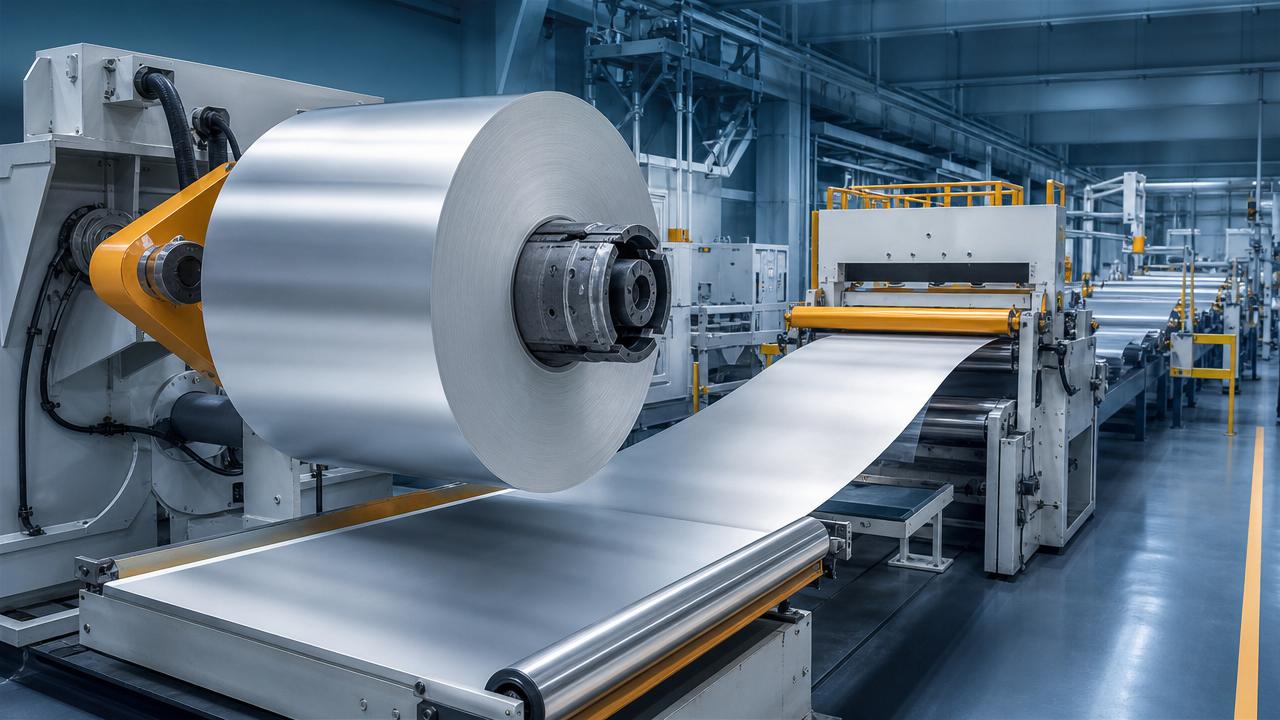
For enterprise decision-makers focused on output, consistency, and cost control, aluminum coils can play a critical role in continuous production. From faster line speeds to stable material performance across demanding applications, the right supplier helps reduce downtime and improve efficiency. This article explores how aluminum coils support higher throughput and why choosing a capable manufacturing partner matters.
Why do aluminum coils matter in continuous production?
Continuous production depends on steady material flow, predictable forming behavior, and fewer interruptions. Aluminum coils support all three when quality is stable from edge to edge.
Compared with inconsistent raw materials, well-produced aluminum coils help lines run at higher speed with less adjustment. That means better throughput and more repeatable output.
In metallurgical materials applications, surface quality, flatness, thickness control, and coil consistency directly affect stamping, slitting, bending, and coating performance.
If those variables drift, scrap increases, machine stops become frequent, and downstream processes slow. Good aluminum coils reduce these hidden productivity losses.
How do aluminum coils improve throughput on real production lines?
Higher throughput is not only about machine speed. It also comes from smoother feeding, fewer defects, and better compatibility with automated equipment.
1. Stable dimensions reduce setup time
Uniform thickness and width help operators minimize repeated calibration. A line can switch faster between runs and maintain output with fewer corrections.
2. Better formability lowers scrap
High-quality aluminum coils bend, stamp, and stretch more predictably. This matters in automotive parts, enclosures, curtain walls, and appliance components.
3. Surface consistency supports downstream finishing
Clean and stable surfaces improve painting, polishing, oxidation, and coating results. Less rework means faster movement across the entire production chain.
4. Reliable mechanical properties improve processing windows
Consistent tensile strength, yield strength, and plasticity allow better line planning. Production teams can run with tighter tolerances and fewer safety slowdowns.
Which applications benefit most from aluminum coils?
Aluminum coils are widely used where lightweight structure, corrosion resistance, and efficient processing are required. Continuous production especially benefits in repeatable, high-volume environments.
- Automotive panels and interior boards
- Marine and ship components
- Fuel tanks and pressure vessel parts
- Appliance housings and electronic enclosures
- Curtain wall panels and architectural systems
- Machinery covers and precision parts
For example, Aluminum sheets 5052 Series fits many continuous processing needs.
Its high strength, corrosion resistance, welding performance, and good fatigue strength support stable forming in humid, outdoor, and marine environments.
It can also be oxidized, polished, and painted, helping downstream finishing lines maintain consistent appearance and quality.
How should aluminum coils be evaluated before sourcing?
Choosing aluminum coils only by price can create bottlenecks later. Throughput improves when sourcing decisions match actual production requirements.
What technical indicators should be checked?
- Thickness tolerance and width accuracy
- Flatness and edge condition
- Tensile and yield strength stability
- Corrosion resistance and surface finish
- Weldability and formability
- Coil size compatibility with production equipment
Why does supplier capability matter?
A capable supplier provides more than material. It supports quality consistency, production scale, lead-time control, and technical communication.
Shandong Diwang Aluminum Technology Co., Ltd. was established in 2002 and integrates design, research, development, production, and sales.
The company has more than 300 employees and 5 advanced aluminum coil production lines, with annual output reaching 900,000 tons.
Its aluminum products are exported to more than 30 countries and serve engineering, coal mining, textiles, electricity, machinery, aviation, automobiles, ships, and more.
What mistakes reduce the value of aluminum coils in production?
Even premium aluminum coils cannot improve throughput if selection and handling are poor. Several common mistakes can erase expected gains.
- Ignoring actual forming, welding, or coating requirements
- Choosing grades without checking corrosion environment
- Using coil dimensions unsuited to line equipment
- Focusing only on purchase price, not total processing cost
- Neglecting storage, surface protection, and handling procedures
For demanding applications, another option is Aluminum sheets 5052 Series, available in sheet or coil-related formats.
With good low-temperature performance, non-magnetic properties, and strong resistance to deformation, it can support stable output in specialized lines.
How can aluminum coils be compared quickly for production decisions?
What is the practical next step for improving throughput?
Start by reviewing where line speed is lost today. Check material variation, scrap patterns, setup frequency, and downstream rework.
Then compare current material performance with the requirements of your forming, welding, slitting, coating, or assembly process.
If throughput depends on stable raw materials, aluminum coils should be evaluated as a full production efficiency factor, not just a commodity input.
The right aluminum coils can reduce downtime, improve product consistency, and support long-term cost control across continuous production systems.
Working with an experienced, scalable partner makes that improvement easier to achieve and sustain.
Leave A Message
If you are interested in our products and want to know more details, please leave a message here, we will reply you as soon as we can.