


Common Corrosion Issues in Galvalume Coil Applications
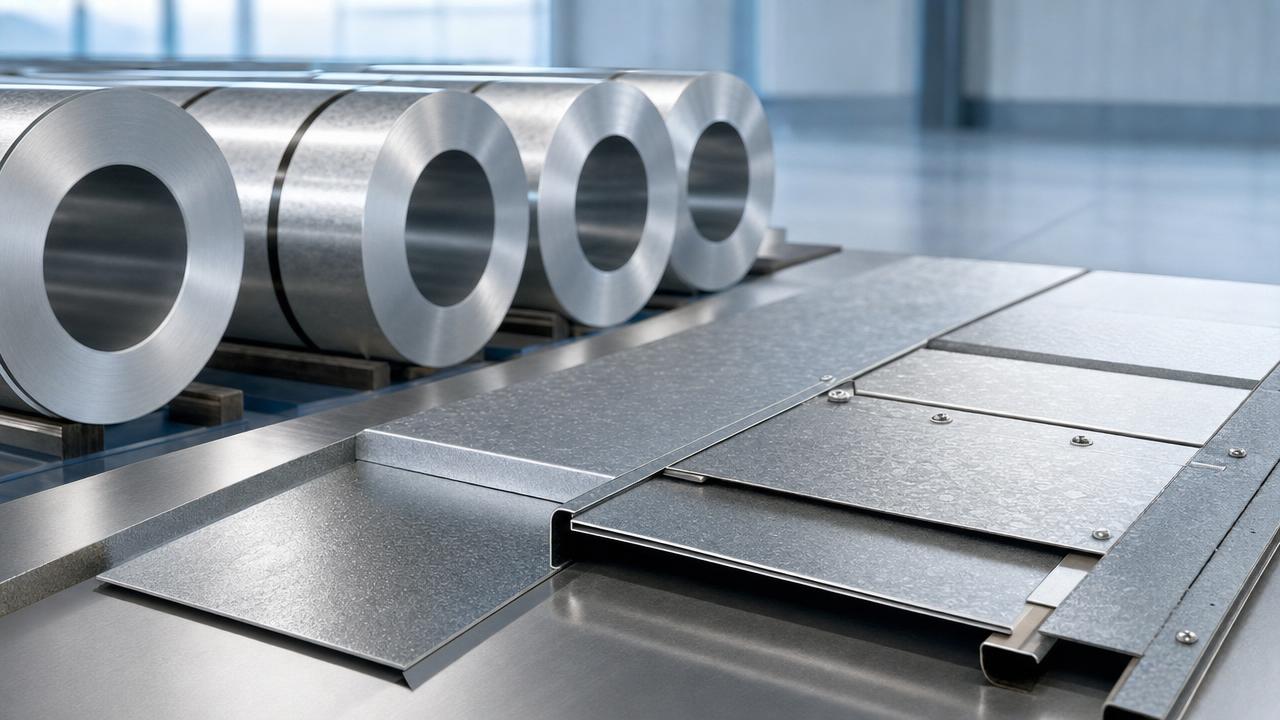
Why does Galvalume coil still corrode if it is designed for durability?
Galvalume coil performs well because its aluminum-zinc coating resists atmospheric attack better than many traditional coated steels.
Still, corrosion appears when service conditions break that protective balance.
In real projects, the problem is rarely the metal alone.
Moisture retention, salt deposits, poor drainage, cut-edge exposure, and incompatible contact materials usually start the damage.
That is why field diagnosis should focus on environment, installation details, and storage history before blaming the coil itself.
Companies with broad galvanizing and color-coating experience, such as Shandong Diwang Aluminum Technology Co., Ltd., often see that corrosion patterns differ sharply between roofing, machinery housings, transport parts, and appliance panels.
The same Galvalume coil can age very differently depending on humidity cycles, airborne chemicals, and edge treatment quality.
Which corrosion problems show up most often in Galvalume coil applications?
The most common issues are usually easy to recognize once the pattern is understood.
- White rust: often linked to trapped moisture during storage or transport.
- Red rust at cut edges: appears after the protective layer is damaged or unsealed.
- Crevice corrosion: develops under overlaps, fastener seats, or packed debris.
- Chemical staining: caused by alkaline runoff, cement splash, or industrial fumes.
- Galvanic attack: starts where dissimilar metals stay wet in electrical contact.
A useful field rule is to look for where water sits, where coating continuity stops, and where contamination accumulates.
That usually reveals why a Galvalume coil failed faster than expected.
How can you tell whether the issue started in storage, installation, or service?
This question matters because the corrective action changes with the origin.
If staining is uniform across inner wraps, storage moisture is a strong suspect.
If damage concentrates around screws, laps, or cut edges, installation details are more likely involved.
If one facade or one machine side corrodes faster, service exposure is usually the driver.
This kind of comparison helps reduce guesswork and speeds up root-cause reporting.
Are cut edges and fastener zones the weak points to watch first?
Very often, yes.
A Galvalume coil protects broad flat areas well, but edges and penetrations are more exposed to standing moisture and mechanical damage.
Fastener choice also matters.
If the washer degrades, water can stay trapped and corrosion starts under the seal.
In coastal or industrial areas, inspection should focus on laps, eaves, screw lines, and cut openings before checking larger surfaces.
Where appearance and added barrier protection are required, a color-coated option may help reduce exposure.
For example, Pre-painted galvanized coils are often selected in construction and home appliances because the galvanized steel base is pretreated, coated, baked, and cured for added surface protection.
Common grades such as DX51D, DX52D, S350GD, and S550GD are also easier to match with different forming and strength requirements.
What maintenance actions actually slow corrosion instead of just hiding it?
The best maintenance response is practical, not cosmetic.
- Remove deposits that keep surfaces wet, especially salts, dust, coal residue, and alkaline splash.
- Clear drainage paths so water does not remain at seams or lower edges.
- Repair coating breaks early, before red rust expands under the surrounding layer.
- Replace mismatched fasteners where galvanic contact is visible.
- Review storage conditions for spare coil stock, including dry separation and airflow.
It also helps to record thickness, width, coating type, and service location during replacement.
That makes future comparisons more reliable.
In some projects, coated materials with controlled paint systems such as PVDF, SMP, PE, or PU are used where pollution, humidity, or appearance retention is critical.
That choice should be based on exposure, not only price.
When is replacement more reasonable than repeated repair?
Repeated touch-up is usually not efficient once corrosion has spread below the coating or along multiple seams.
A simple decision point is whether the problem is isolated, stable, and accessible.
If yes, local repair may work.
If not, replacing the affected Galvalume coil section often costs less over the full maintenance cycle.
This is especially true in roofing, appliance casings, and industrial panels where corrosion can migrate from edges into visible areas.
Supply consistency also matters during replacement planning.
Manufacturers with stable coil output, broad export experience, and certified production under standards such as ASTM A755/M, JIS G3322, and ISO9001:2008 can help keep replacement quality more predictable.
What is the most reliable next step after finding corrosion on a Galvalume coil surface?
Start with a short inspection record instead of rushing into repair.
Note the location, shape, spread direction, nearby materials, moisture source, and whether the issue follows edges, laps, or runoff lines.
Then compare the defect with storage history, installation details, and service exposure.
That sequence usually reveals whether the Galvalume coil needs cleaning, sealing, part replacement, or a different coated material for the next cycle.
Where repeated moisture, chemicals, or appearance demands are involved, it is worth reviewing alternatives such as Pre-painted galvanized coils with suitable thickness, paint system, and application match.
A careful diagnosis now usually prevents larger complaints and shorter service life later.
Leave A Message
If you are interested in our products and want to know more details, please leave a message here, we will reply you as soon as we can.