


Key Standards and Certifications for Aluminum Profiles
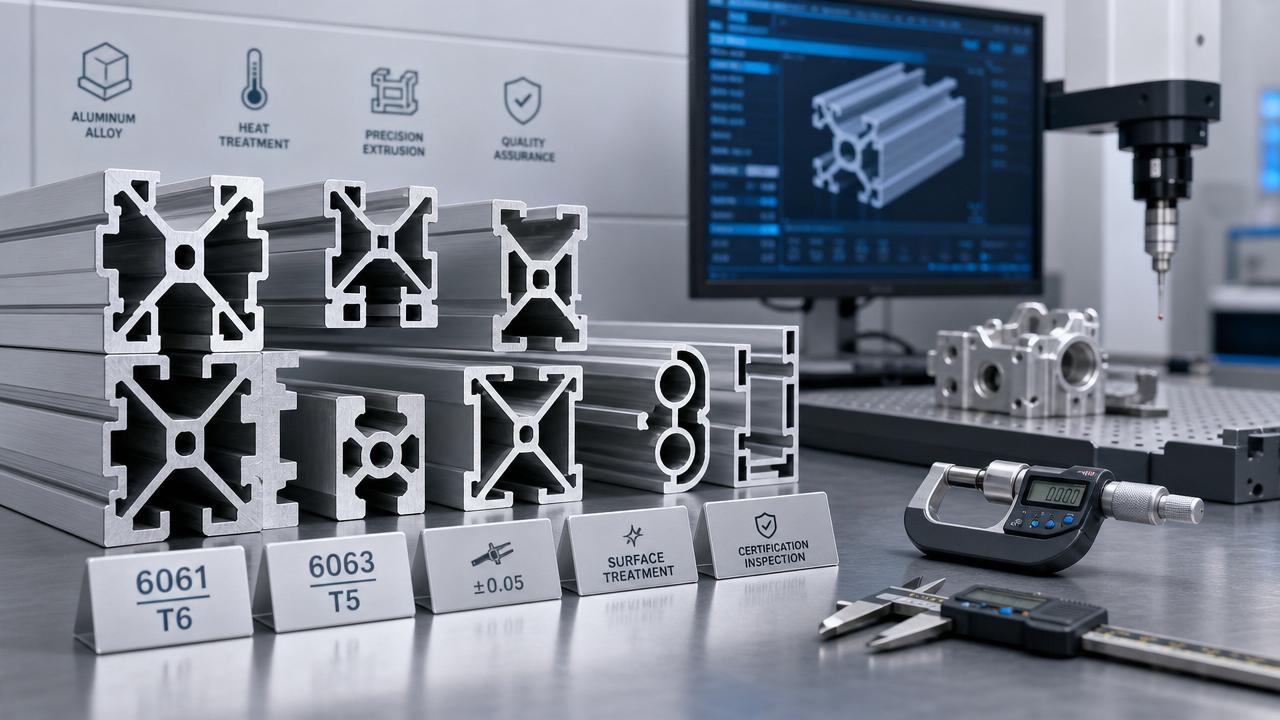
In global metals sourcing, the standards behind aluminum profiles matter as much as price or delivery. For any evaluation focused on quality, compliance, and supply risk, certifications, alloy rules, and dimensional controls reveal whether a supplier can support stable performance over time.
That is especially true in sectors where aluminum profiles are used in construction, transport, machinery, power systems, and industrial fabrication. A profile may look acceptable on paper, yet still fail a project if its alloy condition, tolerance consistency, or traceability does not match the intended service environment.
Why standards shape real purchasing decisions
Aluminum profiles are not a single generic product. They vary by alloy series, temper, section design, surface treatment, and downstream application. Standards create a shared language for these variables.
Without that shared language, comparing suppliers becomes difficult. One quotation may describe excellent mechanical properties, while another highlights appearance or coating quality. Standards help convert those claims into measurable facts.
In metallurgical materials trading, this reduces uncertainty across contracts, inspection, customs documentation, and final installation. It also helps prevent disputes over whether aluminum profiles meet agreed technical expectations.
The core standards buyers usually review
The most relevant standards for aluminum profiles usually fall into four groups: chemical composition, mechanical properties, dimensional tolerances, and surface quality.
Alloy and temper classification
Alloy designation is the first checkpoint. Common profile grades include 6061, 6063, and 6082, each suited to different strength, formability, and corrosion requirements.
Temper status such as T5 or T6 is equally important. It affects hardness, yield strength, and how the material performs during fabrication or long-term loading.
Dimensional and geometric tolerances
Profiles must meet limits for wall thickness, straightness, twist, squareness, and sectional dimensions. These details directly influence assembly accuracy and waste rates during processing.
For curtain wall systems, rail components, frames, and machine structures, tolerance failure can trigger costly rework. That is why aluminum profiles should be checked against the exact applicable standard, not only a general drawing.
Surface and finish requirements
Surface quality standards address scratches, pits, oxidation marks, coating adhesion, film thickness, and color consistency. This matters in visible architectural use, but also in technical environments where coating failure shortens service life.
Which certifications carry the most weight
Certification should be read as evidence of system control, not as a substitute for product testing. The strongest suppliers combine recognized certificates with batch records and independent inspection data.
ISO 9001 is often the baseline. It shows that production, inspection, and corrective processes are documented and repeatable. For exported aluminum profiles, this is usually the minimum expectation.
For environmental and operational governance, ISO 14001 and ISO 45001 can also indicate stronger process discipline. In some markets, CE-related compliance or customer-specific approval is required for construction systems.
When anodizing or powder coating is critical, buyers often ask for evidence tied to coating standards, salt spray testing, adhesion testing, and thickness verification. These are practical indicators, not just paperwork items.
How to read supplier capability behind the certificates
A certificate is useful only when supported by production reality. That means reviewing manufacturing scale, inspection discipline, export experience, and the consistency of related product lines.
Shandong Diwang Aluminum Technology Co., Ltd., established in 2002, operates across aluminum and galvanized materials, with integrated design, research, production, and sales. Its export footprint across more than 30 countries suggests familiarity with varied compliance expectations.
The company’s broader portfolio also matters. A supplier handling aluminum coils, sheets, tubes, alloys, and aluminum profiles usually offers better traceability between raw material control and finished section performance.
That cross-product capability can help when a project includes both profiles and flat products. For example, Aluminum sheets 1060 Series fit applications such as electronics, decoration, packaging, and heat dissipation, where purity, conductivity, and corrosion resistance also need clear specification control.
Common application differences that affect evaluation
Not all aluminum profiles should be judged by the same checklist. A decorative indoor frame does not face the same demands as a marine structure, an automotive component, or an industrial support system.
- Architectural use focuses on surface finish, anodizing quality, color consistency, and dimensional precision.
- Transport and machinery applications place more weight on alloy strength, fatigue resistance, and joining performance.
- Power, electronics, and heat management projects often review conductivity, finish stability, and machining suitability.
- Marine or corrosive environments require closer attention to alloy selection and corrosion test evidence.
This is where broad metallurgical knowledge helps. A supplier familiar with pure aluminum, Al-Mn, Al-Mg, and Al-Mg-Si systems can usually discuss why a certain profile grade is specified, not merely quote it.
A practical review framework
A useful evaluation process for aluminum profiles combines documents with evidence from production and product samples.
- Match the alloy and temper to the actual load, environment, and fabrication route.
- Confirm the governing standard for tolerance, not just nominal drawing dimensions.
- Review mill test certificates, inspection reports, and batch traceability records.
- Check whether surface treatment data aligns with service-life expectations.
- Compare certification validity with production scope and export history.
Where multiple aluminum products are sourced together, adjacent materials can provide useful signals. A flat product range that includes 1060, 3003, 5052, 6061, and 6063 often reflects stronger control over alloy sourcing and processing routes.
What deserves closer follow-up
The next step is not simply collecting more certificates. It is building a comparison file that links each standard claim to the intended application of the aluminum profiles.
Usually, the clearest path is to define alloy, temper, tolerance class, finish requirement, and inspection method before commercial comparison. That makes quotations easier to judge and reduces hidden deviation.
If a project also involves sheet or coil materials, reviewing related products such as Aluminum sheets 1060 Series can help verify whether the supplier’s metallurgical control extends beyond one category. In practice, that broader consistency often says more than a certificate alone.
Leave A Message
If you are interested in our products and want to know more details, please leave a message here, we will reply you as soon as we can.