


When Is Galvalume Coil Not the Best Material Choice?
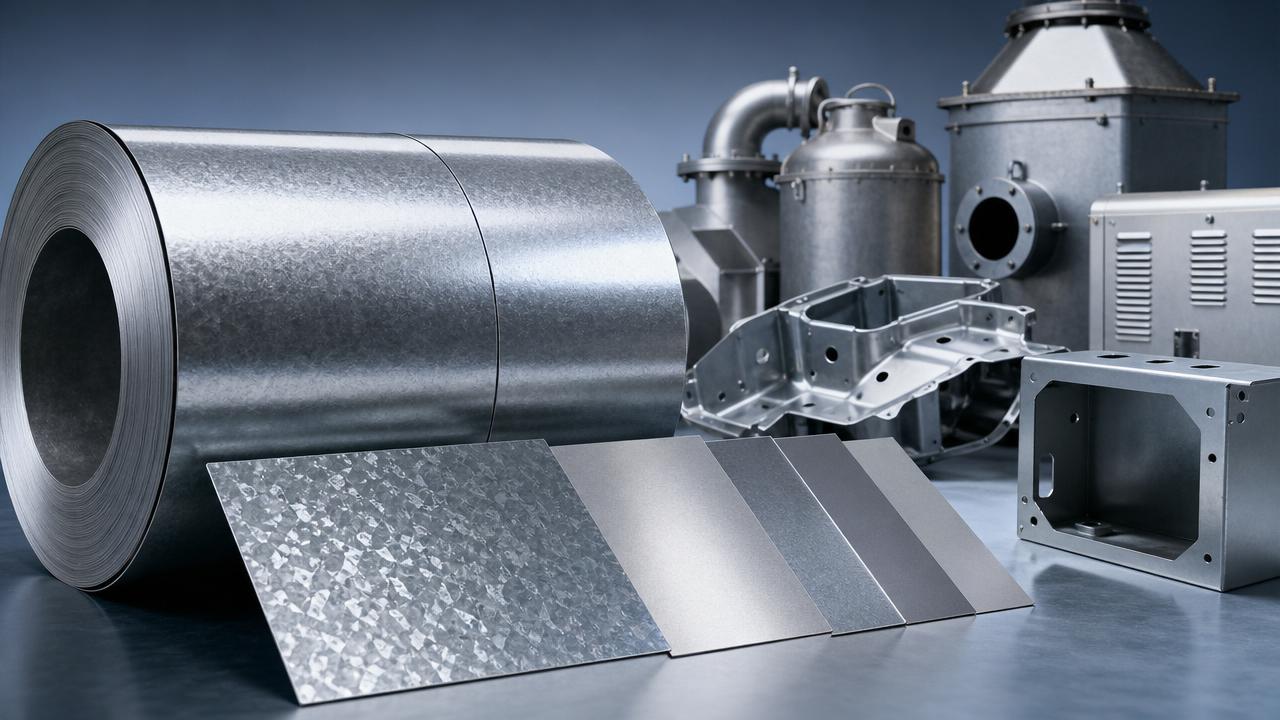
Galvalume coil is often chosen for its aluminum-zinc coating, stable outdoor durability, and reasonable lifecycle cost. Even so, material selection in metallurgy is rarely about one advantage alone. In projects involving severe forming, repeated welding, chemical attack, or sustained heat, Galvalume coil can become a compromise rather than the best answer.
That question matters more as applications diversify across construction, transportation, machinery, electrical systems, and marine-adjacent environments. Companies with broad product capabilities, such as Shandong Diwang Aluminum Technology Co., Ltd., see this directly because different industries ask for very different performance balances, not just a familiar coating system.
Where Galvalume coil performs well, and where the limits begin
In many roofing, cladding, and light industrial uses, Galvalume coil delivers strong atmospheric corrosion resistance. It also supports cost-sensitive projects that need long service life without moving into premium alloy systems.
The limitation appears when the evaluation moves beyond general weather exposure. Once fabrication, thermal stress, or chemical contact become dominant factors, the coating system and substrate behavior must be examined more closely.
This is why Galvalume coil should be judged by service conditions, not by reputation alone. A material can be excellent in open-air exposure and still underperform in a process-heavy environment.
Forming demands can change the decision
Deep drawing, sharp bending, and complex profiling can challenge Galvalume coil. The coating may develop microcracks at tight radii, especially if forming parameters are aggressive or edge quality is inconsistent.
In appearance-critical products, even minor surface disruption can become unacceptable. This is especially relevant for visible panels, appliance parts, and shaped architectural components.
When formability is the primary concern, aluminum grades or specific coated aluminum products may offer a better balance. For example, Aluminum sheets in 1050, 1060, 3003, or 5052 families are often considered where good plasticity, high flatness, and stable surface quality matter more than a zinc-based coating.
Welding and heat input remain practical concerns
Galvalume coil is not always ideal for assemblies with frequent welding. The aluminum-zinc coating can interfere with weld consistency, create fume management issues, and require extra surface preparation.
Heat-affected zones may also lose some protective value, leaving repaired or welded areas more exposed than the original sheet surface. In high-throughput production, that added process control has a real cost.
Where joining is central to performance, alternative substrates with well welding property may reduce downstream risk. That is one reason multi-material suppliers serving machinery, automotive, and industrial device sectors usually keep more than one route open.
Chemical exposure is more specific than “corrosion resistance”
A common mistake is to assume that good outdoor durability means broad chemical resistance. Galvalume coil resists many atmospheric conditions well, but acidic, alkaline, saline, or trapped-moisture environments can produce a different result.
Chemical plants, livestock buildings, coastal processing zones, and poorly ventilated enclosures deserve separate review. Edge corrosion, cut-edge creep, and localized attack can become more important than field performance on the flat surface.
In these cases, the evaluator should compare coating chemistry, drainage design, maintenance access, and contact with dissimilar metals. Material failure often comes from the system design, not the sheet alone.
High-temperature service is another dividing line
Galvalume coil is not the first choice for components exposed to sustained elevated temperatures. Thermal cycling can affect coating stability, appearance, and long-term protection.
This matters in exhaust-adjacent parts, heat-reflective assemblies, industrial covers, and equipment housings. If the operating profile includes repeated heating and cooling, coating behavior should be verified rather than assumed.
Some aluminum and aluminum-alloy solutions become more attractive here, especially when low weight, high reflectance, good oxidability, or corrosion resistance are also required. In broader portfolios, grades such as 3003, 5052, 5083, or 6061 are often reviewed according to structural and environmental demands.
A practical comparison framework
A useful decision does not start with brand preference. It starts with the dominant failure mode expected in service.
How alternative materials enter the conversation
Alternative selection does not mean abandoning coated steel in every case. It means matching the metal to the job’s real stress pattern.
For lightweight structures, external walls, transportation parts, heat-sink devices, containers, or marine-grade applications, aluminum routes may deserve closer attention. In those evaluations, flatness, corrosion resistance, machinability, and surface consistency can outweigh the advantages of Galvalume coil.
A supplier with both galvanized and aluminum production experience is usually better positioned to support that comparison. With established R&D, large output capacity, and exports across more than 30 countries, Shandong Diwang Aluminum Technology Co., Ltd. reflects the kind of manufacturing background where cross-material assessment is practical rather than theoretical.
What to confirm before making the final call
- Map the actual environment, including humidity, salts, fumes, and cleaning agents.
- Check fabrication steps such as bending radius, punching, welding, and recoating.
- Review service temperature, not just peak temperature.
- Compare lifecycle risk at edges, joints, and damaged surfaces.
- Test candidate materials in representative conditions when the application is critical.
If Galvalume coil remains the best fit after that review, the choice is easier to defend. If not, the next step is not guesswork. It is a structured comparison of coating system, alloy family, fabrication route, and service exposure, with options such as 3003, 5052, 5083, or 6061-based solutions included where performance demands point beyond coated steel.
Leave A Message
If you are interested in our products and want to know more details, please leave a message here, we will reply you as soon as we can.