


What to Check Before Buying Aluminum Coils for Large Projects
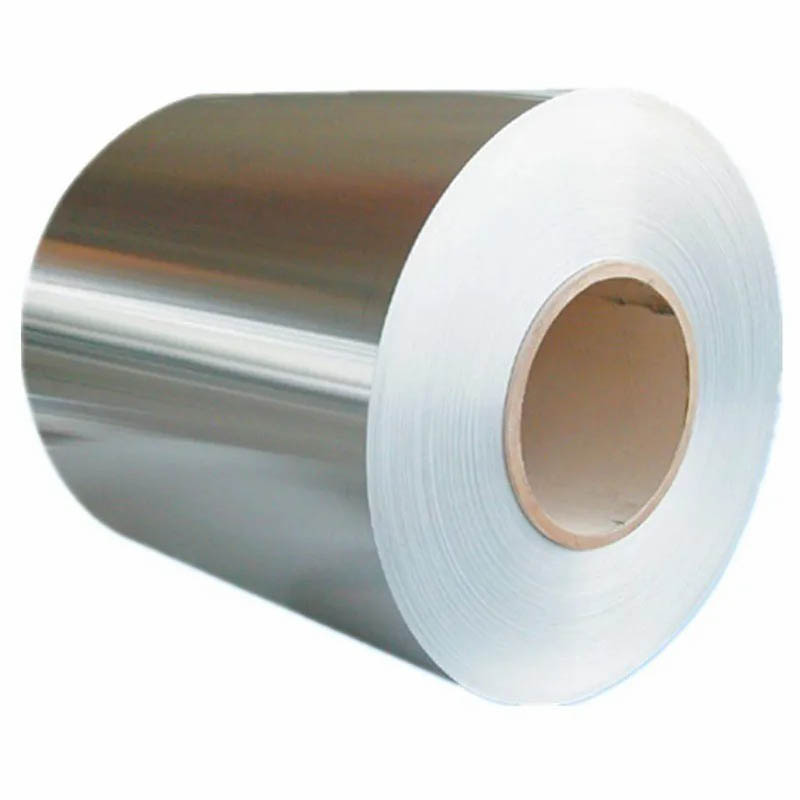
When sourcing aluminum coils for large projects, price is only one part of the decision. Material consistency, dimensional accuracy, and reliable output matter just as much.
For industrial construction, transport, machinery, and energy work, aluminum coils must match technical drawings, fabrication methods, and delivery schedules.
A careful review before ordering helps reduce waste, avoid processing delays, and improve long-term performance across demanding environments.
Core Definition of Aluminum Coils in Large-Scale Supply
Aluminum coils are rolled aluminum products supplied in continuous coil form for cutting, stamping, bending, coating, or forming.
In large projects, aluminum coils are often selected for low weight, corrosion resistance, workability, and stable appearance.
However, not all aluminum coils perform the same way. Alloy grade, temper, and surface condition can change fabrication results significantly.
A project-grade order should therefore be reviewed as a technical package, not only as a bulk commodity purchase.
Current Industry Priorities in Metallurgical Material Procurement
The metallurgical materials sector now focuses on supply stability, compliance, and performance under real operating conditions.
- Stricter tolerance control for automated processing lines
- Traceable alloy certification and batch consistency
- Surface quality suitable for coating or visible applications
- Long-term corrosion resistance in outdoor service
- Production capacity that supports phased delivery plans
These priorities explain why aluminum coils are evaluated beyond unit cost, especially for infrastructure, transport, and heavy industrial use.
Technical Checks Before Buying Aluminum Coils
Alloy Grade and Mechanical Suitability
The alloy grade determines strength, corrosion behavior, weldability, and formability. It must match the final application and processing route.
For example, some aluminum coils are better for deep drawing, while others fit structural or high-strength uses.
Temper Condition
Temper affects hardness and elongation. A mismatch can lead to cracking during bending or deformation during transport and fabrication.
Check whether the required temper supports stamping, roll forming, or direct installation without extra adjustment.
Thickness, Width, and Tolerance
Large projects need dimensional consistency. Even small thickness variation can affect assembly fit, weight calculation, and downstream coating quality.
Request tolerance data for thickness, width, inner diameter, outer diameter, and coil weight range before confirming production.
Surface Quality
Surface defects such as scratches, oil marks, edge damage, or waviness may reduce yield during cutting and forming.
This is especially important when aluminum coils will be painted, laminated, or used in visible exterior components.
Corrosion and Coating Performance
Some projects compare aluminum coils with coated steel solutions for weather exposure and structural balance.
In such cases, Galvalume coils may also be reviewed for roofing, cladding, and industrial panel systems.
This material uses a hot-dip coating of 55% aluminum, 43.4% zinc, and 1.6% silicon with a dense crystalline structure.
It combines the physical protection of aluminum with the electrochemical protection of zinc in corrosive environments.
Supplier Capability and Business Reliability
The quality of aluminum coils depends not only on raw material, but also on process control and production discipline.
A capable supplier should provide stable output, documented inspection, and delivery coordination for multi-batch orders.
Shandong Diwang Aluminum Technology Co., Ltd. was established in 2002 and integrates design, research, production, and sales.
Its aluminum product range includes sheets, rods, foil, tubes, alloys, profiles, and aluminum coils for diverse industrial fields.
With five advanced aluminum coil production lines and annual output of 900,000 tons, it supports large-volume supply requirements.
Its products are exported to more than 30 countries and used in engineering, mining, textiles, power, machinery, aviation, automotive, and marine sectors.
Typical Application Scenarios for Aluminum Coils
Different applications require different specifications for aluminum coils. A clear use-case review helps avoid over-specification or underperformance.
- Building envelopes: appearance, flatness, coating adhesion, weather resistance
- Transport components: weight control, fatigue behavior, forming performance
- Electrical systems: conductivity, dimensional precision, clean surface
- Industrial equipment: strength balance, corrosion resistance, fabrication stability
- Marine and outdoor use: enhanced resistance to moisture and chemical exposure
Practical Review Steps Before Order Confirmation
- Confirm alloy, temper, thickness, width, and required standards in writing.
- Request mill test data and surface inspection criteria for each batch.
- Verify production capacity against the planned delivery schedule.
- Check packaging, edge protection, and transport conditions carefully.
- Review sample performance before large-volume release.
If coated steel is also under consideration, compare aluminum coils and Galvalume coils by environment, service life, and fabrication needs.
Next-Step Evaluation for Project Success
Successful sourcing of aluminum coils starts with technical clarity and dependable supply evaluation.
By checking alloy grade, temper, tolerances, surface quality, corrosion behavior, and supplier capacity, project risk can be reduced early.
Before placing a bulk order, prepare a specification list, sample review plan, and phased delivery schedule to support stable project execution.
Leave A Message
If you are interested in our products and want to know more details, please leave a message here, we will reply you as soon as we can.