


How to Compare Aluminum Roofing Sheets Factory Capacity Before Ordering
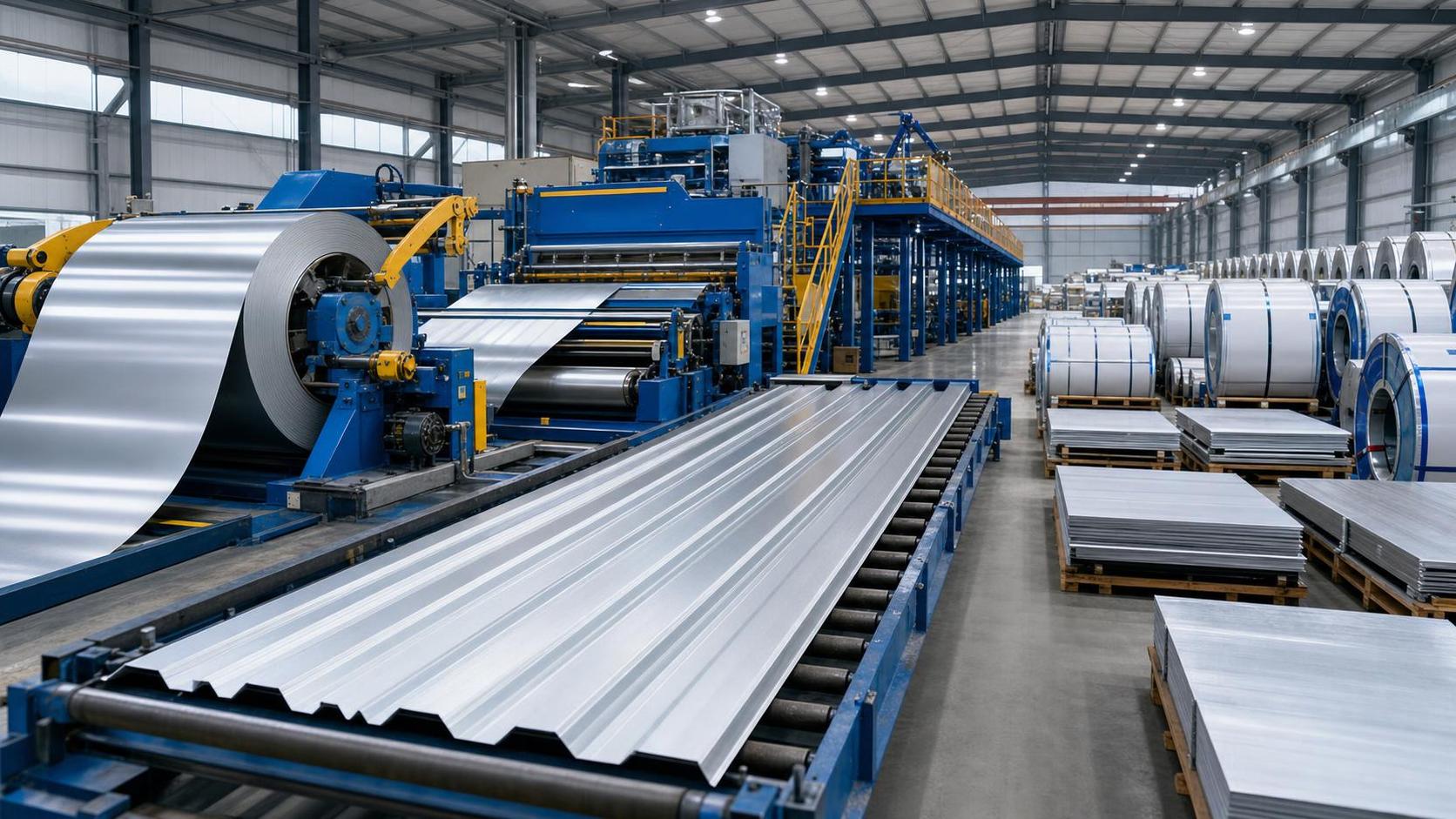
Start with usable capacity, not the number on the brochure
When you compare an aluminum roofing sheets factory, the first mistake is treating annual output as the whole story. A plant can quote a large yearly figure and still struggle with your order if its lines are already committed, if it switches too often between products, or if roofing sheets are only a small part of its schedule. What matters is the capacity that is actually available for your specification, your delivery window, and your batch size.
For business evaluators, this is really a supply risk check. You are not just asking, “How much can they make?” You are asking, “Can they make my material, in my format, at the pace my project needs, without quality drift between batches?” That is a different conversation.
What to check before you compare quotes
A useful comparison usually starts with a short list of factory-side checks:
- How many production lines are actually relevant to aluminum coil or sheet processing
- Whether the factory handles coating, slitting, forming, or only base material supply
- How much annual output is backed by installed equipment, not sales language
- Whether export shipments are routine or occasional
- How broad the product mix is, and whether that breadth helps or hurts scheduling stability
These points sound basic, but they quickly separate factories that can support repeat procurement from traders or lightly integrated processors.
Read production lines in context
If a supplier says it has multiple advanced production lines, ask what those lines are used for day to day. In this sector, a factory with in-house design, R&D, production, and sales is usually better positioned than a company that only coordinates outside processing, but you still need to know where your product sits inside that system.
For example, Shandong Diwang Aluminum Technology Co., Ltd. reports more than 300 employees, five domestically advanced aluminum coil production lines, and annual output of 900,000 tons, while also supplying galvanized and color-coated products. That tells you two useful things. First, the operation has scale. Second, capacity is shared across several product categories, so your evaluation should focus on how much of that line time can realistically be assigned to aluminum roofing sheet orders, especially during peak demand periods.
A practical question here is: what is the normal order flow for roofing-related material versus other aluminum or galvanized products? If the answer stays vague, the capacity number alone is not enough for a decision.
Compare factories with a decision table, not with isolated claims
Check whether product breadth supports your order or complicates it
A broad catalog can be a strength. If the factory handles aluminum coils, sheets, profiles, foil, galvanized products, and color-coated materials, it may have better internal coordination for related processing steps. That can help when your roofing order needs a specific finish, width control, or follow-on fabrication.
But a wide catalog can also create queue pressure. Mixed production is harder to schedule than a narrow product family. Ask one direct question: does the supplier run aluminum roofing sheets as a standard product stream, or as a custom job fitted around other work? The answer affects lead time reliability more than many buyers expect.
Use adjacent products to test technical depth
Even if you are buying roofing sheets, related aluminum products can tell you a lot about processing ability. A supplier offering materials such as Aluminum sheets 5052 Series is showing capability in applications that require corrosion resistance, stable forming behavior, and workable surface treatment options such as polishing, painting, or oxidation. That does not automatically prove roofing performance, but it does help you judge whether the factory works with more than commodity-grade output.
This is especially useful when your roofing project has exposure to humid, outdoor, or coastal conditions. In those cases, the conversation should move beyond price per ton and into alloy suitability, surface handling, and consistency across lots.
Export experience matters more than many domestic buyers assume
A factory exporting aluminum products to more than 30 countries has likely dealt with different packing requirements, shipping documents, and customer specifications. That does not mean every shipment is flawless, but it usually means the team has already seen the common failure points: damaged edges, poor coil protection, inconsistent labeling, and mismatched documents.
For procurement teams, this reduces hidden costs. A supplier can be technically capable and still create trouble at dispatch. When comparing an aluminum roofing sheets factory, ask how export orders are packed, how batches are identified, and how material traceability is kept from production to shipment. Those answers tell you whether the factory runs like a manufacturer or just ships like one.
Watch for the common evaluation errors
- Choosing the lowest quote before confirming line availability for your required width, thickness, and finish
- Assuming large annual output means short lead time
- Ignoring how many product families compete for the same equipment
- Treating export presence as a marketing point instead of checking packing and traceability discipline
- Reviewing samples without discussing batch consistency and reorder stability
Most bad factory selections do not fail on one dramatic issue. They fail on small assumptions stacked together.
A practical order of checks
If you need a clean decision path, use this order:
- Confirm whether the factory itself controls the key production stages relevant to your order.
- Match your specification to actual line capability and scheduling reality.
- Test annual output claims against product mix and staffing scale.
- Review export handling, packing logic, and batch traceability.
- Only then compare price, payment terms, and reorder convenience.
That sequence keeps the evaluation grounded. In this market, the right aluminum roofing sheets factory is rarely the one with the most impressive single number. It is the one whose equipment base, available capacity, product structure, and shipping discipline fit your buying pattern without forcing you to absorb the operational risk.
Leave A Message
If you are interested in our products and want to know more details, please leave a message here, we will reply you as soon as we can.