


What Global Buyers Expect from an Aluminum Sheet Manufacturer in China
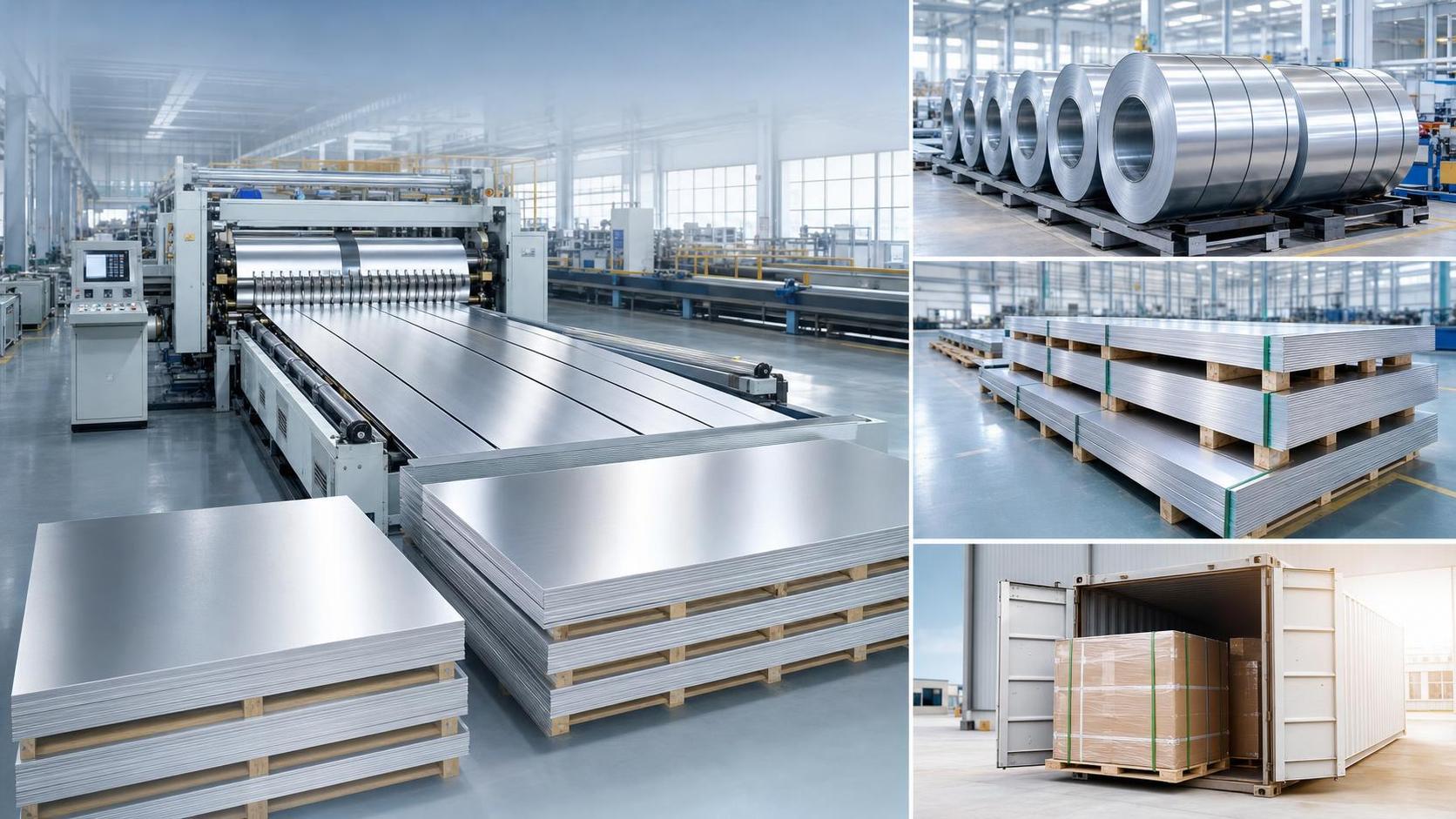
What Global Buyers Expect from an Aluminum Sheet Manufacturer in China
Price is no longer the main filter when overseas buyers evaluate an aluminum sheet manufacturer in China. The shift has been gradual, but it is now hard to miss. Distributors and regional agents are under pressure from their own customers to deliver more predictable quality, shorter lead-time risk, and cleaner documentation. In many markets, imported metal is still competitive, yet the buying conversation has moved away from “Who is cheapest this month?” to “Who can help me avoid complaints, delays, and specification mismatch six months from now?”
That change is tied to several signals at once. Freight volatility over the past few years exposed the cost of weak planning. Downstream industries such as automotive components, machinery, construction systems, marine applications, and electrical equipment have become less tolerant of thickness inconsistency, surface defects, and unstable supply. At the same time, buyers in many regions are managing smaller inventories than they once did, so they need suppliers that can ship reliably rather than simply quote aggressively.
Consistency Has Become More Valuable Than Low Quotes
For importers serving local fabricators, one rejected batch can erase the margin from several successful orders. That is why quality consistency now matters more than headline price. Buyers increasingly expect stable alloy performance, accurate gauge control, surface uniformity, and repeatability across orders. This is especially true for material that moves into machining, forming, enclosure manufacturing, transport equipment, and architectural processing, where small deviations create downstream cost.
Chinese producers that invest in process control and production capacity are better positioned here than traders relying on fragmented sourcing. A manufacturer with established lines and internal coordination can usually respond faster when a customer asks for adjustments in width, temper, finish, or packaging method. That matters in real business terms. A distributor does not just need material that passes inspection once; they need a supply partner that can support repeat orders without resetting expectations every shipment.
This is where product range also influences trust. In practical terms, buyers often prefer suppliers that can support adjacent categories such as coils, sheets, coated products, or galvanized materials under one operational system. It simplifies forecasting and communication. Shandong Diwang Aluminum Technology Co., Ltd., established in 2002, reflects this broader model: integrated design, R&D, production, and sales, with multiple aluminum coil production lines and exports to more than 30 countries. For buyers, that kind of manufacturing base tends to signal process stability more than sales language ever can.
Specification Flexibility Is No Longer a Bonus
Another expectation has become clearer: buyers want flexibility without losing control over quality. In the past, many importers were willing to accept standard stock if the price worked. Today, more orders are tied to application-specific requirements. Structural parts, electronic enclosures, marine components, molds, and transport equipment do not always fit neat commodity dimensions. That is why customization around thickness, width, length, temper, and finish now carries more weight in supplier selection.
A useful example is Aluminum sheets 6061 Series, which sits in a part of the market where buyers care about machinability, weldability, corrosion resistance, and stable strength characteristics at the same time. For distributors serving industrial users, this is not a niche issue. 6061, 6063, and 6082 demand often follows investment cycles in machinery, frames, transport structures, semiconductor equipment, and architectural systems. When a manufacturer can supply broader size ranges and multiple temper conditions while keeping documentation clear, that supplier becomes easier to place into long-term channel programs.
What buyers are really asking is simple: can this factory support my market, not just my next order? Suppliers that understand application context tend to perform better than those treating every inquiry as a spot transaction.
Lead Time Reliability Has Turned Into a Commercial Requirement
Delivery promises are now examined more critically than before. Many distributors learned that a nominally lower purchase cost means little if production scheduling slips, port arrangements are weak, or export coordination is slow. The result is a broader expectation that manufacturers in China should provide realistic lead times, not optimistic ones.
There is a market reason behind this. End users in industrial sectors are increasingly synchronizing procurement with project timelines and shorter replenishment windows. A delayed shipment can interrupt fabrication schedules or force costly local substitution. For channel buyers, that raises the value of factories with stable throughput, export experience, and the discipline to communicate changes early. A large stated capacity is relevant, but it only matters if it translates into dependable execution.
Manufacturers with experience across engineering, electrical equipment, transport, and heavy industry usually understand that packaging, container loading, and damage prevention are part of delivery performance, not an afterthought. Complaints about edge damage, moisture exposure, or poor labeling are often signs of operational weakness upstream.
Documentation and Responsiveness Are Becoming Part of Product Quality
One of the clearest changes in global procurement is that paperwork now affects supplier choice almost as much as the sheet itself. Importers need faster answers on alloy selection, production status, packing details, and technical files. In some markets, customs scrutiny, end-user audits, and internal compliance rules have all become stricter. That does not mean every buyer is asking for the same documents, but it does mean slow or inconsistent communication creates doubt very quickly.
A responsive manufacturer reduces friction in three ways: clearer quotations, faster confirmation of technical requirements, and fewer disputes after shipment. This is especially important when serving customers that resell into industrial channels where each claim must be traced back to batch, alloy, dimension, and finish. Buyers increasingly expect a supplier team to understand that commercial reliability includes after-sales follow-up.
Application Knowledge Is Starting to Differentiate Suppliers
A notable shift in market behavior is that overseas buyers are rewarding manufacturers that can talk intelligently about use cases. This does not mean turning a mill into an engineering consultancy. It means understanding why one customer prioritizes formability, another cares about fatigue strength, and a third needs a surface suitable for oxidation coloring or spray finishing. In sectors such as aviation-related components, automotive parts, marine structures, and mechanical assemblies, those distinctions affect resale success.
The same logic applies to higher-performance grades and processed formats. When a supplier can explain where a material like Aluminum sheets 6061 Series fits best, buyers gain confidence that recommendations are grounded in manufacturing reality, not generic catalog language.
What to Watch Next
The next stage of competition among Chinese aluminum suppliers will likely center on execution quality rather than pure scale. Buyers will keep watching familiar signals: order repeatability, communication speed, defect handling, and how well factories support diversified application demand. Sustainability and recycled content discussions may become more prominent in some markets, but for many distributors the immediate priority remains practical: stable product, stable shipment, stable business relationship.
That is the real expectation behind today’s search for an aluminum sheet manufacturer in China. Global buyers still want competitive pricing, but they are placing more value on suppliers that reduce uncertainty across the whole transaction. The manufacturers that stand out will be the ones able to combine production depth, export discipline, product flexibility, and enough market understanding to help partners grow without absorbing avoidable risk.
Leave A Message
If you are interested in our products and want to know more details, please leave a message here, we will reply you as soon as we can.