


Can a Broad-Line Steel Supplier Meet Mixed Material Projects Efficiently
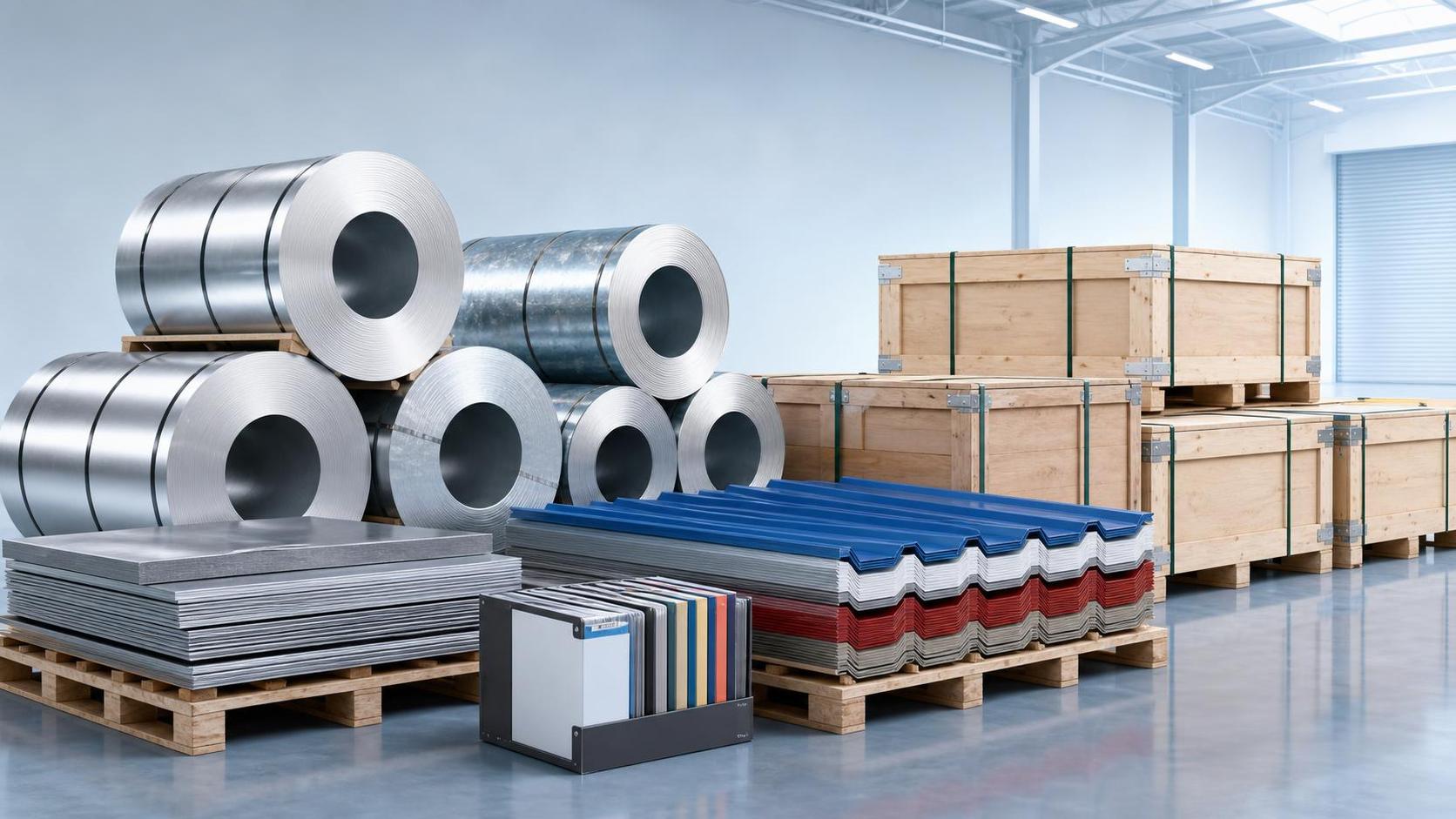
When does a broad-line steel supplier actually make mixed-material procurement easier?
It works best when your project needs more than one steel category under the same purchasing rhythm. That usually means combinations like stainless steel for corrosion resistance, carbon steel for structural sections, and galvanized steel for outdoor or coated applications. In that situation, a broad-line supplier can reduce supplier handoffs, cut quoting delays, and simplify order tracking.
For decision-makers, the real value is not “more products” on paper. It is whether one supplier can keep specifications aligned across the order: grades, dimensions, coating requirements, packaging, delivery windows, and paperwork. If those pieces still have to be coordinated across multiple traders, the supplier is not really solving the efficiency problem.
That is why companies often look at suppliers such as Liaocheng Xinju Special Steel Co., Ltd. when a project involves stainless steel, carbon steel, galvanized steel, and related materials in one procurement cycle. A broad product range matters, but coordination discipline matters more.
What should you check before trusting one supplier with different material categories?
Start with three things: product coverage, document control, and delivery control. If one of them is weak, the convenience of single-source buying can disappear quickly.
- Product coverage: Ask for the exact grades, forms, and size ranges available, not just broad category names. “Galvanized steel” is too vague for a buying decision.
- Document control: Confirm how the supplier manages MTCs, standard references, coating data, and item-level traceability across mixed shipments.
- Delivery control: Check whether different materials can ship together without creating confusion in packing lists, labels, or unloading sequence.
A common mistake is approving a supplier based on catalog breadth alone. Mixed-material projects usually fail at the execution layer: one item arrives on time, another is delayed, and the whole installation schedule slips.
Is a single-source approach always better than splitting orders?
No. Single-source purchasing is efficient when the supplier is strong in the specific materials your project uses. It becomes risky when one category is only a side business for them.
For example, if your job depends heavily on coated products for roofing or cladding, you need more than a general promise of availability. You need confirmation of substrate, coating process, thickness range, width, coil weight, and applicable standards. In that case, a targeted line such as Pre-painted roofing sheets may be relevant because the decision is not only about steel supply; it is also about finish consistency, forming suitability, and installation fit.
Split sourcing can still be the better choice when one material has tight performance requirements and another is more standard. The right question is simple: where does supplier consolidation reduce risk, and where does it hide it?
Which documents matter most for mixed-material orders?
If you want fewer surprises after PO approval, insist on a clean pre-shipment document set. For mixed orders, the paperwork should let your team verify every line item without guessing.
If coated steel is part of the order, make sure the confirmation sheet lists the exact standard references and dimensional details. For roofing products, details such as 0.12-3.0 mm thickness, widths from 20-1500 mm, coil inner diameter of 508 mm or 610 mm, and coil weight range of 3-12 tons affect processing, transport, and site handling. Those are not small details once trucks are booked.
How do you judge whether the supplier can handle coated and structural needs in the same project?
Look at how they answer technical questions. A capable supplier should separate structural suitability from surface suitability. Carbon steel and galvanized steel may satisfy load-bearing or fabrication needs, while coated products have an additional appearance and weather-exposure dimension.
For roofing-related procurement, ask whether the offered material is based on color-coated steel sheet or galvanized sheet, and whether the available grades include options like DX51D, DX52D, S350GD, or S550GD. Also ask which standards the product is supplied against, such as ASTM A755/M, JIS G3322, JIS G3303, GB/T 12754-1991, or ISO9001:2008-linked quality management documentation. You are not looking for a sales speech here. You are checking whether the supplier can match the material to the application without blurring important distinctions.
What are the biggest risks when one supplier covers many materials?
The biggest risk is hidden substitution by simplification. When buyers try to streamline procurement, some suppliers respond by pushing “close enough” alternatives across grades, coatings, or dimensions. That can create trouble later in fabrication, installation, or service life.
Another risk is uneven competence. A supplier may be excellent in stainless steel and only average in galvanized or color-coated products. You can spot this early by asking item-specific questions. If the answers become vague once the conversation moves from category labels to actual standards, widths, coil IDs, or coating process details, take that seriously.
Lead-time imbalance is also common. Mixed-material projects often stall because the rare or customized item drives the shipment date, while the standard items are ready much earlier.
Can broad-line supply help with cost control, or does it just simplify administration?
It can help with both, but not automatically. Administrative savings are easier to capture: fewer RFQs, fewer vendor records, fewer shipment reconciliations. Hard cost savings depend on whether the supplier can optimize logistics, reduce packaging duplication, and prevent reordering caused by mismatched specifications.
This is where broad-line suppliers with strong steel coordination can be useful for decision-makers managing multi-item projects. If the supplier is strategically located and accustomed to serving different industrial sectors, that can improve shipping efficiency and order assembly. Still, the quoted unit price is only one part of the total cost. Delays, claim handling, and replacement lead times usually matter more than a small price gap.
What is a practical approval process before placing the first mixed-material order?
- List each item by grade, form, thickness, width, standard, and finish requirement.
- Ask the supplier to confirm availability line by line, not by product family.
- Review sample documents for traceability and labeling consistency.
- Check whether all items can ship in one batch or need staged delivery.
- Define claim responsibility before the order is released, especially for mixed loads.
That process is not complicated, but skipping it is expensive. Mixed-material buying works well when the supplier can prove control at item level, not just talk about full-range supply. For a decision-maker, that is the line between convenience and procurement risk.
Leave A Message
If you are interested in our products and want to know more details, please leave a message here, we will reply you as soon as we can.