


What Buyers Should Verify in an Aluminum Sheet Supplier in USA
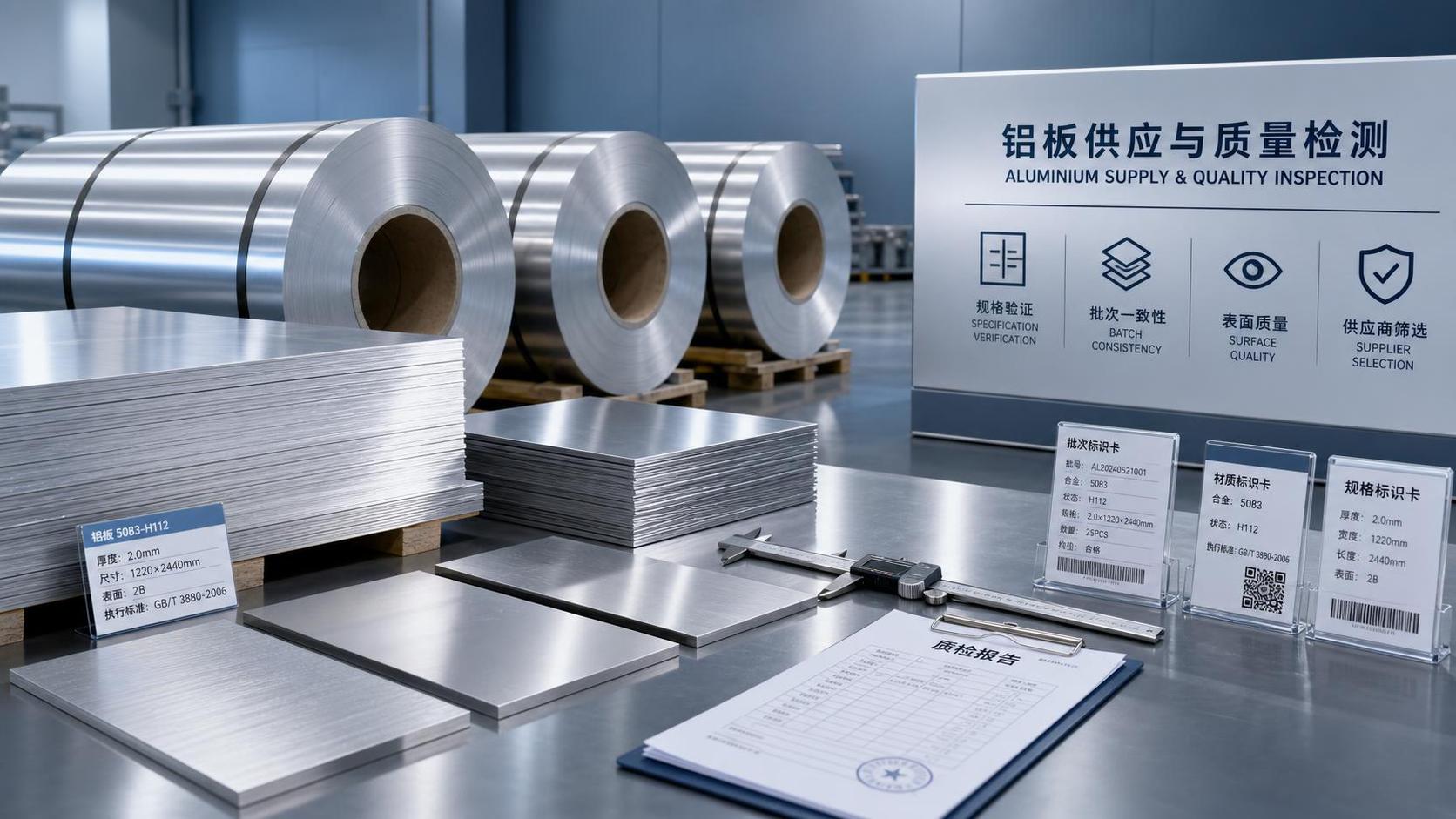
Start with the supplier’s actual production position
When buyers look for an aluminum sheet supplier in USA, the first mistake is treating every seller like a mill. Some are manufacturers, some are traders, and some are a mix of both. That difference shows up fast when you ask for lead time, custom sizes, temper options, or repeat orders across multiple batches.
Ask a simple set of questions: do they produce sheet themselves, what product range do they control directly, and what part is outsourced? A supplier with real production depth can usually discuss coil source, slitting or cut-to-length capability, thickness range, width limits, and how they handle scheduling when demand spikes. If answers stay vague, you are probably buying from a middle layer, which is not always a problem, but it changes your risk and your negotiating position.
Check whether the material matches the job, not just the quote
A low price on the wrong alloy or temper is expensive material. Buyers should pin down the exact requirement before comparing suppliers: alloy, temper, thickness tolerance, width, sheet length, surface finish, and intended use. A sheet for decorative panels, appliance housings, and stamped hardware does not need the same performance balance as one used in a structural or load-sensitive part.
This is where many sourcing discussions get sloppy. For example, if your application needs high formability, corrosion resistance, and easy processing, a supplier may recommend Aluminum sheets 1100 Series. That can make sense for lighting fixtures, signage, kitchenware, and general hardware components because 1100 is industrial pure aluminum with good bending, stamping, and welding properties. But it also has relatively low strength and is not meant for heat treatment, so it should not be substituted into a strength-driven application just because it is easy to buy.
Verify consistency across batches
One clean sample proves very little. The real test is whether the supplier can hold consistency over time. Procurement teams usually feel this problem later, on the shop floor: one batch bends cleanly, the next cracks at the edge; one lot paints evenly, the next oxidizes faster or shows a different surface tone.
Ask for the documents tied to the shipment, not just a generic brochure. Mill test certificates, heat or batch identification, dimensional inspection records, and packing details matter because they connect the delivered material to a traceable production lot. If your process is sensitive to surface quality, ask how they define acceptable marks, oil, scratches, and edge condition before purchase, not after a claim appears.
Look at tolerances like a manufacturing issue
Thickness and flatness are not paperwork items. They drive scrap, tooling wear, nesting efficiency, and downstream complaints. Buyers often focus on nominal thickness and forget the effect of tolerance spread across a full order.
If the supplier cannot speak clearly about these points, expect disputes later over what was “within spec.”
Review temper and processing fit
In aluminum sheet buying, temper is where a lot of hidden trouble starts. The same alloy behaves differently in O, H12, H14, H18, or other tempers. A buyer sourcing for stamping or deep drawing should not accept a general promise that the material is “easy to process.” The right question is whether the temper fits the actual forming route.
For common commercial applications, some suppliers offer temper ranges such as O, H111, H112, H12/H22/H32, H14/H24/H34, H16/H26/H36, H18/H28/H38, and H114/H194. That matters because your forming window, springback, and surface outcome will change with temper. Match the purchase specification to what your production line actually does.
Do not skip export and logistics capability
Even when the buying target is an aluminum sheet supplier in USA, the supply chain may still involve imported stock, overseas mills, or export packing standards. That makes logistics discipline part of supplier qualification. The material itself may be fine, but poor packing ruins flatness, edges, or surface condition before it reaches your warehouse.
Ask how sheets are packed, how moisture protection is handled, whether sheets and coils are shipped with protective separation where needed, and how bundle labeling ties back to documents. For larger-format orders, also check maximum available dimensions. In some supply programs, sheet can be offered up to 30 mm thickness, 2600 mm width, and 16000 mm length, or in coil form. That directly affects whether you can reduce secondary processing or consolidate vendors.
Make certifications and documents part of the buying decision
Do not ask a broad question like “Are you certified?” Ask which document will accompany the order and which field on that document confirms the material you are buying. Procurement needs records that support receiving inspection, internal quality release, and any later claim handling.
- Material grade or alloy identification
- Temper designation
- Lot or heat traceability
- Measured dimensions and quantity
- Any test record relevant to the order specification
That sounds basic, but it is often the difference between a manageable issue and a stuck dispute.
Pay attention to communication under pressure
A supplier is easy to deal with when the order is standard and the schedule is loose. The useful test is how they respond when you request a nonstandard size, a split shipment, a replacement claim, or a quick answer on processing behavior. Buyers should notice whether replies come back with technical clarity or just sales language.
If your application involves painting, polishing, conductivity, or reflective performance, bring that up early. Material such as Aluminum sheets 1100 Series may suit those needs because the surface is workable for painting and polishing and the alloy is known for high conductivity and high reflectance. But again, that only helps if the supplier can match the spec to the end use instead of pushing one stock item into every job.
How to screen suppliers without wasting a month
Use a short sequence. Start with technical fit: alloy, temper, dimensions, surface, and application. Then move to production control: who makes it, how lots are traced, and what inspection documents come with the shipment. After that, compare delivery capability, packing method, and response quality. Price belongs near the end, once you know you are comparing equivalent material.
The practical rule is simple: choose the supplier that can explain the material in the language of your process, document what they ship, and deliver it consistently. That is the supplier worth putting into your approved source list.
Leave A Message
If you are interested in our products and want to know more details, please leave a message here, we will reply you as soon as we can.