


Stainless Steel Grating Load Ratings: What Matters Before Specification
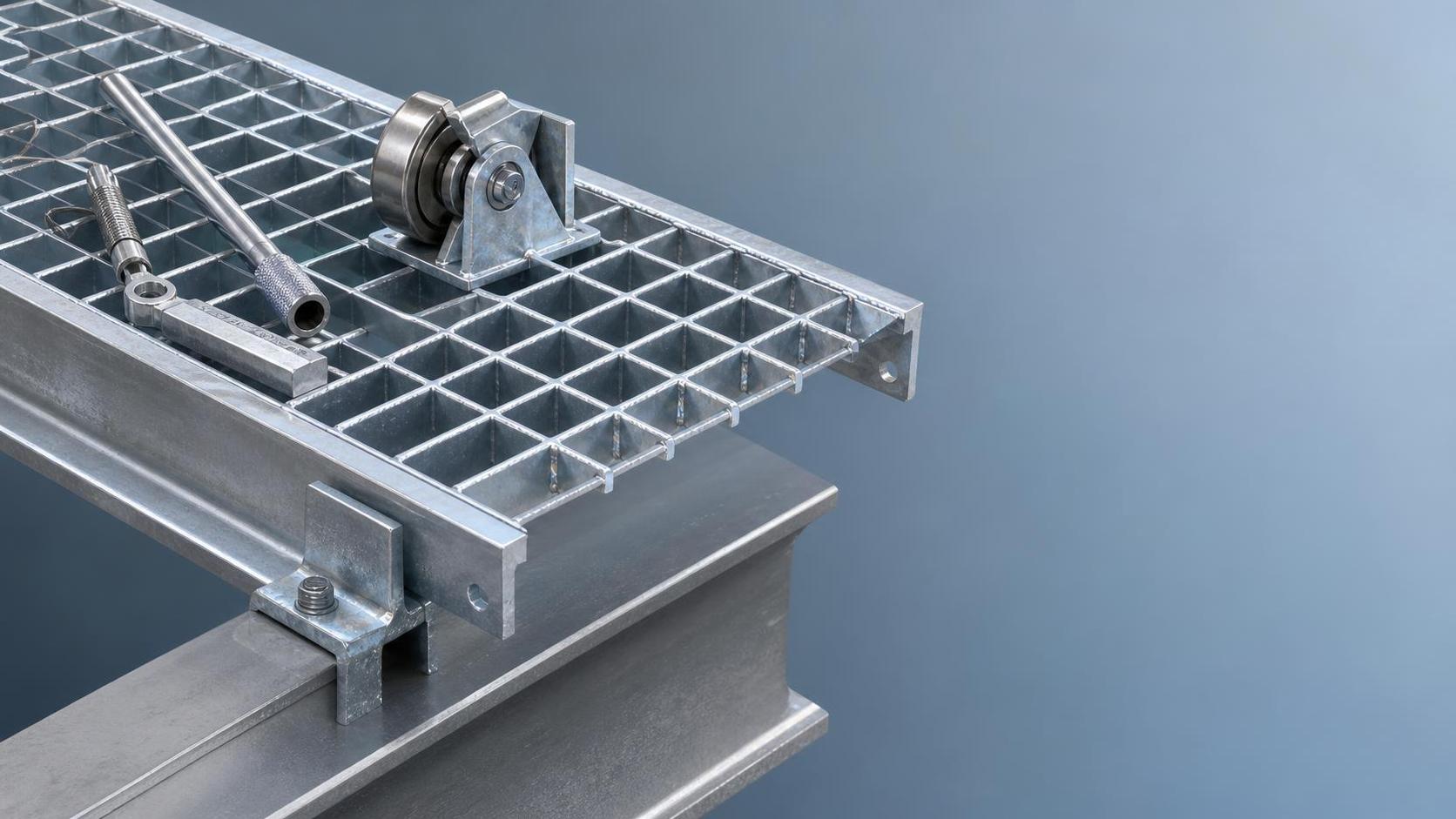
Start with the actual loading case, not the grating catalog
When stainless steel grating gets specified too early from a product table, the load rating discussion usually goes off track. Technical evaluators need to define the service case first: pedestrian traffic, maintenance access, rolling loads, equipment support, or occasional impact from handled materials. A walkway that only carries foot traffic is a different design problem from a platform where operators park carts, set tools down, or move small wheeled equipment across the panel.
That sounds basic, but it is where overdesign and underdesign both start. If the duty is described only as “industrial use,” suppliers may price against very different assumptions. Before you compare any stainless steel grating options, write down the load type, where it acts, whether it is static or moving, and whether the panel sees repeated traffic or only occasional access.
Check these inputs before you look at load tables
A load table is useful only if the input conditions match the real installation. In practice, these are the items worth checking first:
- Clear span between supports: not the nominal panel size, but the actual unsupported distance.
- Bearing bar direction: the panel must span on the bearing bars, not on the cross bars.
- Bearing bar size and spacing: these drive stiffness and capacity more than many buyers expect.
- Support condition: simple support, edge restraint, clips, welds, and intermediate supports all change performance.
- Load footprint: a concentrated wheel or point load behaves very differently from a uniform area load.
- Allowable deflection criteria: serviceability can reject a panel even when strength looks acceptable.
- Environment: corrosion, washdown chemistry, heat, and debris buildup affect grade selection and long-term safety.
If one of these is missing, the load rating comparison is not finished yet.
Span is usually the first thing that breaks the assumption
In review work, span errors show up constantly. Teams often pass around a panel length and call it the span, but load rating depends on the unsupported distance between bearing points. A few extra millimeters at each end may not matter much on a short panel. On longer runs, the difference can be enough to move a panel out of the acceptable range, especially when deflection limits are tight.
Also check whether the support is continuous and level. Grating seated on uneven steel can create local overloads on only part of the panel. If the framing has gaps, kick plates, cutouts, or interrupted support lines, rate the panel for the real support pattern, not the drawing ideal.
Do not treat all loads as uniform loads
This is one of the most expensive mistakes in industrial access design. Catalog values often emphasize evenly distributed loading because it is easy to compare. Real field conditions are messier. Toolboxes, valve actuators, maintenance trolleys, chain blocks, and small hard wheels all create concentrated loading. The panel may pass a uniform load check and still feel poor in service, or fail locally at a bearing bar under a narrow contact patch.
For technical evaluation, ask two simple questions: where does the heaviest single contact occur, and how large is its contact area? If the answer involves wheels, machine feet, or point support, ask for concentrated load verification, not just a distributed load table.
Bar spacing affects both strength and usability
Wider spacing may lower weight and improve drainage, but it also changes how load is shared and how the walking surface feels. For access platforms, spacing is not only a structural issue. Heel safety, dropped object risk, cleaning requirements, and debris passage all come into the decision. A panel that is structurally acceptable can still be wrong for operators if small tools regularly catch or if the surface feels unstable under foot.
That is why the specification should tie bar spacing to the application. Roof access, process platforms, offshore service, and enclosed plant interiors often need different tradeoffs even before grade selection enters the discussion.
Grade selection is part of load performance in service
On paper, load rating looks like a geometry question. In service, material grade matters because corrosion and temperature exposure can change how reliable that rating remains over time. In chloride-heavy, marine, chemical, or washdown environments, the wrong stainless grade may hold its initial dimensions but lose real-life durability where welds, cut edges, or connections see attack.
The practical check is straightforward: match the service environment to the grade selection notes in the project material schedule, then review whether the supports, clips, and adjacent metals follow the same corrosion logic. A good panel installed with incompatible fasteners is still a weak specification.
Deflection limits deserve their own line item
Many evaluations stop at load capacity and miss serviceability. That creates panels that are technically strong enough but unpleasant or unsafe to walk on. Excessive flex under foot traffic can affect confidence, vibration behavior, and equipment handling, even when the panel does not approach failure.
So when you compare stainless steel grating options, separate two checks: can it carry the load, and will it remain acceptably stiff in use? If the supplier submittal shows one but not the other, the review is incomplete.
Watch the edges, cutouts, and field modifications
The clean load rating in a table assumes an intact panel. Real installations include notches around columns, penetrations for piping, removable sections, banding interruptions, and field trimming. Those details can reduce local stiffness or shift the load path in ways that standard tables do not capture well.
Any panel with major cutouts or unusual support geometry should be reviewed as a special condition. That does not always require a complicated redesign, but it does require someone to stop pretending the standard catalog value still applies unchanged.
Keep the support steel and surrounding system in view
A correctly rated panel can still underperform if the framing below it is too flexible, misaligned, or poorly detailed. Grating and support steel work together. Technical evaluators should confirm support spacing, seat width, fastening method, and access panel restraint. Removable panels need extra attention, because field crews tend to prioritize easy removal while forgetting what that does to movement and bearing stability.
In mixed-material projects, this review often sits next to adjacent component selection. For example, support assemblies or secondary fabricated parts may be developed alongside Aluminum extrusion systems in machinery manufacturing, construction, or industrial device layouts. That does not change the grating rating method, but it does make interface detailing, corrosion compatibility, and support stiffness checks more important.
A short review table helps catch scope gaps
What to ask for before approval
Before signing off a specification or supplier submittal, make sure the package shows these items clearly:
- Panel orientation and actual support spacing.
- Bearing bar dimensions and spacing.
- The load case used for rating, including concentrated loads where relevant.
- Deflection basis or serviceability limit.
- Material grade and connection materials for the intended environment.
- Special review of cut panels, removable panels, and nonstandard supports.
The cleanest review sequence is simple: define the real load, confirm the true span, check the bearing bar layout, verify serviceability, then look at environment and detailing. That order catches most specification errors before they get built into steelwork, procurement, and site rework.
Leave A Message
If you are interested in our products and want to know more details, please leave a message here, we will reply you as soon as we can.