


How Aluminum Sheet for Aviation Balances Strength, Formability, and Weight
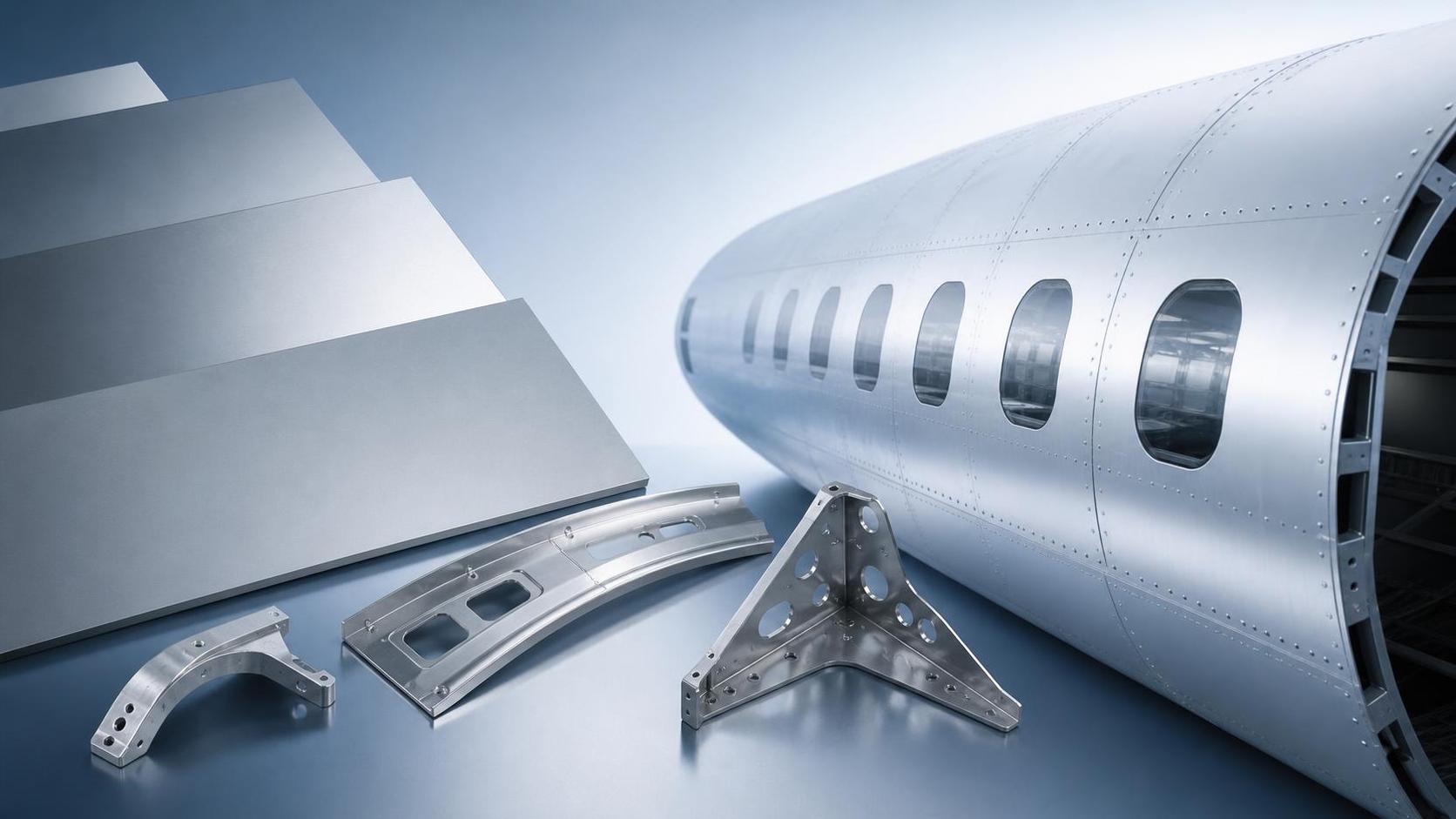
How Aluminum Sheet for Aviation Balances Strength, Formability, and Weight
For technical evaluators, choosing the right aluminum sheet for aviation starts where most material discussions become difficult: the same part rarely needs only one property. A fuselage skin, an interior support panel, a fairing, or a formed bracket may all be made from aluminum, but the selection logic changes with stress path, forming method, corrosion exposure, and how much dimensional stability the assembly process can tolerate. That is why aluminum sheet for aviation is never judged only by tensile strength or only by weight reduction. The workable answer sits in the interaction between alloy family, temper, sheet thickness, surface condition, and how the material behaves after forming.
In aircraft structures, weight is not a decorative target. Every unnecessary kilogram affects fuel burn, payload margin, and, in some platforms, range planning. Yet the lightest option is not automatically the right one. If a sheet is too soft, it may distort during fastening or lose shape consistency after forming. If it is too strong, the same sheet may crack at tight radii, require more complex tooling, or create scrap rates that erase any theoretical material advantage. This is why experienced buyers and engineers usually begin with the part function rather than the alloy catalog.
For skin panels and secondary structural components, the practical question is often stiffness-to-weight rather than ultimate strength alone. Thin-gauge sheet can save mass, but if panel waviness becomes difficult to control during riveting or bonding, the downstream assembly cost rises quickly. High flatness and stable thickness matter here more than many non-specialists expect. A sheet that looks acceptable in storage can still create fit-up problems once it reaches long panel lengths or complex subassemblies. In aviation work, surface quality is not just an appearance issue either; scratches, local dents, or rolling defects may interfere with inspection standards, protective finishing, or fatigue-sensitive areas.
Formed parts push the balance in a different direction. Seat components, interior panels, ducts, covers, and certain brackets often require bending, stamping, or stretch forming before final machining or joining. In those cases, good formability is not a convenience. It determines whether the part can be made repeatedly without edge cracking, springback surprises, or unstable dimensional results between batches. This is one reason lower-strength or medium-strength aluminum grades remain relevant even when stronger alloys exist. The manufacturing route sets the limit. A material that performs well in a datasheet comparison may still be the wrong choice if the shop floor needs multiple redraws, sharp bends, or tight cosmetic consistency.
This is also where buyers sometimes make a costly misread: they focus on the alloy number and overlook temper condition and processing history. In aviation-related fabrication, two sheets from the same broad alloy family can behave very differently in forming and finishing. If the part will be chemically treated, painted, bonded, or anodized, the surface must be consistent enough to support that process route. A technically strong sheet with unstable surface behavior creates quality drift later, not at incoming inspection.
Where the Selection Usually Changes
Three decision points tend to shift the material choice more than anything else:
Marine-derived atmospheric exposure, runway de-icing environments, and maintenance chemical contact all change the judgment. In these conditions, corrosion resistance becomes part of structural reliability, not just a durability add-on. That is one reason Al-Mg alloys are often discussed for demanding environments, while other alloy families are considered where forming ease or conductivity has more value. No single series covers every aviation need equally well.
Manufacturers with broad rolling capability usually see this divide clearly. Shandong Diwang Aluminum Technology Co., Ltd., for example, works across multiple aluminum series and application sectors, including aviation, automotive, marine, and industrial manufacturing. That kind of production overlap matters because aviation buyers often benefit from suppliers that already understand flatness control, mechanical consistency, and width or length flexibility across different end uses. It does not replace project-specific qualification, but it does improve the odds that the supplied sheet will behave predictably in processing.
Another point that comes up in technical reviews is whether a visually similar coil product can inform sheet selection logic. In some development or adjacent fabrication discussions, products such as Printed aluminum coil are not used as aviation structural material, but they do illustrate a supplier capability that evaluators often care about: high flatness, strong coating adhesion, corrosion resistance, and stable mechanical behavior over large-format material. Those traits matter differently in aerospace, but the underlying process discipline is still relevant when assessing a manufacturer’s control over rolled aluminum products.
What the Shop Floor Usually Reveals
Material suitability is often exposed not in the design office but at the press brake, stretch former, CNC table, or final assembly fixture. Buyers frequently ask why one batch forms cleanly while another shows edge tearing or inconsistent springback, even when nominal composition appears similar. The answer is usually a combination of temper control, residual stress, thickness tolerance, and surface condition. If the part geometry is demanding, these variables stop being secondary.
For that reason, evaluating aluminum sheet for aviation should include process questions, not only material questions. Will the part be stretch formed across a wide radius or bent sharply near a cut edge? Is it machined after forming, which may release stress and alter shape? Does the assembly rely on adhesive bonding, which raises the bar for surface cleanliness and consistency? Is the component hidden inside the airframe, or is it in a location where cosmetic defects can trigger rejection? These details often determine the better material choice faster than a generic property comparison.
There is also a cost trap worth mentioning. Teams sometimes assume that using a higher-performance alloy automatically improves the part. In practice, a material upgrade can increase tool wear, reduce forming yield, tighten handling requirements, and create procurement complexity without improving actual service performance. A lighter gauge may look efficient until local buckling, fastening deformation, or panel oil-canning appears. The best decisions usually come from matching the sheet to the true load case and fabrication route, then confirming whether the supplier can hold the necessary dimensional and surface consistency over production volume.
When the application sits near the boundary between structural need and appearance need, the specification should be especially disciplined. Flatness, defect limits, width, thickness, and allowable forming radius should be discussed together. Suppliers offering broad alloy coverage, from commercially pure aluminum and Al-Mn grades to Al-Mg and Al-Mg-Si series, can support that comparison more effectively because they are not forced into a one-alloy answer. That is often more useful than an aggressive sales claim.
The practical way to close a material decision is simple: define the part’s critical failure mode first, then review forming severity, environmental exposure, joining method, and allowable weight. If those conditions point in different directions, that is normal. The right aviation sheet is usually the one that stays balanced after manufacturing reality is added to the drawing.
Leave A Message
If you are interested in our products and want to know more details, please leave a message here, we will reply you as soon as we can.