


How Aluminum Sheet Custom Impacts Inventory and Cash Flow
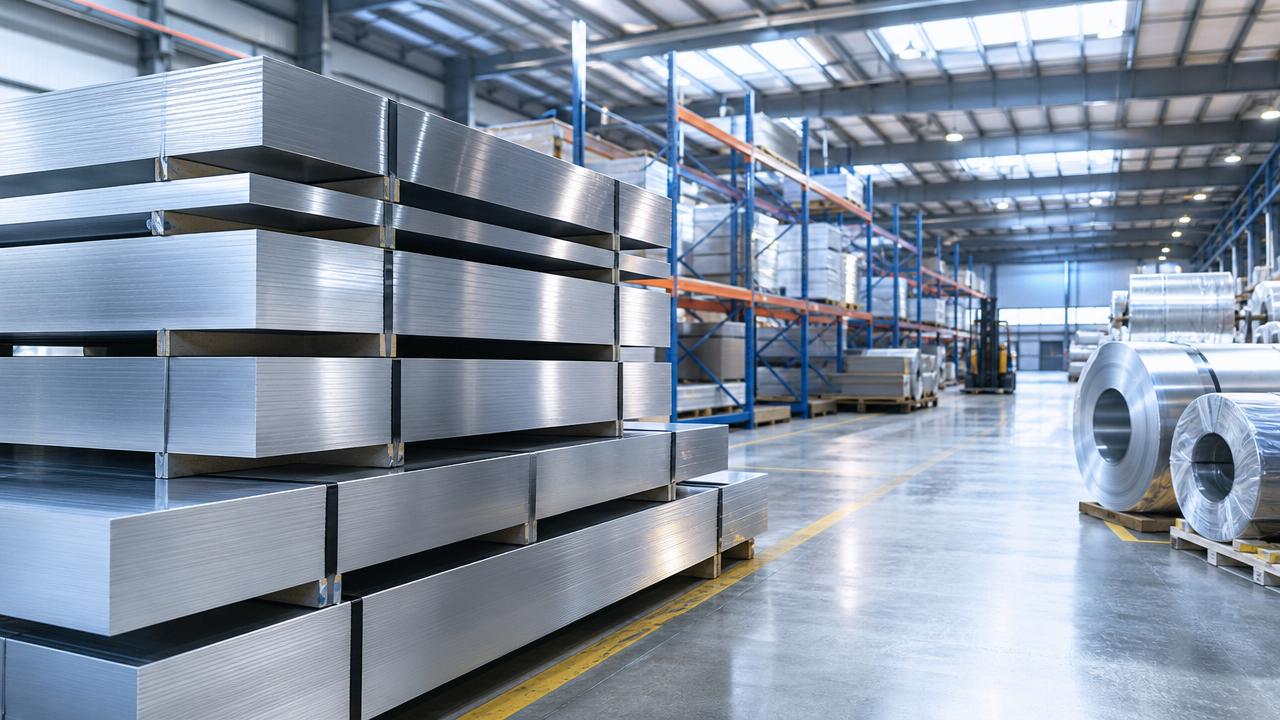
For finance decision-makers, aluminum sheet custom is more than a purchasing option—it directly affects inventory turnover, working capital, and cost control. By aligning material specifications with actual demand, companies can reduce overstock, avoid unnecessary cash tie-up, and improve supply chain efficiency. Understanding this impact is essential for balancing procurement flexibility with healthier cash flow management.
Why aluminum sheet custom matters to finance teams
When buyers search for aluminum sheet custom, their real question is usually financial, not technical. They want to know whether customization lowers total cost or quietly creates new cash flow pressure.
For finance approvers, the answer is nuanced. Custom aluminum sheets can improve inventory efficiency and reduce waste, but only when order volumes, lead times, and demand visibility are managed carefully.
Standard material often looks cheaper on a unit-price basis. However, standard stock may drive hidden costs through excess inventory, rework, scrap, storage, and slower conversion of purchased material into revenue.
What finance decision-makers care about most
Financial stakeholders usually focus on five questions before approving customized material procurement. How much cash will be tied up, how quickly will stock turn, what risks exist, and whether savings are measurable.
They also care about predictability. A purchasing model that reduces waste but introduces unstable delivery, higher minimum order quantities, or more complex forecasting may weaken working capital instead of improving it.
That is why aluminum sheet custom should be evaluated as a total operating model, not simply as a sourcing choice. The right decision connects procurement policy, production planning, sales demand, and cash discipline.
How custom aluminum sheets influence inventory levels
Customized sheets are usually ordered to exact thickness, width, length, temper, or surface needs. This can reduce the need to hold multiple standard sizes that are only partially suitable for different orders.
When a company buys general stock for convenience, it often builds safety inventory across many SKUs. Over time, this creates slow-moving material, duplicated stock positions, and higher warehouse carrying costs.
With aluminum sheet custom, businesses can consolidate specifications around actual production demand. That means fewer unnecessary SKUs, less material conversion loss, and better alignment between purchased inventory and planned output.
For example, if a manufacturer regularly trims standard sheets to match customer dimensions, it is paying for material that never becomes sellable product. Customized supply directly reduces this avoidable waste.
The direct link between custom orders and cash flow
Cash flow improves when inventory is purchased closer to real demand. Aluminum sheet custom supports this by reducing overbuying, shortening the distance between procurement and production use, and limiting idle material.
From a finance perspective, every extra ton sitting in storage represents trapped cash. It also creates secondary costs, including insurance, handling, quality risk, warehouse space, and potential markdowns on obsolete stock.
Custom ordering can help release working capital because the business no longer needs to maintain oversized standard inventories just to handle specification differences across projects or customers.
At the same time, finance teams must watch payment timing. If suppliers require deposits, long production windows, or large batch commitments, the cash flow benefit can shrink despite lower waste rates.
When aluminum sheet custom reduces total cost
Customization usually creates financial value in operations with repeat demand, clear specification control, and meaningful processing waste from standard stock. In these cases, savings often extend beyond material pricing alone.
The biggest gains typically come from reduced scrap, fewer secondary cutting steps, lower handling labor, simpler inventory structures, and improved production throughput. These are operational savings with direct financial impact.
It also helps when customer orders are specification-sensitive. If projects frequently require exact dimensions, special tempers, or industry-specific finishes, standard inventory may cause recurring mismatch and costly last-minute adjustments.
For companies serving engineering, machinery, transportation, or industrial manufacturing, tailored supply often supports more stable cost planning. That is especially true when raw material use is high and margins are closely managed.
When customization can hurt cash flow instead
Aluminum sheet custom is not automatically the better financial choice. It can hurt liquidity when order frequency is low, specification changes are frequent, or planning discipline is weak.
If procurement teams order custom material without reliable demand forecasts, they may create highly specific inventory that cannot be easily reused. This converts flexibility problems into balance sheet problems.
Finance approvers should also examine supplier minimums. A custom run may require larger volume commitments than actual near-term demand, causing excess stock despite the promise of specification accuracy.
Another concern is lead time volatility. If custom orders take longer than standard stock, companies may compensate by increasing buffer inventory, which partially reverses the intended working capital improvement.
Key metrics finance teams should use before approving
To assess aluminum sheet custom objectively, finance teams should compare more than quoted material prices. The better framework is total landed and consumed cost versus standard-stock purchasing behavior.
Start with inventory turnover. If customization can raise turnover by reducing unused stock and shortening time-to-consumption, it deserves serious consideration even if unit purchase price is slightly higher.
Next, review days inventory outstanding, scrap percentage, warehouse carrying cost, conversion yield, and order fill reliability. These metrics reveal whether customization improves operational cash efficiency or just changes spending categories.
It is also helpful to model working capital per sales dollar. If custom sourcing lowers inventory investment needed to support the same revenue level, the financial case becomes stronger.
Finally, compare gross margin after processing loss. A lower-priced standard sheet may actually deliver worse profit if trimming, rework, and production inefficiency consume the apparent savings.
How to build a practical approval framework
Finance decision-makers need a simple approval model that balances cost, risk, and liquidity. One useful approach is to separate custom demand into repeat, project-based, and experimental categories.
Repeat demand is usually the easiest to approve because usage patterns are visible and reorder cycles can be planned. Here, aluminum sheet custom often supports both inventory reduction and stronger purchasing discipline.
Project-based demand requires milestone-driven control. Finance teams should align purchasing volume with confirmed project schedules, customer payment terms, and realistic production release plans.
Experimental or uncertain demand should be treated cautiously. Unless the commercial upside is strong, standard material or smaller trial runs may protect cash better than fully customized procurement.
Supplier capability is a financial factor, not just a sourcing detail
Many approval decisions fail because buyers evaluate only the specification sheet. In reality, supplier capability strongly influences whether customization improves or damages cash flow.
A capable manufacturer can maintain quality consistency, stable lead times, and flexible production planning. That reduces the need for excess safety stock and gives finance teams more confidence in leaner inventory positions.
Shandong Diwang Aluminum Technology Co., Ltd., established in 2002, operates as an integrated manufacturer with design, research, production, and sales capabilities across aluminum and galvanized product lines.
With advanced production lines and broad export experience, such a supplier profile may support buyers seeking more predictable delivery and scalable supply for industrial applications in engineering, machinery, vehicles, and other sectors.
Supplier breadth can also matter when procurement needs extend beyond sheets. In some operations, complementary materials such as Aluminum Bar support consolidated sourcing and better vendor coordination.
How broader material planning strengthens working capital
Finance teams should not evaluate sheet customization in isolation. The real gains often come when customized sheet supply is part of a wider raw material strategy covering multiple aluminum formats and applications.
For example, some manufacturers use both sheets and bars in production or fabrication support processes. Aligning purchase cycles, payment terms, and supplier schedules across categories can reduce fragmented inventory decisions.
A product like Aluminum Bar may be available in multiple grades, tempers, shapes, and standards for construction, manufacturing, electrical, aerospace, and chemical equipment uses, supporting broader planning flexibility where needed.
This matters because working capital is affected by the whole material portfolio. A company may optimize sheet purchasing but still lose cash efficiency if adjacent material categories remain overstocked or poorly coordinated.
Best practices for using aluminum sheet custom without creating risk
First, connect custom purchasing to demand history, not assumptions. If a specification repeats consistently, it is a stronger candidate for customized supply than one-off or loosely defined requirements.
Second, negotiate lead times, batch sizes, and payment terms together. A good unit price does not help if deposits or oversized production lots put unnecessary pressure on operating cash.
Third, track material yield after implementation. Custom sourcing should reduce scrap and handling effort in measurable terms. If those savings do not appear, the buying strategy should be reviewed quickly.
Fourth, classify inventory by reusability. The more specialized the material, the more carefully finance teams should manage reorder triggers and internal approval thresholds.
Finally, keep procurement, operations, and finance aligned. Aluminum sheet custom creates value only when specification control, production scheduling, and cash planning support the same objective.
Final assessment for finance approvers
For finance decision-makers, aluminum sheet custom is best viewed as a working capital tool rather than a simple material option. Its value comes from reducing mismatch between inventory and actual production needs.
When demand is stable, waste is meaningful, and supplier execution is reliable, customization can improve inventory turnover, lower hidden operating costs, and protect cash flow more effectively than standard stock.
But when specifications change often, order visibility is poor, or custom minimums are too high, the model can create slow-moving inventory and tie up capital in harder-to-use material.
The best approval standard is practical and measurable: choose aluminum sheet custom when it reduces total consumed cost, shortens inventory holding time, and improves cash efficiency without increasing supply risk.
Leave A Message
If you are interested in our products and want to know more details, please leave a message here, we will reply you as soon as we can.