


Aluminum Sheet or Steel Sheet: Which Fits Weight-Sensitive Projects Better
Start with the weight target, not the material label
When a project is sensitive to transport load, installation effort, moving parts, or fuel and energy use, the aluminum-versus-steel decision needs to happen early. Waiting until procurement often creates a bad compromise: the team keeps the steel design, then tries to reduce thickness later and runs into stiffness, corrosion, or fabrication problems.
A practical way to assess it is simple: define where weight actually matters. Is it the full structure, the outer skin, removable panels, housings, roofing, marine sections, vehicle body parts, or covers around equipment? In many jobs, only part of the assembly is truly weight-sensitive. That is where Aluminum sheet usually earns its place fastest.
The real checklist project managers should run
If you are comparing Aluminum sheet with steel sheet for a live project, check these points in order instead of debating materials in the abstract.
- Check the weight limit that is driving the decision. If the limit comes from transport cost, crane capacity, manual handling, vehicle payload, or supporting frame load, write that number down first. Without that, teams tend to overvalue steel’s familiarity and undervalue how much mass reduction helps downstream.
- Separate strength from stiffness. This is one of the most common mistakes. Steel is often chosen because people say it is “stronger,” but the part may fail in service because of deflection, denting, or vibration, not tensile failure. For thin panels, covers, and skins, geometry, ribbing, embossing, and support spacing matter as much as the base metal.
- Map the corrosion exposure honestly. Outdoor use, coastal air, chemical splash, condensation, and poorly ventilated equipment rooms change the decision quickly. In those settings, Aluminum sheet often reduces the burden of protective maintenance. Steel can still work well, especially galvanized or coated products, but only if the coating system matches the environment and the cut edges, joints, and fastener areas are treated properly.
- Review forming and joining before release. If the design needs deep bending, roll forming, welding, punching, textured surfaces, or cosmetic finishes, bring fabrication into the discussion early. A material that looks cheaper on paper can become expensive once rework, tool wear, welding difficulty, and finish defects show up.
- Look at the installed-life cost, not just the sheet price. Freight, labor, lifting equipment, coating maintenance, replacement intervals, and scrap recovery can outweigh the initial price difference. This is where weight-sensitive projects often swing toward aluminum, especially when access for future maintenance is difficult.
Where Aluminum sheet usually fits better
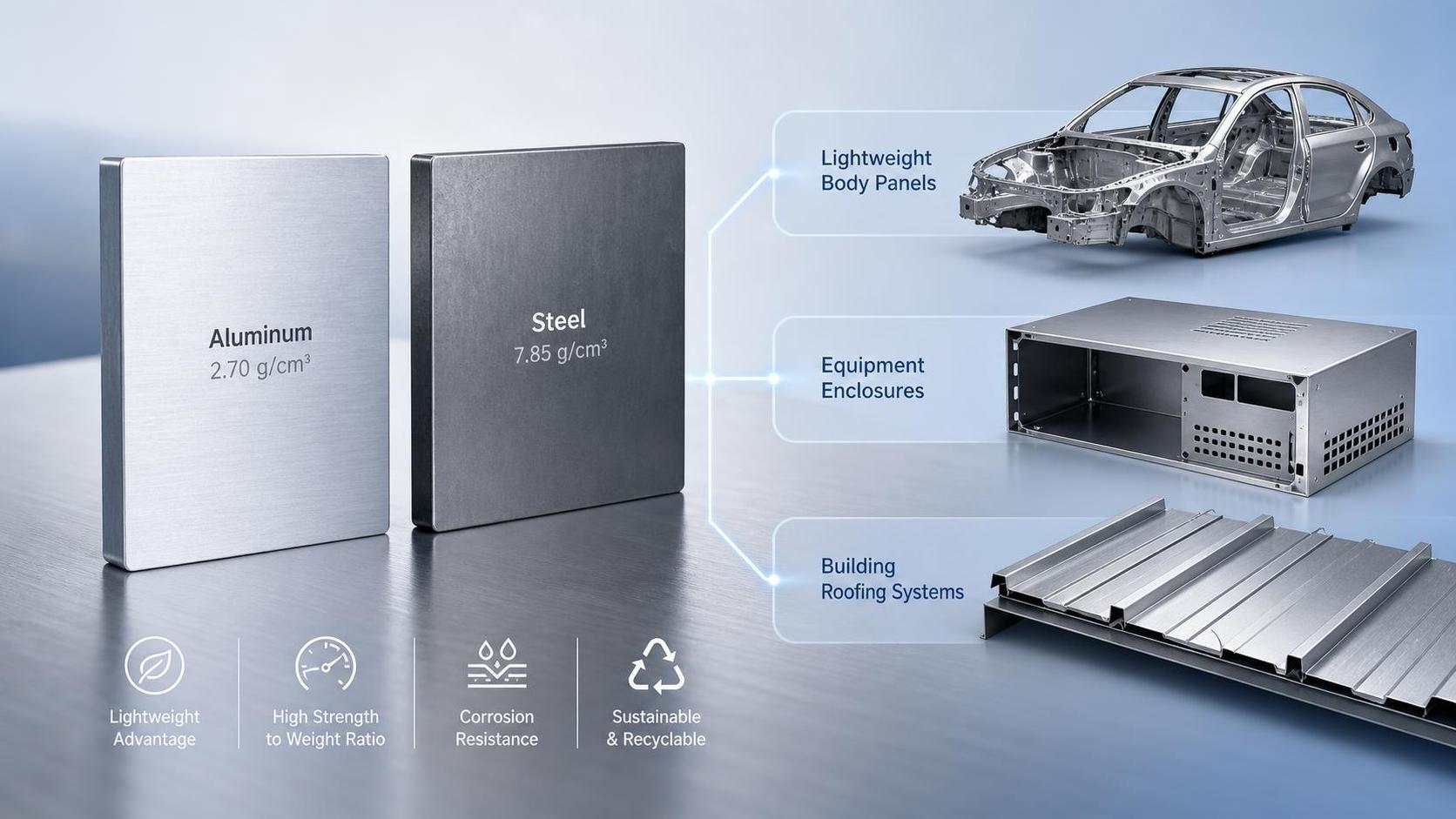
In practice, Aluminum sheet tends to make the most sense when the project is paying a penalty for excess mass. Vehicle body panels, transport equipment, roofing systems, equipment covers, curtain wall elements, marine components, and large fabricated enclosures are typical examples. The value is not just that the part is lighter. It is that lighter material can reduce handling effort, simplify support structures, and lower strain on the overall assembly.
It also helps when appearance and weather resistance matter at the same time. For exterior cladding, decorative surfaces, appliance panels, and architectural skins, aluminum gives more flexibility in finish and surface treatment while staying practical to process.
For projects that need textured surfaces for rigidity, slip resistance, or appearance, products such as Embossed Aluminum Coil can be relevant because they combine low weight with corrosion resistance, good flatness, and processability across applications like construction, automotive parts, exterior panels, containers, and industrial devices. That does not automatically make embossed material the right choice, but it is worth checking when a plain sheet feels too flexible or visually plain for the job.
Where steel sheet still wins
There are plenty of cases where steel remains the better answer. If the part is heavily loaded, impact-prone, cost-driven, and the weight saving does not unlock any transport or operating advantage, steel sheet may be the cleaner choice. The same applies when the project already has established tooling, welding procedures, coating lines, and field repair methods built around steel.
Another point that gets missed: if the design is thick, compact, and not moving, the weight penalty may be negligible compared with the simplicity of staying with steel. In that case, switching only for the sake of “going lighter” can create purchasing and fabrication complexity without improving the result.
A fast comparison for decision meetings
Questions to send to suppliers before you decide
Good material selection gets easier when you ask for the right documents and dimensions. For either metal, do not stop at a generic product name.
- Ask for the exact alloy or grade, temper or condition, and available thickness range.
- Confirm sheet or coil form, maximum width, and length limits against your nesting and fabrication plan.
- Check whether the part will be bare, painted, color-coated, galvanized, or embossed, and how that affects forming and edge treatment.
- For welded assemblies, request joining recommendations for the chosen alloy or coated steel surface.
- For visible surfaces, verify flatness and finish consistency requirements before ordering production quantity.
This is also where a broader supplier base matters. Manufacturers serving engineering, machinery, automotive, shipbuilding, and architectural applications are usually better prepared to discuss the tradeoffs between coated steel and aluminum forms than traders who only quote by tonnage.
The mistake that causes the most rework
Teams often compare one aluminum option against one steel option too early. That is not a real evaluation. The right comparison is system against system: part weight, support spacing, corrosion plan, joining method, finish, logistics, and service life. Once you do that, the answer becomes clearer. If lower mass improves transport, installation, operation, or corrosion performance, Aluminum sheet is often the better fit. If the project gains little from weight reduction and needs a hard-working, cost-focused solution, steel sheet may stay ahead.
For most project managers, the cleanest path is this: define the weight penalty, review the environment, test the fabrication route, then price the whole installed solution. If two options are still close, move the lighter one forward only when it also protects you on corrosion, handling, or maintenance. That is usually the point where the material choice stops being a debate and starts being a sound project decision.
Leave A Message
If you are interested in our products and want to know more details, please leave a message here, we will reply you as soon as we can.