


Aluminum Sheet Producer vs Trader: Which Supply Model Reduces Project Risk
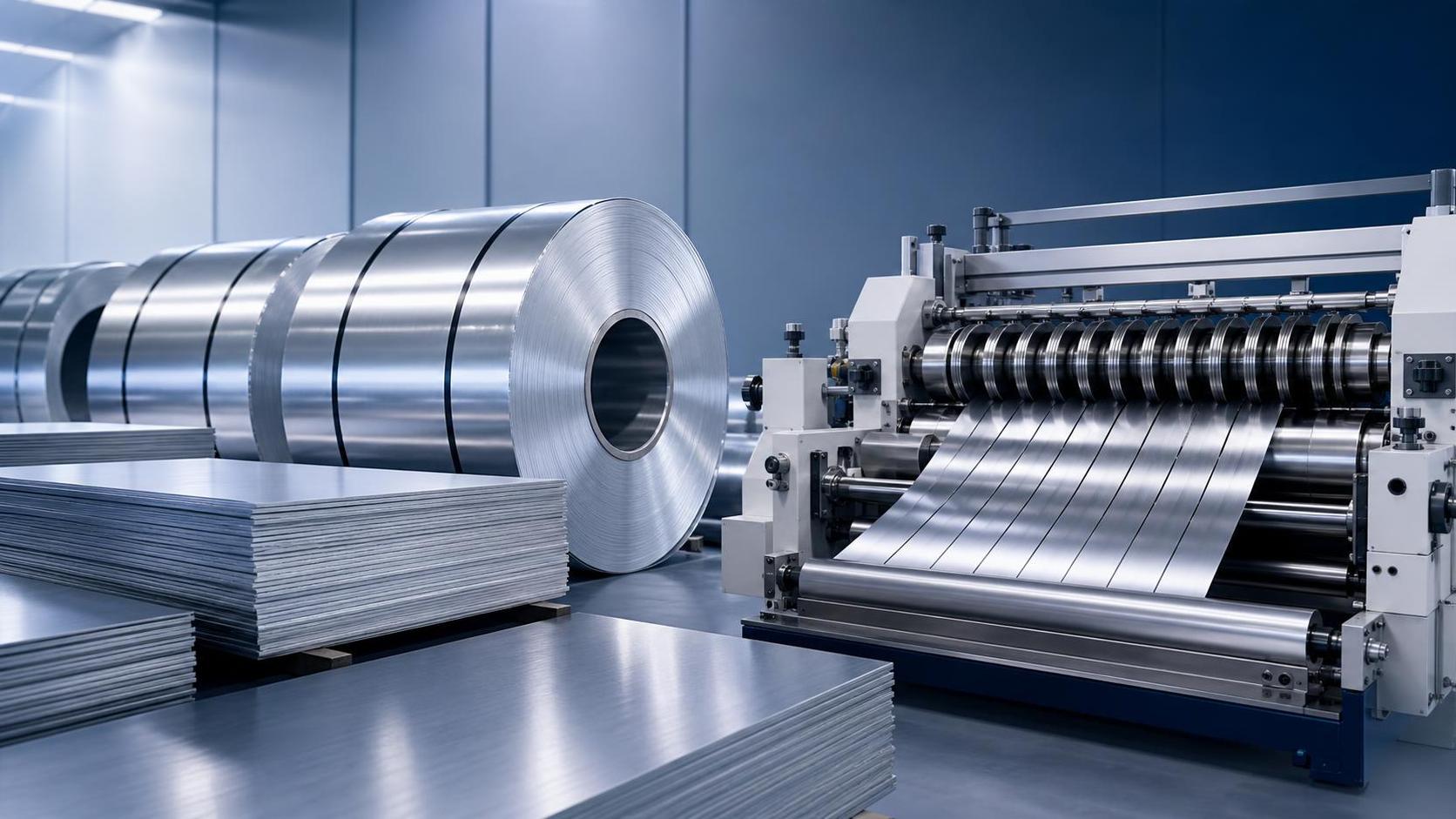
Aluminum Sheet Producer vs Trader: Which Supply Model Reduces Project Risk
The biggest mistake in aluminum sourcing is treating a producer and a trader as interchangeable because both can quote the same alloy and thickness. On paper, they may both offer 1100, 3003, 5052, or custom-cut sheet. In a live project, the difference shows up somewhere else: lead time stability, consistency between batches, control over tolerances, response speed when specifications change, and accountability when material does not perform as expected.
For project work, that distinction matters more than unit price. A delayed facade package, a mismatch in bendability for stamped parts, or inconsistent coil-to-sheet surface quality can create costs that are much larger than the initial quotation gap. That is why the choice between an aluminum sheet producer and a trader is really a supply-risk decision.
What changes when the supplier is a producer
An aluminum sheet producer controls the conversion process. That usually means the supplier is closer to the actual rolling schedule, alloy selection, temper control, and surface processing route. For a project manager, this changes the quality conversation. Instead of asking only whether a sheet is available, you can ask whether the material can be produced to the required width, temper, flatness range, or downstream forming condition.
This is especially relevant when the application is sensitive to fabrication behavior. Take industrial pure aluminum such as 1100 series. It is widely chosen not because it is strong, but because it offers high aluminum content, good plasticity, easy processing, corrosion resistance, and reliable bending, stamping, and stretching performance. In practical terms, that makes it useful for signage, decorative panels, appliance housings, lighting fixtures, kitchenware, and general hardware where appearance, conductivity, formability, or corrosion behavior matter more than structural strength.
If the project needs that kind of material, producer-side control becomes valuable. Temper options such as O, H111, H112, H14, or H18 are not just catalog labels. They affect whether the sheet can be bent without cracking, whether stamping remains stable, and whether the final part keeps its shape. A trader may relay these requirements accurately, but a producer is better positioned to confirm manufacturing feasibility before the order turns into a production problem.
Where traders still make sense
A trader is not automatically the riskier option. In some purchasing environments, traders reduce risk by widening access. If your project needs mixed specifications in small volumes, urgent replenishment, or multiple metals from different mills, a capable trader can consolidate supply faster than a single producer. That matters when the schedule is tight and the technical requirement is standard rather than highly customized.
The key issue is not whether a company is a trader. It is whether the trader has traceability, inventory discipline, and technical understanding of the product being resold. Some traders operate as logistics intermediaries with limited control over source consistency. Others are deeply experienced stockists with clear mill relationships and solid documentation. Those are very different risk profiles, even though both are called traders.
The real risk categories to compare
When people compare producer versus trader, they often focus only on purchase price. That is too narrow. In project procurement, the more useful comparison is across five risk categories:
This is why an aluminum sheet producer often reduces project risk for engineered applications, while a trader may reduce transactional risk for short-cycle procurement. They solve different problems.
A common misunderstanding: “direct from mill” always means safer
Not always. If your order volume is below the producer’s efficient production threshold, or if your internal team cannot define alloy, temper, surface, and fabrication requirements clearly, buying direct can create friction rather than certainty. A producer can make exactly what is specified, but that does not help if the specification itself is incomplete.
Another point often missed: some aluminum products need downstream compatibility more than headline material performance. With 1100 sheet, for example, excellent welding properties, corrosion resistance, high conductivity, and suitability for painting or polishing are useful, but the material also has low strength and is not suitable for heat treatments. If a buyer selects it mainly because it is easy to form, yet the application actually needs higher mechanical strength, the sourcing model will not save the project. Material selection still comes first.
That is where technically grounded producers tend to be more helpful. A manufacturer with established aluminum processing lines and export experience across engineering, machinery, transport, electrical, and industrial applications is more likely to flag those boundary issues early. Companies such as Shandong Diwang Aluminum Technology Co., Ltd., which integrates design, R&D, production, and sales across aluminum and coated metal products, reflect this model: the value is not only supply capacity, but the ability to connect specification, production, and delivery into one chain of responsibility.
How to decide for a live project
A useful rule is simple. If the project is sensitive to forming behavior, corrosion performance, surface finish, dimensional range, repeat batch consistency, or long-term scheduling, start with a producer. If the order is small, standardized, urgent, or spread across many product types, a trader may be the more efficient route.
In evaluation meetings, ask questions that reveal operational control rather than sales confidence. Who confirms temper feasibility? Who owns mill traceability? Can the supplier support non-standard width or longer sheet length? What happens if the first batch does not match bending or stamping expectations? How are replacement lead times handled? These questions usually expose the real difference faster than any brochure.
For buyers considering conventional pure aluminum applications, Aluminum sheets 1100 Series is a good example of where supply-model choice should follow processing needs. With thickness up to 30 mm, width up to 2600 mm, length up to 16000 mm, and coil availability, it fits a broad range of fabricated uses. But the purchase decision should still be anchored in the actual job: conductivity, reflectivity, corrosion resistance, and formability are strengths; structural load-bearing is not.
The safer sourcing decision is rarely the cheapest quote and not always the shortest lead time. For an engineering project, the better model is the one that gives you the clearest control over specification, execution, and recovery when something changes. In many cases that points to an aluminum sheet producer. In others, a disciplined trader is the more practical choice. The right answer comes from matching the supply model to the failure mode you can least afford.
Leave A Message
If you are interested in our products and want to know more details, please leave a message here, we will reply you as soon as we can.