


What Affects Aluminum Sheet Custom Pricing Most in 2026
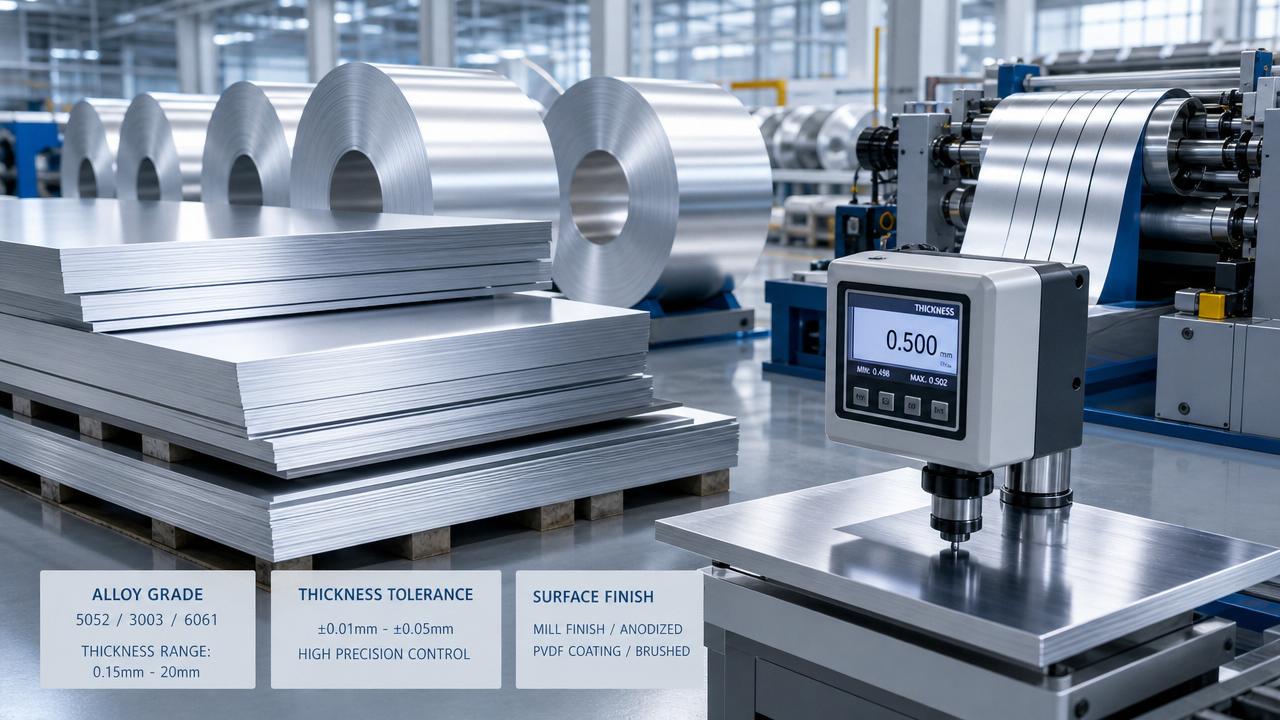
In 2026, aluminum sheet custom pricing is shaped by more than raw material costs alone. For procurement teams, factors such as alloy grade, thickness tolerance, surface treatment, order volume, and supplier production capacity can all make a measurable difference. Understanding these cost drivers helps buyers compare quotes more accurately, control budgets, and choose reliable manufacturers for long-term supply.
For buyers in engineering, transportation, machinery, power equipment, and industrial fabrication, the challenge is not simply finding a lower number per ton. The real task is identifying which quote reflects stable quality, realistic lead time, process capability, and manageable total procurement risk.
In the metallurgical materials sector, custom aluminum sheet orders often involve multiple variables at once: alloy selection, gauge range, width, temper, coating, packaging, and inspection requirements. When these variables are not compared line by line, two offers that look similar can differ significantly in final cost and downstream usability.
Key Cost Drivers Behind Aluminum Sheet Custom Pricing
The price of aluminum sheet custom supply usually starts with the aluminum ingot or coil market, but that is only the base layer. In practice, 6 major elements tend to have the strongest influence on procurement cost in 2026.
1. Alloy grade and temper
Different grades such as 1050, 1060, 3003, 5052, and 6061 carry different alloying costs and processing complexity. For example, a general-purpose 1xxx series sheet is usually priced lower than a 5xxx or 6xxx grade because magnesium, manganese, and heat-treatment related requirements add production steps.
Temper also matters. H14, H24, O, and T6 conditions require different rolling, annealing, or heat-treatment routes. If the buyer requests tight mechanical property consistency across 3 to 5 batches, the supplier may add a premium for process control and testing.
2. Thickness, width, and tolerance range
A 0.5 mm sheet and a 5.0 mm sheet do not move through the same production rhythm. Thin gauges often require stricter flatness control, while thicker plates may involve different cutting and leveling loads. The narrower the thickness tolerance, such as ±0.03 mm instead of ±0.10 mm, the higher the likely production cost.
Custom widths also affect yield. If a mill mainly runs standard coil widths and your project requires uncommon slitting dimensions, material loss can rise by 2% to 6%. That waste is usually built into the quotation.
3. Surface treatment and finish expectations
Mill finish is generally the most economical option. Brushed, anodized-ready, coated, embossed, or laminated surfaces require additional operations, labor hours, and inspection. Surface uniformity requirements become even more important for visible architectural or appliance applications.
If procurement specifications include scratch limits, edge burr standards, or film protection, the added handling time can influence price by a noticeable margin, especially for export packing or mixed-size orders.
4. Order volume and production batching
Volume remains one of the clearest pricing levers. A trial order of 1 to 3 tons normally carries higher setup cost per ton than a 25-ton or 100-ton repeat order. Tooling adjustment, sample confirmation, packaging preparation, and machine scheduling are spread across fewer units in small runs.
For procurement managers planning annual demand, consolidating monthly requirements into quarterly releases can reduce processing inefficiency and improve quote stability. In many industrial settings, suppliers respond more favorably to predictable 3-month to 12-month schedules than to fragmented emergency orders.
The table below shows how typical custom factors influence the final quotation structure in aluminum sheet sourcing.
For procurement teams, the key lesson is that aluminum sheet custom pricing is rarely a single-variable exercise. A lower unit price may hide broader tolerances, longer lead times, or less stable repeatability.
5. Supplier production capacity and equipment match
Capacity affects both price and reliability. A manufacturer with multiple lines can schedule custom work more efficiently than a small converter working around limited machine availability. Shandong Diwang Aluminum Technology Co., Ltd., established in 2002, operates with more than 300 employees and 5 domestically advanced aluminum coil production lines, with annual output reaching 900,000 tons.
That scale matters for buyers because larger production systems can better support recurring contracts, mixed product demand, and export packing coordination across aluminum sheets, coils, rods, foil, tubes, alloys, and profiles. In practical sourcing terms, stronger capacity can reduce rescheduling risk during peak demand cycles.
6. Packaging, logistics, and export compliance
For international orders, packaging is not a small detail. Wooden pallets, waterproof wrapping, corner protection, labeling, and container loading plans all add measurable cost. A shipment intended for marine transport over 20 to 40 days typically requires stronger moisture protection than inland truck delivery.
If your aluminum sheet custom order is going to sectors such as aviation, automotive, ships, electricity, or military-support manufacturing, document control and inspection records may also be tighter, which can influence quoting lead time and administrative cost.
How Procurement Teams Should Compare Quotes in 2026
A smart quotation comparison should go beyond unit price. Buyers should evaluate at least 4 dimensions at the same time: material match, process capability, delivery reliability, and commercial clarity. This reduces the risk of approving a quote that looks attractive but creates extra cost after arrival.
Build a specification sheet before RFQ release
Many pricing gaps begin with incomplete RFQs. Before requesting bids, define alloy, temper, thickness, tolerance, width, length, surface condition, edge type, film requirement, and destination packing. A complete sheet can cut unnecessary quote revisions by 2 to 3 rounds.
Recommended RFQ checklist
- Alloy and temper, such as 3003-H24 or 5052-H32
- Thickness and tolerance, for example 1.2 mm ±0.05 mm
- Sheet size, coil slit width, or cut-to-length requirement
- Surface standard, protective film, and acceptable scratch level
- MOQ, annual volume, and target delivery cycle such as 15–30 days
- Testing, certificate, and packaging requirements for export or project use
The next table can help procurement personnel compare suppliers on a practical basis instead of relying only on headline price.
This comparison method is especially useful when sourcing from suppliers serving multiple industrial sectors. A broader product range often helps buyers align standard sheet procurement with related galvanized or coated materials under a more efficient purchasing plan.
Watch for hidden cost in “low” quotes
Low offers can become expensive if they exclude trimming loss, package upgrades, film protection, test reports, or claim handling terms. Procurement staff should ask at least 5 follow-up questions before approval: What tolerance is guaranteed? What packing is included? What is the exact lead time? What claim window applies? What replacement process is offered for nonconforming batches?
In many cases, the best aluminum sheet custom supplier is not the one with the cheapest spot quote, but the one that provides stable repeat quality across 6 months or 12 months of scheduled releases.
Use cross-product sourcing to improve negotiation leverage
Many industrial buyers do not purchase aluminum sheets alone. They may also require galvanized coils, color-coated material, roofing products, foil, rods, or profiles for different project stages. Combining demand can strengthen annual negotiation and simplify logistics management.
For example, some applications exposed to weather or corrosion may involve both aluminum and coated steel solutions. In such cases, products like Galvalume coils can complement procurement planning. Made with 55% aluminum, 43.4% zinc, and 1.6% silicon through a hot-dip coating process, they develop a dense quaternary crystalline structure and combine the physical protection of aluminum with the electrochemical protection of zinc.
This matters because procurement decisions are often made at the system level, not just by single SKU price. When one supplier can support aluminum sheet custom orders together with corrosion-resistant coated products for roofing, fabrication, or structural cover applications, buyers may lower coordination cost and improve shipment planning.
Practical Buying Strategies to Control Aluminum Sheet Custom Cost
Once the main cost variables are understood, procurement teams can move from reactive price checking to proactive cost control. The most effective strategies usually involve planning, standardization, and supplier communication.
Standardize where customization is not essential
Not every parameter needs to be fully customized. If your production line can accept 2 standard widths instead of 5 nonstandard sizes, yield loss and setup time can fall. The same applies to packaging type, film color, and edge finish. Limiting unnecessary variation often reduces both price and delivery uncertainty.
Forecast demand in rolling cycles
A 90-day forecast with monthly call-off releases gives suppliers more room to reserve material and machine time. This is often more effective than placing urgent weekly orders. In unstable raw material periods, a rolling forecast can also support better discussions around price validity windows and batch locking.
Request samples for critical applications
For sectors such as aviation support, automotive parts, shipbuilding, electrical cabinets, and textile machinery, visual finish and forming performance can be as important as chemistry. A sample check or pre-production batch of 100 to 500 kg may help avoid larger claim risk later.
Evaluate supplier export experience
Shandong Diwang Aluminum Technology Co., Ltd. exports aluminum products to more than 30 countries, which is relevant for buyers who need consistent international documentation, practical packaging experience, and communication around multi-market shipment requirements. Experience across engineering, coal mining, textiles, electricity, machinery, aviation, automobiles, and ships also helps a supplier understand diverse specification logic.
For procurement teams, that type of industry coverage can shorten technical clarification time. It may also improve the supplier’s ability to recommend the right alloy family or processing route based on actual use conditions rather than generic catalog descriptions.
Common Procurement Questions in 2026
Is the lowest quote usually the best choice?
Not always. If the quote has wider tolerance, longer lead time, weaker packaging, or unclear claims handling, the total landed cost can be higher. Procurement should compare at least 4 to 6 commercial and technical items together.
How much does MOQ affect custom pricing?
MOQ can strongly affect cost because setup and handling charges are spread over total tonnage. Small orders under 3 tons are often less efficient than planned lots above 20 tons, especially when multiple custom sizes are involved.
What lead time should buyers expect?
For common alloy and dimension combinations, production may fall in the 15 to 30 day range, depending on schedule and finishing requirements. More specialized tolerances, coatings, or export packaging can extend the cycle.
How can buyers reduce price fluctuation risk?
Use clear RFQs, bundle forecast demand, define a price validity period, and discuss release schedules in advance. In longer supply programs, periodic review every 30 to 90 days is often more practical than relying on one-off spot pricing.
In 2026, successful aluminum sheet custom sourcing depends on understanding how alloy choice, tolerance, finish, volume, capacity, and delivery terms interact. Buyers who compare quotes by total procurement value instead of unit price alone are better positioned to control cost, reduce quality disputes, and maintain stable supply.
If you are evaluating custom aluminum sheet supply for industrial, engineering, or export applications, working with a manufacturer that combines production scale, multi-product capability, and international shipment experience can improve both pricing transparency and execution reliability.
To discuss your specifications, request a tailored quotation, or review related aluminum and coated metal solutions, contact us today to get a custom plan and product details for your next procurement cycle.
Leave A Message
If you are interested in our products and want to know more details, please leave a message here, we will reply you as soon as we can.