


Key Quality Checks for Aluminum Sheet Custom Before Shipment
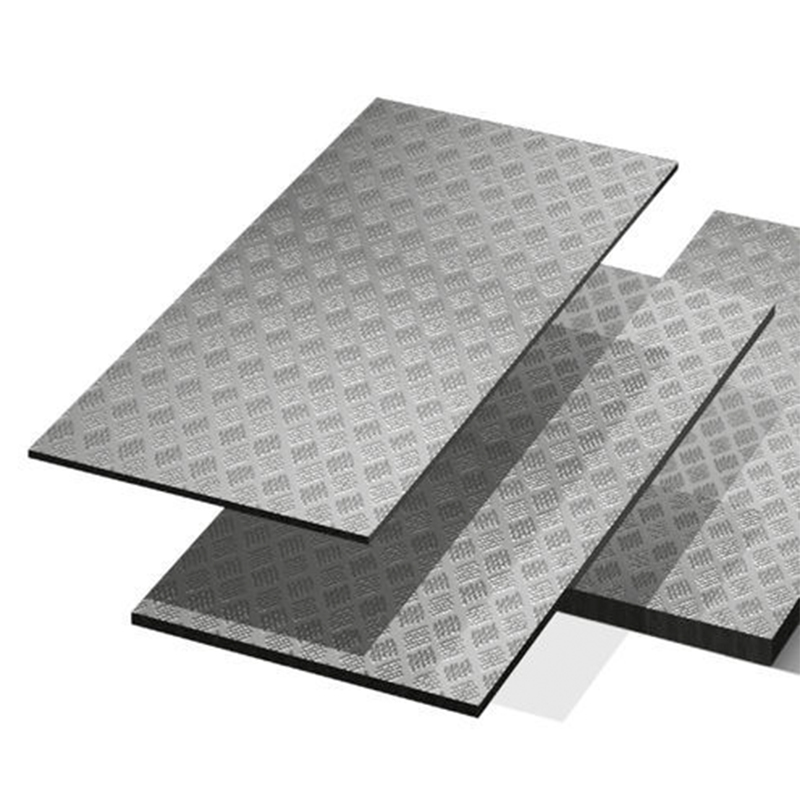
Before any aluminum sheet custom order leaves the factory, strict quality checks are essential to ensure safety, performance, and compliance. For quality control and safety managers, understanding these pre-shipment inspections helps reduce risk, prevent costly claims, and guarantee product consistency. This article outlines the key checks that protect both operational standards and customer trust.
What Is the Real Search Intent Behind “aluminum sheet custom”?
Most readers searching this topic are not looking for generic product promotion. They want a practical pre-shipment inspection framework for custom aluminum sheet orders.
For quality control and safety managers, the core concern is simple: how to verify that each batch matches specifications before release, and how to avoid downstream failure.
That means the most valuable content is not basic aluminum theory. It is a usable checklist covering dimensions, surface quality, mechanical properties, traceability, packing, and compliance evidence.
Why Pre-Shipment Checks Matter More for Custom Orders
Standard stock material is easier to control because specifications are fixed. An aluminum sheet custom order usually includes special alloy, temper, thickness, coating, width, or end-use requirements.
Once those requirements change, the risk of mismatch increases. A sheet may meet general standards yet still fail the customer’s actual processing, forming, welding, or corrosion-resistance needs.
For example, a batch intended for transportation or curtain wall use may require high flatness, uniform appearance, and stable mechanical performance across the full lot.
If defects are discovered after shipment, the costs multiply quickly. Claims may involve return freight, production delays, replacement commitments, rework, and serious credibility damage.
Start With Order Review and Specification Confirmation
The first quality check happens before physical inspection begins. Quality teams should compare the production order, contract, drawing, and internal process card line by line.
Key points include alloy grade, temper condition, thickness tolerance, width, length, coating requirement, surface finish, packaging method, and destination-specific compliance standards.
For aluminum sheets used in architectural decoration, automotive panels, marine environments, or industrial mould applications, even small deviations can create processing or safety problems.
Common grades may include 1050, 1060, 3003, 5052, 5083, 5754, 6061, and 6082, but the inspection standard must always follow the customer specification first.
Check Chemical Composition and Material Identity
For safety-critical or performance-sensitive applications, confirming material identity is essential. The shipment should match the declared alloy, not simply a similar commercial substitute.
Quality personnel should verify mill test certificates and, where required, use spectrometric testing to confirm the main alloying elements and their allowable ranges.
This is especially important for Al-Mn, Al-Mg, and Al-Mg-Si alloy products because corrosion resistance, weldability, and strength depend heavily on composition consistency.
Without this step, a wrong alloy can pass visual inspection but fail in service, particularly in marine, transport, external wall, or chemical exposure environments.
Dimensional Inspection Is a Shipment Gate, Not a Formality
Dimensional accuracy is one of the most common sources of claims in aluminum sheet custom projects. Inspectors should not rely only on production records.
Actual measurement must confirm thickness, width, length, squareness, edge quality, and, where specified, flatness across representative samples from every lot.
Thickness variation matters because it directly affects weight, structural performance, forming behavior, and coating consumption. Width and length errors may stop downstream cutting or assembly.
For products with thickness up to 30 mm, width up to 2600 mm, or length up to 16000 mm, suitable instruments and calibrated methods are necessary.
Flatness should also be checked carefully. High flatness means the surface is smooth and free from obvious waviness, indentation, bulging, or uneven deformation.
Surface Quality Often Determines Customer Acceptance First
Even when mechanical data is qualified, visible surface defects can trigger immediate rejection. For many buyers, appearance is the first acceptance criterion after unpacking.
Inspectors should examine both sides of the sheet under appropriate lighting conditions. The review should cover scratches, dents, roller marks, oil stains, edge cracks, corrosion spots, and contamination.
If the material is for decoration, home appliances, curtain walls, automobile decoration, or visible exterior applications, stricter standards for color and finish are usually required.
Uniformity of colour must be consistent, with no obvious colour difference between sheets or coils from the same order. This is especially relevant for coated products.
When evaluating finished material such as Aluminum sheets, inspectors should also document any acceptable defect limits clearly before release.
Mechanical Property Testing Should Match the End Use
Not every order needs the same testing intensity, but quality managers should align tests with application risk. Tensile strength, yield strength, elongation, and bend performance are common checks.
For transportation, automotive body sheets, mechanical components, marine grade plate, and semiconductor equipment uses, poor mechanical consistency can create serious service problems.
Different tempers such as O, H14, H24, H32, H34, H116, H321, or F indicate different forming and strength behavior, so inspection must reflect the ordered condition.
Some customers may also require proof of fatigue strength, weldability, or suitability for anodic oxidation, depending on the manufacturing route that follows delivery.
Where coated or treated surfaces are involved, performance after bending should be checked to ensure there is no cracking, peeling, or loss of adhesion.
Coating Adhesion and Corrosion Resistance Need Practical Verification
If the custom order includes painted, color-coated, or otherwise finished aluminum, visual approval alone is not enough. The coating must remain stable during transport and use.
Cross-hatch adhesion testing, impact resistance checks, and bend tests can help confirm strong coating adhesion between the substrate and the coating layer.
For outdoor or aggressive environments, quality teams should also verify resistance to fading, chalking, discoloration, and chemical attack where the specification requires it.
Strong corrosion resistance is especially critical in engineering, shipbuilding, coastal construction, energy, and industrial settings exposed to acids, alkalis, salts, or moisture.
A pre-shipment decision should consider whether the expected service environment matches the verified performance data, not just whether the batch looks acceptable today.
Traceability and Documentation Protect Both Supplier and Buyer
A qualified shipment is not only about the material itself. It must also be fully traceable in case a complaint, recall, or technical review happens later.
Each bundle or pallet should be linked to heat number, production batch, alloy, temper, dimensions, inspection status, and packing list information.
The shipping file should normally include the inspection report, mill test certificate, quantity records, labeling details, and any customer-specific compliance documents.
For exporters serving multiple markets, accurate documentation becomes even more important because customs clearance and local acceptance can depend on paperwork consistency.
Manufacturers with broad output capacity and international supply experience often build stronger control through standardized lot identification and release approval procedures.
Packaging and Loading Checks Are Part of Quality Control
Many quality teams focus heavily on production inspection but underestimate packaging risks. In reality, qualified material can still arrive damaged because of poor protection.
Before shipment, confirm moisture-proof wrapping, edge protection, pallet stability, strapping security, label visibility, and separation methods that prevent rubbing during transit.
Loading inspection should verify container dryness, cleanliness, weight distribution, and anti-movement measures. This is especially important for export shipments and long transport routes.
If the customer ordered bright-finish or high-appearance material, packaging should be reviewed with the same seriousness as surface inspection to prevent avoidable claims.
How Quality Managers Can Build a Better Release Checklist
The best pre-shipment system is structured, repeatable, and risk-based. It should not depend only on individual inspector experience or last-minute judgment.
A practical release checklist should include specification review, identity verification, dimensional checks, surface inspection, property testing, document audit, packaging review, and sign-off authority.
Inspection frequency should be adjusted by order complexity, application risk, and historical supplier performance. High-risk custom orders deserve tighter sampling and escalation rules.
For buyers evaluating a supplier, it is useful to ask whether the manufacturer can support multiple alloys, tempers, and application requirements with stable internal controls.
In sectors ranging from construction to aviation, reliable supply often comes from producers that combine production scale with disciplined inspection across every release stage.
Final Takeaway for Safe and Reliable aluminum sheet custom Shipments
The most important quality checks before shipment are the ones that connect directly to customer use, not just internal factory convenience.
For any aluminum sheet custom order, quality and safety managers should prioritize specification matching, material identity, dimensional accuracy, surface integrity, mechanical suitability, coating performance, traceability, and protective packaging.
When these checks are completed thoroughly, the result is more than compliance. It means lower claim risk, better processing consistency, safer field performance, and stronger trust between supplier and buyer.
In short, pre-shipment inspection should function as a final risk barrier. If done well, it protects product value long before the material reaches the customer’s line.
Leave A Message
If you are interested in our products and want to know more details, please leave a message here, we will reply you as soon as we can.