


How to Choose Aluminum Sheet Custom Thickness for Structural Use
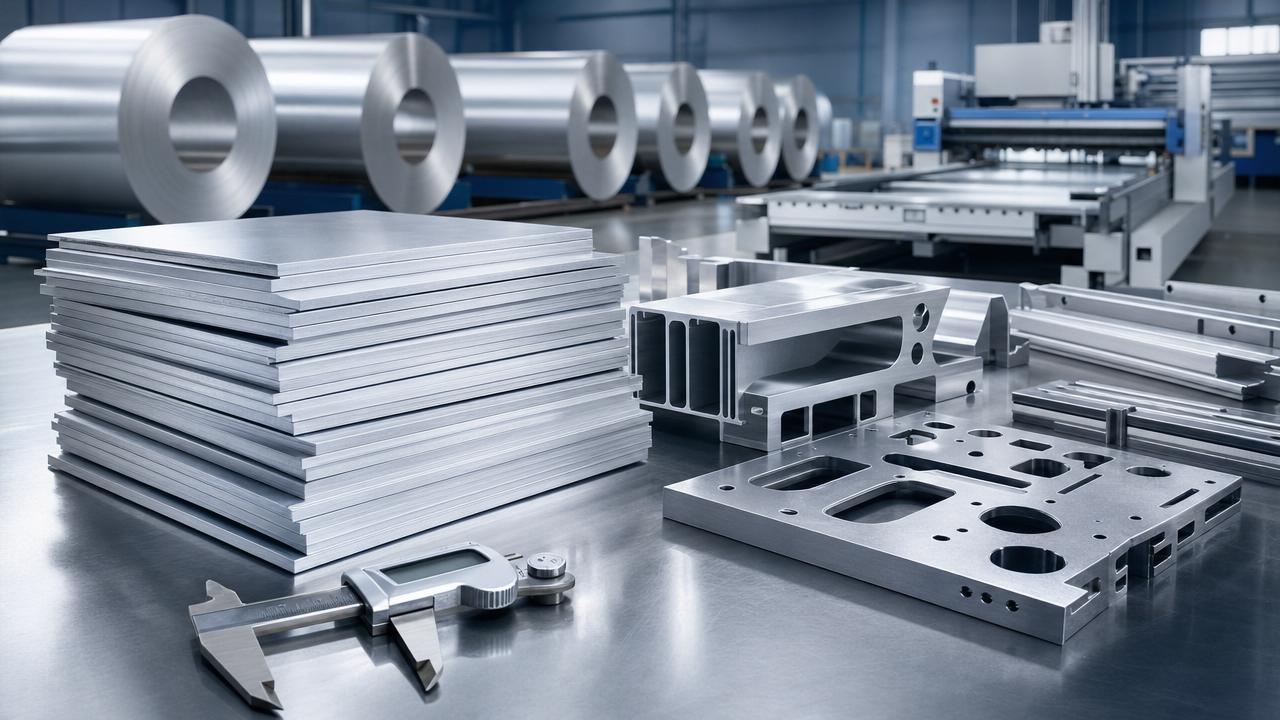
Choosing the right aluminum sheet custom thickness is critical for structural performance, safety, and cost control. For technical evaluation, thickness affects stiffness, forming limits, joint design, corrosion life, and total material efficiency.
In metallurgical materials, thickness selection is never only a dimensional choice. It is a structural decision tied to load paths, service environment, fabrication processes, and compliance requirements.
A reliable aluminum sheet custom plan should connect design targets with alloy capability, realistic tolerances, and downstream manufacturing conditions. This creates better consistency from prototype to volume production.
Basic Understanding of Aluminum Sheet Thickness for Structural Use
For structural applications, thickness determines how an aluminum sheet resists bending, denting, vibration, and local deformation. Even small thickness changes can strongly influence section stiffness and service safety.
An aluminum sheet custom specification usually includes alloy, temper, thickness range, flatness, width, length, and surface condition. These factors must work together rather than independently.
Thicker material generally improves load capacity. However, it also increases weight, transport cost, forming force, and sometimes welding heat input. The best result comes from balanced engineering, not maximum thickness.
Core Variables That Affect Thickness Choice
- Static and dynamic load levels
- Span, support spacing, and fastening layout
- Forming, bending, stamping, or deep drawing needs
- Corrosion exposure and coating requirements
- Weldability, machinability, and fatigue performance
- Applicable standards and tolerance control
Industry Focus Points in Metallurgical Material Selection
Current structural projects require lighter materials without sacrificing durability. This is why aluminum sheet custom solutions are widely reviewed in transport, construction, machinery, storage systems, and engineered enclosures.
Thickness decisions are now evaluated alongside lifecycle cost. Material savings may look attractive, but under-designed sheets can create vibration issues, assembly distortion, or premature fatigue failure.
Shandong Diwang Aluminum Technology Co., Ltd., established in 2002, supports these needs through integrated design, research, production, and sales across aluminum and galvanized product lines.
With advanced aluminum coil production lines and exports to more than 30 countries, the company serves engineering, electricity, machinery, aviation, automotive, shipbuilding, and construction-related applications.
Engineering Value of a Proper Aluminum Sheet Custom Specification
A well-defined aluminum sheet custom order reduces rework and improves structural predictability. It also helps control waste during cutting, forming, drilling, welding, and surface treatment.
When thickness is properly matched to use conditions, several business benefits appear:
- Lower risk of overdesign and unnecessary metal consumption
- Better dimensional stability during fabrication
- Improved consistency in welding and fastening quality
- More reliable corrosion and fatigue performance
- Higher confidence in long-term maintenance planning
For projects requiring strength, formability, and corrosion resistance, Aluminum sheets 3004 Series can be a practical reference option.
This aluminum-manganese-magnesium alloy offers higher strength, good weldability, strong rust resistance, deep drawing performance, and thickness availability up to 30 mm for varied structural layouts.
Typical Structural Scenarios and Thickness Considerations
Different applications require different logic. The same aluminum sheet custom thickness is rarely suitable for all structural conditions.
In decorative or external wall applications, visual stability matters as much as strength. A slightly thicker sheet may improve appearance by reducing waviness and installation distortion.
In cold storage panels, construction sheets, or appliance casings, material must also tolerate forming and surface finishing. This is where alloy selection and thickness must be evaluated together.
Practical Method for Selecting Thickness
1. Define the real load case
Separate static load, impact load, cyclic load, and localized load. Structural failures often come from overlooked conditions rather than average design loads.
2. Match alloy and forming route
If the part needs deep drawing, bending, or complex shaping, thickness must stay within workable forming limits. High strength alone does not guarantee process success.
3. Review joining details
Welded, riveted, and bolted assemblies behave differently. Edge distance, heat input, and local stress concentration can change the minimum safe thickness.
4. Consider the environment
Outdoor, marine, humid, and chemical settings may require extra corrosion allowance or special finishing. Surface treatment compatibility should be checked early.
5. Confirm tolerance and supply range
A good aluminum sheet custom order should state acceptable thickness deviation, sheet flatness, width, and length. This avoids mismatch during fabrication and installation.
For example, the 3004 alloy family is used in fuel tanks, pressure vessels, cookware, automotive sheet metal, construction sheets, and external walls because of its balanced processing behavior.
Implementation Notes for Better Structural Results
- Do not select thickness only by past habit
- Use sample forming or prototype testing for critical parts
- Review fatigue zones near holes, corners, and welds
- Coordinate structural calculation with fabrication capability
- Check whether anodizing, coating, or spraying affects final performance
The most effective aluminum sheet custom decision combines engineering analysis with manufacturability review. This prevents cost drift and supports stable long-term structural performance.
If a project needs corrosion resistance, good plasticity, weldability, and durable surface treatment potential, the referenced series above can fit many industrial structural applications.
Next Step for Thickness Evaluation
Start with the load condition, span, environment, alloy requirement, and fabrication route. Then compare several aluminum sheet custom thickness options instead of selecting one by assumption.
Prepare a clear technical sheet with dimensions, tolerances, forming steps, and service conditions. This makes supplier communication faster and improves quotation accuracy.
For projects needing broader material support, application guidance, and export-ready supply capability, reviewing available aluminum specifications early can reduce technical and commercial risk.
Leave A Message
If you are interested in our products and want to know more details, please leave a message here, we will reply you as soon as we can.