


Aluminum Sheet Custom Options for Low-Waste Fabrication in 2026
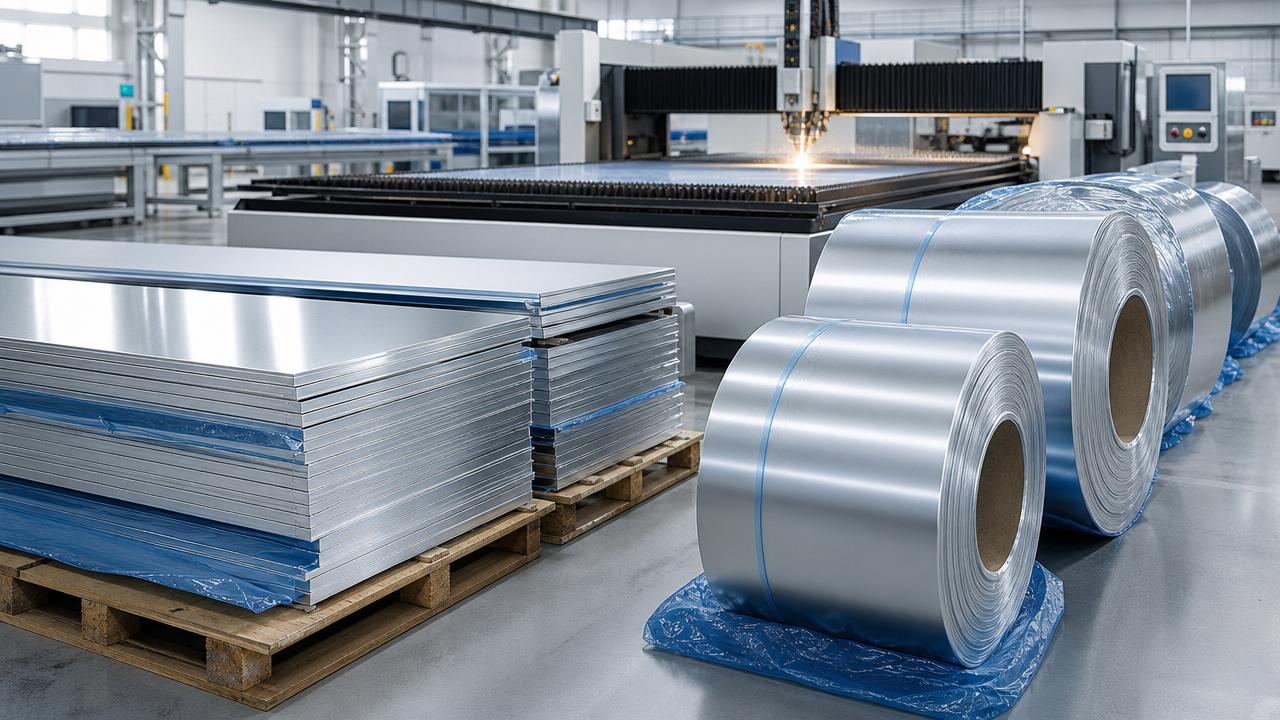
In 2026, aluminum sheet custom solutions are becoming essential for operators who need cleaner cuts, tighter tolerances, and less material waste on the shop floor. From coil and sheet selection to surface treatment and fabrication-ready sizing, the right custom approach can improve efficiency, reduce scrap, and support reliable performance across demanding industrial applications.
For most operators, the core question is simple: which custom options actually reduce waste without slowing production or creating new handling problems? The short answer is that the best results come from matching alloy, temper, thickness, width, surface condition, and cut format to the real fabrication process.
When aluminum sheet custom choices are made too late, waste usually appears in familiar ways: excess trimming, edge damage, bending cracks, stamping defects, protective film issues, and rework caused by dimensional mismatch. A practical custom plan prevents these losses before the material reaches the machine.
What operators really need from aluminum sheet custom work in 2026
Searchers using this topic usually want more than a general material overview. They want to know how custom aluminum sheets can improve cutting yield, reduce scrap, simplify setup, and keep forming quality stable during daily production.
Operators care most about repeatability. If sheet dimensions vary, surface quality is inconsistent, or flatness is poor, the result is wasted time at the press brake, punch line, shear, laser table, or assembly station.
That is why aluminum sheet custom services should not be treated as a simple sizing request. They should be evaluated as a fabrication support system covering alloy choice, temper range, width optimization, sheet length, edge condition, coating or bare finish, and packaging for shop-floor handling.
Which custom options have the biggest effect on material waste
The first major factor is thickness accuracy. Even small variation can affect forming behavior, nesting assumptions, and downstream fit. For operators, a consistent sheet is easier to bend, stamp, and stack, with fewer unexpected rejects.
The second factor is width and length customization. Standard sheets often force fabricators to trim away usable material. Ordering fabrication-ready sizes can reduce offcut volume, lower labor, and improve line speed because fewer adjustments are needed.
Edge quality also matters. Burrs, waviness, and transport damage can create avoidable defects before fabrication begins. Clean edges support safer handling and help operators maintain better consistency during feeding and alignment.
Surface condition is another practical issue. Some applications need a finish suitable for painting or polishing, while others need a surface that can tolerate contact, forming, or welding without visible defects. Choosing the right surface preparation reduces cosmetic scrap.
Finally, coil versus sheet supply affects waste. Some operators gain better yield from coils processed in-house, while others benefit from pre-cut sheets that eliminate decoiling steps and reduce handling marks.
How to choose the right alloy and temper for low-waste fabrication
Not every job needs high-strength aluminum. In many fabrication environments, easier forming and more stable processing deliver greater value than maximum strength. This is especially true for parts with bending, stamping, stretching, or cosmetic finish requirements.
For example, industrial pure aluminum in the 1100 family is widely used when good plasticity and easy processing are more important than structural strength. It offers strong corrosion resistance, good bending behavior, and excellent welding properties for many general fabrication needs.
In applications such as signage, decorative panels, kitchenware, appliance housings, heat sinks, and hardware components, operators often benefit from a material that forms reliably and creates fewer cracks or shape defects during routine processing.
One relevant option is Aluminum sheets 1100 Series, which can be supplied in multiple tempers including O, H111, H112, H12, H14, H16, and H18 ranges depending on forming and handling needs.
For low-waste fabrication, the practical lesson is clear: choose temper based on what the part must survive on the machine, not only what it must look like on paper. Over-hard tempers may improve rigidity, but they can also increase forming loss in some workflows.
How custom sizing improves yield on the shop floor
Operators often see waste as a cutting issue, but it usually starts with purchasing format. If your standard blank requires trimming on every side, the problem is not only machine setup. The input sheet size may already be wrong.
Custom width and length can be designed around real part geometry, nesting logic, clamp areas, and process allowances. This reduces repetitive edge trimming and makes programmed layouts more efficient for laser cutting, punching, or shearing.
For bending operations, custom blanks also help by controlling flange orientation and grain direction more consistently. That means fewer setup changes, fewer trial parts, and less risk of cracking or springback surprises.
In stamping environments, dimensional consistency matters even more. If incoming sheets are stable in thickness and blank size, die performance tends to improve, feeding becomes smoother, and scrap caused by misalignment can drop significantly.
For high-volume users, even a small reduction in offcut percentage can create meaningful savings across a year. Less scrap also means less internal transport, less sorting, and less time spent managing reusable remnants.
What surface and packaging details operators should not ignore
Low-waste fabrication is not only about alloy and dimensions. Material can lose value through scratches, oxidation, denting, and poor stacking before it ever reaches production. Operators should review surface and packaging specifications early.
Some aluminum materials naturally oxidize at the surface, which is not always a problem. In fact, for products intended for painting or polishing, this can still be fully workable if storage and pretreatment are controlled properly.
Protective interleaving, film options, pallet stability, moisture protection, and lifting method all influence usable yield. Poor packaging can turn good sheets into damaged inventory, especially when shipments travel long distances or face multiple warehouse transfers.
Ask suppliers how they control flatness, surface cleanliness, corner protection, and traceability. These are not minor details. They directly affect whether operators receive fabrication-ready sheets or spend time sorting and rejecting damaged material.
Questions operators should ask suppliers before placing a custom order
A useful supplier conversation should go beyond price and lead time. Operators should ask what dimensional tolerances can be held consistently, what tempers are recommended for the exact process, and how material will be packed for the receiving environment.
It is also important to confirm whether the supplier understands the end-use process. A supplier familiar with bending, stamping, welding, or cosmetic applications is more likely to recommend workable specifications instead of generic stock alternatives.
Ask for clarity on thickness range, maximum width, maximum length, sheet versus coil supply, and whether test samples are available. Practical trial runs often reveal more than broad technical statements.
For example, some fabrication projects benefit from wide format options or coil supply for continuous processing, while others need shorter cut-to-length sheets that operators can handle safely with less surface damage.
Where recycling and sustainability are part of the production target, it is also worth asking how the material supports downstream recovery. Aluminum remains attractive for many plants because it is recyclable and can contribute to lower overall resource waste.
Where 1100 aluminum fits best in a low-waste custom strategy
1100 aluminum is not the answer for every application, especially where high strength is critical. However, for operators focused on easy processing, corrosion resistance, conductivity, and clean forming, it can be an efficient and low-risk choice.
Its good bending, stamping, stretching, and welding behavior can help reduce common production defects in non-structural and semi-structural components. That makes it useful for everyday industrial fabrication where consistency matters more than peak mechanical performance.
It is also a practical option for products requiring reflective properties, paintability, or polished appearance. In these cases, stable forming and finish compatibility often contribute more to low-waste output than a stronger but less workable alloy would.
When reviewing custom specifications, operators should remember one limitation: this type of material is generally not suited to heat-treatment strengthening. Selection should therefore match the true service demands of the finished part.
How to evaluate whether a custom sheet program is actually working
The best way to judge an aluminum sheet custom program is through measurable shop-floor outcomes. Look at scrap rate, rework rate, cutting yield, setup time, forming consistency, surface defect frequency, and operator handling efficiency.
If custom material is doing its job, operators should see fewer adjustments, less trimming, fewer cracked bends, more stable feeding, and less confusion about which sheets belong to which process. Good customization should simplify work, not complicate it.
It is also useful to compare total processing cost rather than material price alone. A sheet that costs slightly more but arrives in the right size, right temper, and right surface condition may save far more in labor and waste reduction.
In 2026, this is the real value of aluminum sheet custom supply. It turns raw material purchasing into a process decision that supports productivity, quality, and lower waste from the first cut to the final formed part.
Conclusion
For operators, the most valuable aluminum sheet custom options are the ones that solve daily production problems: excess trim, unstable forming, surface damage, poor fit, and unnecessary scrap. The right specification reduces waste before fabrication starts.
Focus first on the factors that change real outcomes: alloy, temper, thickness consistency, sheet size, edge quality, surface condition, and packaging. When these elements match the process, production becomes cleaner, faster, and more predictable.
In practical terms, low-waste fabrication in 2026 is not about ordering more material choices. It is about ordering the right material choices. That is how custom aluminum sheets create both operational efficiency and lasting value on the shop floor.
Leave A Message
If you are interested in our products and want to know more details, please leave a message here, we will reply you as soon as we can.