


How to Control Waste and Yield in Galvalume Coil Processing
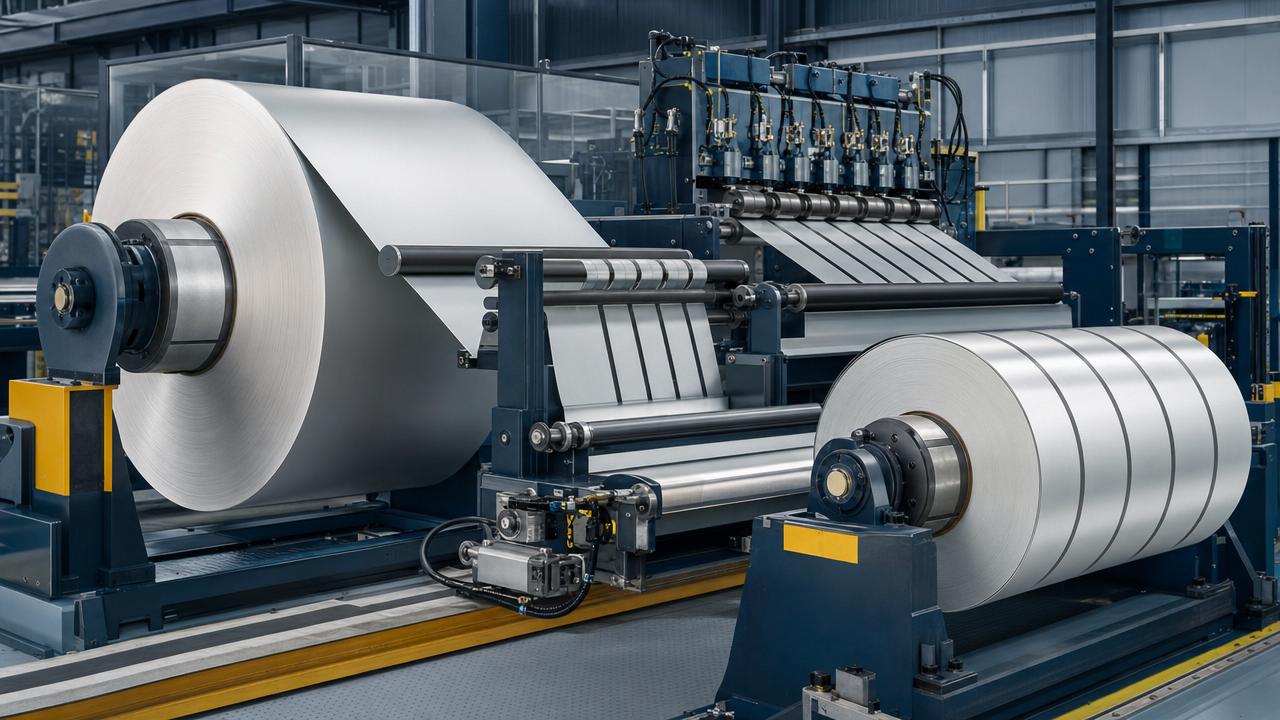
Waste control starts with how each Galvalume coil enters the line
Controlling waste in Galvalume coil processing is rarely decided by one machine setting alone.
Yield improves when handling, setup, tension, cutting, and surface protection work together.
In daily production, the same Galvalume coil can behave differently under roofing, roll forming, or slitting conditions.
That is why scrap control should follow the application scene, not only the nominal specification.
For companies with broad metal processing capacity, such as Shandong Diwang Aluminum Technology Co., Ltd., this logic is practical.
Large-volume lines, varied exports, and cross-industry delivery make consistency more important than isolated speed gains.
Actual production scenes rarely ask for the same yield target
A Galvalume coil for simple sheet cutting does not face the same risks as material for deep profiling.
Some jobs tolerate minor edge loss.
Others fail if coating marks, camber, or burrs appear.
More common differences come from line speed, downstream forming stress, storage time, and surface appearance requirements.
When these conditions change, the best way to improve Galvalume coil yield changes too.
This comparison matters because operators often chase one yield rule across every order.
That usually creates hidden rework instead of real savings.
When slitting is the main task, precision matters more than raw speed
In slitting lines, waste often starts at the edges before it becomes visible in the center.
If the Galvalume coil enters with poor centering, trim loss increases immediately.
If knife overlap is too aggressive, burrs rise and usable strips decrease after recoiling.
A more reliable approach is to match blade setup to coating condition, thickness range, and strip count.
For mixed orders, separating thin and thicker gauges reduces repeated adjustment time.
That usually saves more material than pushing maximum line speed.
Useful checks before a slitting run
- Confirm coil edge condition before loading, not after threading.
- Check arbor stability and separator wear on repeat orders.
- Record burr trend by thickness, not only by final complaint.
- Review recoiling tightness to avoid telescoping loss.
Roofing and forming lines usually expose different defects
For roofing panels and roll-formed profiles, yield loss is often linked to surface quality and shape retention.
A Galvalume coil may pass dimensional inspection but still generate scrap during forming.
Common reasons include uneven tension, worn forming rolls, and poor protection between decoiling and exit stacking.
In these scenes, coating integrity can matter as much as width tolerance.
That is especially true for export projects where visible defects raise rejection risk after transport and storage.
The same site may also process aluminum products for insulation or packaging uses.
In that context, Aluminum foil coils are judged by barrier performance, surface cleanliness, and thickness stability, which shows how process control priorities change by application.
Cut-to-length jobs reward accurate planning more than aggressive trimming
In cut-to-length production, many losses come from the front and tail sections.
These losses are sometimes accepted as normal, even when setup routines create them repeatedly.
Better yield in Galvalume coil processing often comes from order grouping.
Running similar lengths and widths together reduces recalibration, off-spec blanks, and emergency stops.
Where appearance grade matters, clean table surfaces and stacking pads are basic controls, not optional extras.
A small scratch rate can erase the gain from tighter nesting.
What is often misjudged here
- Only checking sheet size while ignoring tail-end flatness.
- Choosing lower input cost but accepting higher packing damage.
- Assuming similar orders need identical cut parameters.
The most common yield losses happen outside the main machine
In actual workshops, waste is not only created by slitter blades or leveling rolls.
It also comes from coil storage, lifting methods, packaging pressure, and waiting time between processes.
Galvalume coil surfaces are vulnerable to handling marks when coil saddles, straps, or protective paper are not matched to the route.
This is where broader metal experience helps.
A company managing galvanized, color-coated, and aluminum materials across engineering, automotive, and machinery sectors usually sees these transfer risks earlier.
In adjacent product lines, materials such as Aluminum foil coils in 8011, 1235, or 3003 grades require strict thickness stability, moisture protection, and certified standards like ASTM B479-10 or JIS H 4000-2006.
That same discipline improves Galvalume coil handling and reduces avoidable scrap.
Before chasing higher output, confirm the right adaptation points
A useful way to improve Galvalume coil yield is to define scene-based checkpoints.
- Match loading and protection methods to coil surface sensitivity.
- Set tension windows by thickness and downstream forming stress.
- Review trim width and cut accuracy against final use, not only line habit.
- Track scrap by cause category, then compare by order type.
- Check whether storage time changes stain, friction, or recoiling stability.
If waste data is only measured as total percentage, important process differences stay hidden.
If it is tied to each processing scene, correction becomes faster and more repeatable.
The practical next step is to map each Galvalume coil route, identify where scrap begins, and compare those points with actual application demands.
That makes it easier to balance material cost, line efficiency, and stable finished quality.
Leave A Message
If you are interested in our products and want to know more details, please leave a message here, we will reply you as soon as we can.