


Choosing Aluminum Coil Grades for HVAC Applications
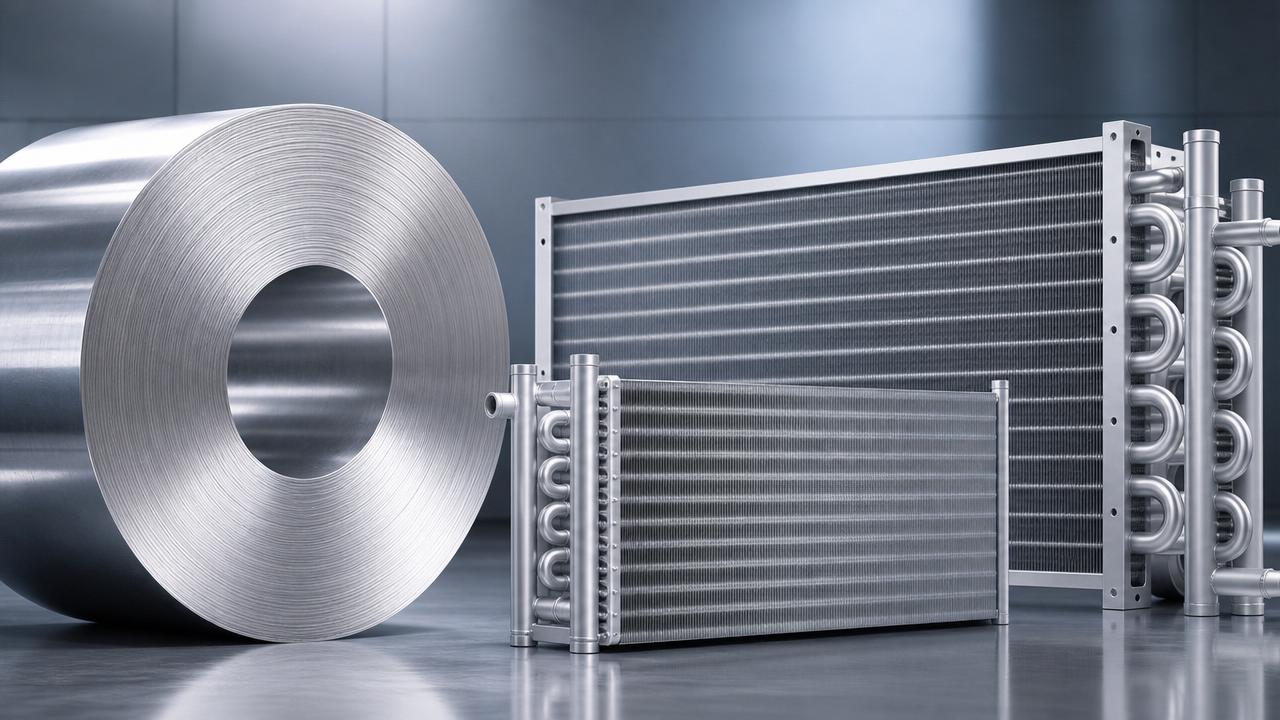
Selecting the right Aluminum coil grade is critical for HVAC systems that require reliable heat transfer, corrosion resistance, formability, and operational stability.
For technical evaluators, the decision is more than price comparison. It requires understanding alloy chemistry, temper, surface treatment, and service conditions.
This guide explains how to specify aluminum coils for HVAC applications, helping engineering and procurement teams balance efficiency, durability, and manufacturability.
What Technical Evaluators Really Need to Decide
Most evaluators searching for HVAC aluminum coil grades are trying to reduce performance risk before approving a material for production or procurement.
The key question is not simply which alloy is common, but which grade performs consistently under heat exchange, forming, coating, and corrosion exposure.
A technically sound selection should connect alloy properties with the application, such as evaporator coils, condenser fins, ducting, insulation jackets, or heat exchangers.
It should also consider fabrication routes, including slitting, stamping, roll forming, brazing, coating, and possible post-treatment requirements during assembly.
Why Aluminum Coil Is Widely Used in HVAC Systems
Aluminum coil is widely specified because it combines low weight, good thermal conductivity, corrosion resistance, and strong processing efficiency in continuous production.
Compared with heavier metals, aluminum supports lighter HVAC units, easier installation, lower structural load, and improved material handling during manufacturing.
Its thermal performance makes it suitable for fins, heat transfer surfaces, and components where efficient energy exchange directly affects system performance.
Another advantage is recyclability. Aluminum scrap from coil processing can often be recovered, improving material utilization and supporting sustainability targets.
Key Aluminum Alloy Families for HVAC Applications
The most relevant alloy families for HVAC work are usually 1xxx, 3xxx, and selected 5xxx series materials, depending on strength and corrosion needs.
1xxx series aluminum, such as 1050, 1060, and 1100, offers very high aluminum content and excellent thermal and electrical conductivity.
These grades are useful where heat transfer, reflectivity, light duty forming, and corrosion resistance are more important than high structural strength.
For example, Aluminum sheets 1050 Series materials feature aluminum content of at least 99.5%, excellent conductivity, and strong corrosion resistance.
3xxx series alloys, such as 3003, 3004, 3005, 3102, and 3105, contain manganese and provide better strength than pure aluminum grades.
They are commonly considered for HVAC fins, panels, casings, and components needing moderate strength, good workability, and reliable corrosion behavior.
5xxx series alloys, including 5005, 5052, 5083, 5086, 5182, and 5754, use magnesium to improve strength and corrosion resistance.
These alloys are often preferred where the HVAC component faces humid, coastal, industrial, or mechanically demanding environments.
How Temper Affects Forming, Strength, and Coil Performance
Alloy selection is incomplete without temper selection. The same alloy can behave very differently depending on its hardness and processing history.
Soft tempers such as O are easier to form, draw, bend, or roll, making them suitable for complex shapes and tight radii.
Strain-hardened tempers such as H12, H14, H16, and H18 provide progressively higher strength but lower formability.
Intermediate tempers like H22, H24, H32, and H34 may offer useful compromises between strength, dimensional stability, and manufacturing flexibility.
For technical evaluation, the question should be whether the coil can pass forming operations without cracking, excessive springback, or surface failure.
It is also important to confirm that the selected temper maintains required flatness, thickness tolerance, and mechanical consistency across the coil length.
Thermal Conductivity Is Important, but Not the Only Criterion
HVAC buyers often focus on thermal conductivity first, especially for fins and heat exchanger surfaces where heat transfer efficiency is critical.
High-purity aluminum grades generally perform well in conductivity, but they may lack the strength required for demanding forming or assembly conditions.
A stronger alloy may slightly reduce conductivity but improve durability, handling resistance, and stability during fin punching or coil expansion.
The practical decision is therefore a balance between heat transfer performance, mechanical strength, manufacturability, and expected service life.
Engineers should request conductivity values, tensile strength, yield strength, elongation, and hardness data rather than relying only on alloy names.
Corrosion Resistance Under Real HVAC Service Conditions
Corrosion risk depends heavily on operating environment. Indoor units, rooftop condensers, marine locations, and industrial zones have very different exposure profiles.
Moisture, salt, cleaning chemicals, acidic condensate, and airborne pollutants can all accelerate degradation if the material is not properly specified.
Pure aluminum grades offer strong natural corrosion resistance, while 3xxx and 5xxx alloys can provide additional strength and environmental durability.
For coastal or high-humidity applications, evaluators should consider alloy selection together with surface treatment, coating thickness, and maintenance requirements.
A material that performs well in a standard warehouse may not be sufficient for rooftop, marine, or chemical plant HVAC installations.
Surface Quality and Coating Compatibility
Surface condition matters because HVAC coils often require coating, bonding, brazing, painting, or decorative finishing after the base material is supplied.
A good aluminum coil should have a clean, uniform surface with stable brightness, even reflection, and minimal defects affecting coating adhesion.
For coated HVAC components, evaluators should confirm compatibility with hydrophilic coating, anti-corrosion coating, color coating, anodizing, or spray finishing.
Surface oil, scratches, waviness, oxidation spots, and inconsistent roughness can create downstream problems during production or reduce final product reliability.
Material certificates and sample testing should be used to verify whether surface condition meets the intended finishing process.
Dimensional Tolerance and Coil Processing Requirements
Dimensional accuracy directly affects production efficiency. Thickness, width, edge quality, coil weight, and inner diameter should match equipment requirements.
Even small deviations can cause feeding instability, die wear, fin pitch errors, uneven coating, or increased scrap during automated processing.
For HVAC fins, thickness consistency is especially important because it influences heat transfer area, mechanical stiffness, and assembly performance.
For panels and jackets, flatness, surface appearance, and bending behavior may be more important than maximum thermal conductivity.
Technical evaluators should define tolerances clearly in purchase specifications instead of accepting only broad commercial standards.
Matching Grades to Common HVAC Components
For fins and heat transfer parts, 1xxx or 3xxx series aluminum coil is often evaluated because of conductivity and forming performance.
Where added mechanical strength is needed, 3003, 3004, or similar Al-Mn alloys may provide a better balance than pure aluminum.
For casings, covers, ducting, and decorative panels, 3005, 3105, or 5005 may be suitable depending on finish and strength requirements.
For humid or aggressive service environments, 5052 and related Al-Mg alloys may be considered because of stronger corrosion resistance and fatigue performance.
The best grade is not universal. It depends on part geometry, forming severity, thermal function, installation location, and life-cycle expectations.
Questions to Ask Before Approving a Supplier
Supplier evaluation should include production capability, quality control, documentation, export experience, and ability to maintain consistency across batches.
Ask whether the supplier can provide alloy certificates, mechanical test reports, surface inspection records, and dimensional tolerance documentation.
It is also useful to confirm slitting capability, packaging method, moisture protection, and traceability from raw material to finished coil.
For international procurement, stable export experience and understanding of application requirements can reduce communication risk and delivery uncertainty.
Shandong Diwang Aluminum Technology Co., Ltd. integrates aluminum coil production, galvanized products, color coating, sales, and export services.
With advanced aluminum coil production lines and broad material coverage, the company supports technical buyers working across engineering and industrial applications.
Common Mistakes When Selecting HVAC Aluminum Coil
One common mistake is selecting the cheapest alloy without validating forming behavior, surface quality, or corrosion resistance under actual service conditions.
Another mistake is choosing a high-strength temper that cannot tolerate bending, stamping, or roll forming required by the component design.
Some buyers also overlook coating compatibility, assuming that any aluminum surface will bond or paint successfully after simple cleaning.
Technical teams should avoid relying only on general catalog descriptions. Testing under real manufacturing conditions provides more reliable approval evidence.
Material sampling, pilot production, salt spray testing, coating trials, and forming trials can all reduce the risk of costly production failures.
Practical Specification Checklist for Technical Buyers
A good HVAC aluminum coil specification should include alloy, temper, thickness, width, tolerance, coil ID, coil weight, and surface requirements.
It should define mechanical properties, thermal requirements, coating requirements, edge condition, packaging, inspection standards, and documentation expectations.
Where corrosion is critical, include environmental assumptions, required surface treatment, and validation methods such as salt spray or humidity testing.
Where forming is critical, specify bend radius, elongation, hardness range, and any required trial samples before large-scale procurement.
Clear specifications help suppliers quote accurately and help buyers compare materials on technical value rather than incomplete price information.
Conclusion: Choose by Application, Not by Alloy Name Alone
Choosing the right Aluminum coil grade for HVAC applications requires a practical balance of conductivity, corrosion resistance, formability, strength, and surface quality.
For technical evaluators, the strongest decision comes from linking alloy and temper to the exact component, process, and service environment.
1xxx grades may support excellent heat transfer, 3xxx grades add practical strength, and 5xxx grades improve performance in tougher environments.
By defining requirements clearly and verifying supplier capability, HVAC manufacturers can reduce production risk and improve long-term system reliability.
Leave A Message
If you are interested in our products and want to know more details, please leave a message here, we will reply you as soon as we can.