


How to Cut Aluminum Tube Without Burr Issues
How to Cut Aluminum Tube Without Burr Issues
Cutting an Aluminum tube cleanly is essential for safe assembly, accurate fitting, and reduced rework in fabrication, maintenance, and on-site installation.
Burrs can affect sealing, welding, surface finish, and operator safety, especially when tubes are used in machinery, automotive, aviation, or structural applications.
This guide explains practical ways to choose the right cutting method, control speed and blade selection, and apply proper deburring practices.
For most operators, burr-free cutting depends on three things: a sharp suitable tool, stable tube support, and correct feed control.
If one of these is ignored, even high-quality aluminum tube can produce sharp lips, rough edges, deformation, or inaccurate lengths.
Why Burrs Form When Cutting Aluminum Tube
Aluminum is softer than steel, but that does not mean it cuts cleanly without control. Its ductility makes it prone to smearing.
When the cutting edge is dull, too coarse, or moving at the wrong speed, the material can tear instead of shear cleanly.
Burrs often appear on the exit side of the cut, where the blade pushes the last thin section away from support.
They can also form inside the tube, especially on thin-wall sections where vibration and wall collapse are more likely.
For operators, the key is not only removing burrs afterward. It is preventing excessive burr formation during the cutting process.
Choose the Cutting Method Based on Tube Size and Accuracy Needs
The best cutting method depends on tube diameter, wall thickness, alloy temper, required tolerance, and production volume.
A manual tube cutter can work well for small-diameter thin-wall tube, especially in maintenance or low-volume installation work.
However, excessive tightening can deform the tube, create an inward ridge, and make internal deburring more difficult later.
A fine-tooth hacksaw is simple and flexible, but it requires careful clamping and steady strokes to avoid angled cuts.
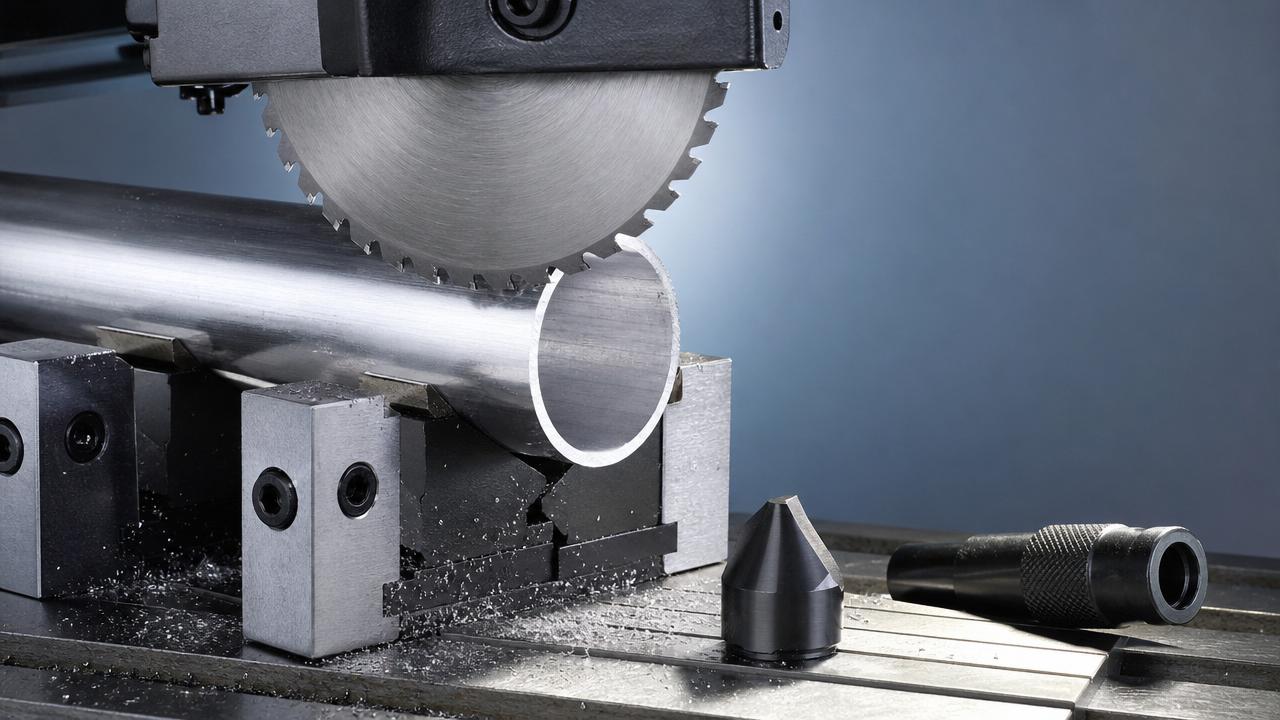
For repeated cuts, a cold saw or non-ferrous circular saw usually gives better squareness, cleaner edges, and faster output.
Band saws are useful for larger sections, but blade selection and feed pressure must be controlled to reduce exit burrs.
Abrasive wheels are generally less ideal for precision aluminum tube because they can load up, heat the surface, and leave rough edges.
Select the Right Blade or Cutter Edge
Blade choice is one of the fastest ways to reduce burr problems. For aluminum, use tools designed for non-ferrous metals.
A circular saw blade should have carbide teeth, proper clearance, and a tooth geometry that shears aluminum instead of tearing it.
Too few teeth may cut aggressively and leave a rough edge. Too many teeth can clog if chips are not cleared.
For thin-wall aluminum tube, a finer tooth pitch usually supports the material better and reduces grabbing at the tube wall.
For thicker-wall tube, the blade must still provide enough chip space to avoid heat buildup and aluminum adhesion.
Operators should replace or sharpen tools before burrs become severe. A dull blade increases force, vibration, and edge rolling.
Control Speed, Feed, and Lubrication
Cutting aluminum tube without burr issues requires balanced speed and feed. High speed alone does not guarantee a clean edge.
If feed pressure is too heavy, the blade may pull, distort the tube, or leave a torn exit edge.
If feed is too light, rubbing can generate heat, soften the edge, and cause aluminum to stick to the teeth.
Use a suitable cutting lubricant or wax for saw cutting when the process allows it. Lubrication reduces friction and chip welding.
For portable work, even controlled application of cutting wax can make a noticeable difference in edge quality and tool life.
In production cutting, chip evacuation is equally important. Chips trapped in the cut can scratch surfaces and create inconsistent burrs.
Support and Clamp the Tube Correctly
Poor support is a common reason operators get burrs even when using good equipment. Aluminum tube must not chatter during cutting.
Clamp the tube close to the cutting line, but avoid crushing thin-wall sections with excessive vise pressure.
Soft jaws, shaped supports, or V-blocks help hold round tube securely while protecting the surface finish.
When cutting long lengths, support both sides of the tube so the offcut does not drop before the cut is complete.
If the offcut falls suddenly, it can tear the last material bridge and create a heavy burr or distorted end.
For high-accuracy work, check squareness after setup. A clean edge still causes assembly problems if the cut angle is wrong.
Use a Practical Step-by-Step Cutting Process
Start by marking the cut line clearly with a wraparound guide, square, or marking fixture suitable for round tube.
Inspect the tube surface for dents, contamination, or coating damage near the cut area before placing it in the fixture.
Secure the tube firmly and confirm the blade will not contact the vise, table, or nearby tooling during the cut.
Begin the cut smoothly, letting the blade establish a stable kerf before applying full feed pressure.
Maintain consistent motion through the cut. Avoid forcing the tool at the end, where exit burrs usually become worse.
After cutting, handle the tube carefully. Fresh aluminum edges can be sharp enough to cut gloves or damage mating parts.
Deburring Methods That Do Not Damage the Tube
Even a good cut may leave a small burr. The goal is controlled deburring without removing too much material.
For outside edges, use a fine file, deburring blade, chamfer tool, or light abrasive pad with steady, even pressure.
For inside burrs, use an internal deburring tool, countersink, scraper, or correctly sized reamer depending on tube diameter.
Avoid aggressive grinding on thin-wall tube. It can flatten the edge, reduce wall thickness, and create uneven sealing surfaces.
When the tube will be welded, deburr and clean carefully. Loose burrs and embedded abrasive particles can affect weld quality.
When the tube will carry fluid or air, internal burrs are especially important because they can restrict flow or trap contamination.
Common Mistakes Operators Should Avoid
One frequent mistake is using a general-purpose wood blade or worn steel-cutting blade on aluminum tube.
Another is clamping the tube too far from the cut, which allows vibration and produces a rough, uneven edge.
Operators may also overtighten rotary tube cutters, creating a narrowed opening and an internal lip that requires extra cleanup.
Skipping deburring because the edge “looks acceptable” is risky. Small burrs can still interfere with assembly or injure hands.
Cutting without eye protection is also unsafe. Aluminum chips can be sharp, hot, and difficult to see during fast cutting.
Quality Checks After Cutting
After deburring, check the tube end visually and by touch, using gloves and proper safety procedures.
Confirm that the cut is square enough for the application, especially when the tube must fit into couplings or frames.
Measure length after deburring, because heavy edge finishing can slightly change final dimensions in precision applications.
Inspect the inner diameter for remaining burrs, chips, or deformation that could affect flow, insertion, or welding preparation.
For repeat production, record the tool type, blade condition, speed, feed, and burr level to standardize the best setup.
Material Quality Also Affects Cutting Results
Cutting performance is influenced by alloy, temper, wall uniformity, and surface condition. Consistent material helps operators maintain stable results.
Shandong Diwang Aluminum Technology Co., Ltd. supplies aluminum products used in machinery, aviation, automotive, construction, shipbuilding, and industrial equipment.
Its aluminum range includes sheets, rods, foil, tubes, coils, alloys, and profiles for projects requiring reliable processing performance.
In workshops handling both tube and sheet fabrication, material consistency across products can improve bending, cutting, coating, and assembly control.
For related applications requiring lightweight, corrosion-resistant decorative panels, explore Color coated Aluminum sheets with good flatness and coating adhesion.
When to Upgrade Equipment or Change Process
If burrs remain excessive after improving blade, support, lubrication, and feed, the cutting method may not match the production requirement.
Manual cutting may be acceptable for occasional work, but repeated precision cuts often justify a dedicated non-ferrous saw setup.
For high-volume production, automatic feeding, controlled clamping, and optimized blade speed can reduce labor and improve consistency.
If tubes require tight sealing, welding, or assembly tolerances, investing in better cutting and deburring tools usually reduces total rework cost.
Operators should also consider training. Many burr issues come from inconsistent pressure, poor support, or incorrect tool handling.
Conclusion: Clean Aluminum Tube Cuts Come From Process Control
To cut aluminum tube without burr issues, start with the right cutting method and a sharp tool designed for non-ferrous metals.
Then control clamping, support, speed, feed, lubrication, and chip removal so the tube is sheared cleanly instead of torn.
Finally, use suitable deburring tools and inspection steps to ensure the tube is safe, accurate, and ready for assembly.
For operators, the best result comes from prevention first and finishing second. A stable process saves time, improves safety, and reduces scrap.
Leave A Message
If you are interested in our products and want to know more details, please leave a message here, we will reply you as soon as we can.