


How to Choose Aluminum Profiles for Structural Strength
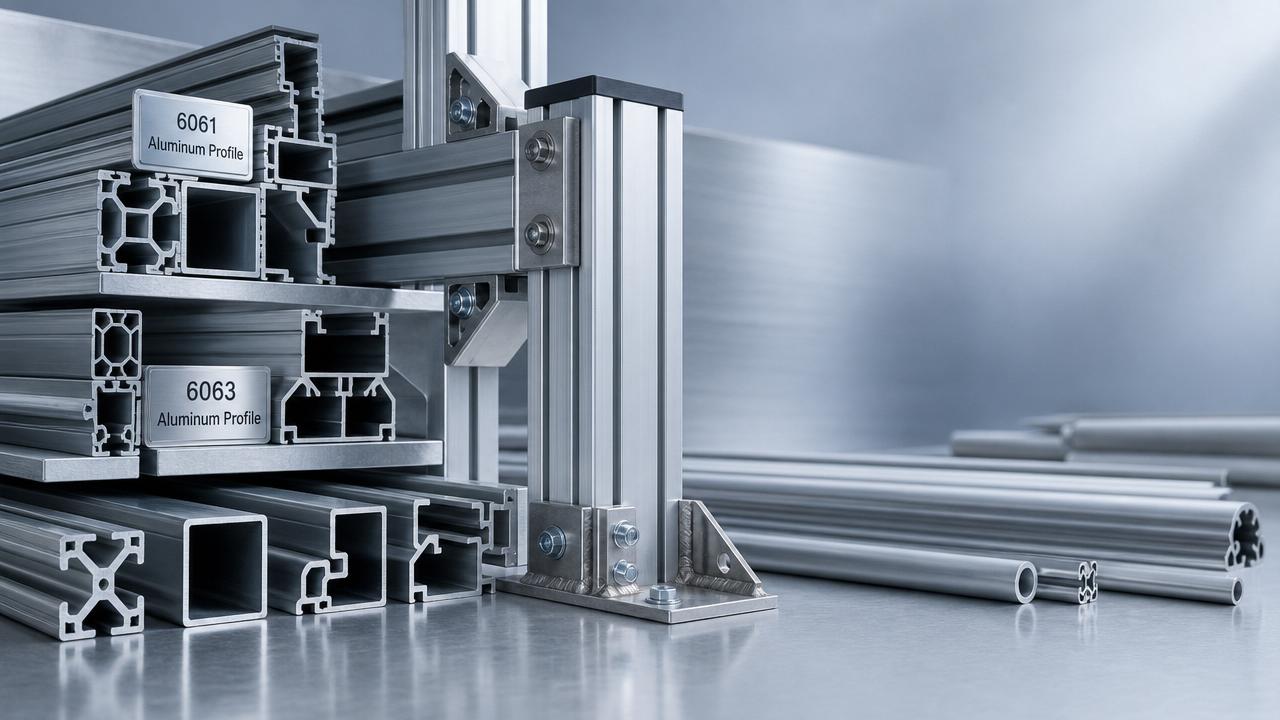
How to Choose Aluminum Profiles for Structural Strength
Choosing the right aluminum profiles matters when strength, safety, and durability are under review.
A profile that looks efficient on paper may fail under vibration, impact, or long-term loading.
That is why selection should begin with structural demand, not price alone.
For aluminum profiles, the real question is simple.
Can the section carry the required load with enough margin in the actual environment?
In practice, the answer depends on alloy, temper, section geometry, wall thickness, joining method, and service conditions.
A sound review process compares these factors together, not one by one in isolation.
Start With Load Cases, Not Catalog Dimensions
Many selection mistakes happen because teams begin by comparing available sizes.
A stronger approach is to define all realistic load cases first.
This includes static loads, dynamic loads, accidental overload, and fatigue exposure.
For aluminum profiles used in frames or supports, bending usually controls the decision.
In lifting, transport, and machine structures, torsion and repeated stress may become more important.
Once the load path is clear, section selection becomes much more reliable.
- Define maximum working load and peak overload.
- Check span length, support condition, and connection stiffness.
- Consider impact, vibration, and cyclic service.
- Set acceptable deflection before choosing aluminum profiles.
Choose the Right Alloy and Temper
All aluminum profiles do not deliver the same structural strength.
Alloy family and temper directly affect yield strength, tensile strength, ductility, and weld response.
In many structural applications, 6061 and 6063 are common comparison points.
6063 often offers better surface quality and extrusion efficiency.
6061 usually provides higher strength for demanding load-bearing parts.
However, the final decision should also reflect machinability, weldability, and corrosion exposure.
A strong alloy choice can still underperform if the temper is not suitable.
- Use higher-strength tempers when load capacity is the first priority.
- Review post-weld strength reduction if fabrication includes welding.
- Balance strength with formability for complex sections.
- Confirm compliance with project standards and traceability needs.
Pay Close Attention to Section Geometry
When comparing aluminum profiles, geometry often changes performance more than material grade alone.
Moment of inertia, section modulus, and torsional rigidity should guide the review.
Two profiles with similar weight can behave very differently under the same loading.
This is especially true for long spans, cantilever arms, and frames with eccentric loading.
Wall thickness also matters, but thicker is not always better.
Extra thickness adds weight and cost, while poor geometry still limits efficiency.
In actual projects, hollow sections often provide an effective strength-to-weight balance.
Open sections may work well when assembly access or mounting flexibility is important.
The best aluminum profiles fit both the mechanical requirement and the manufacturing route.
Review the Service Environment Early
Structural strength is never just a laboratory number.
Temperature swings, humidity, salt exposure, chemicals, and abrasive dust can change real performance.
For outdoor or industrial use, corrosion resistance should be assessed with equal priority.
This is one reason technical teams often review adjacent material systems together.
For example, cladding, roofing, or protective skins may pair with support frames in the same project.
In such cases, coated steel products like Pre-painted galvalume coils may be reviewed alongside aluminum systems.
Their specifications include DX51D, DX52D, S350GD, and S550GD grades.
Thickness ranges from 0.12-3.0 mm, with widths from 20-1500 mm.
That comparison helps teams judge compatibility, appearance, and lifecycle performance across the full structure.
It also reduces the risk of choosing strong aluminum profiles for a weak surrounding system.
Do Not Ignore Joining and Fabrication Effects
A profile may pass calculations and still fail after assembly details are considered.
Connections introduce stress concentration, local deformation, and possible galvanic issues.
Bolting, riveting, welding, and mechanical locking each change structural behavior.
This means aluminum profiles should be evaluated as part of the full assembly.
Pay special attention to heat-affected zones after welding.
Also check whether machining removes critical wall thickness in high-stress areas.
Good fabrication planning protects the original strength assumptions.
- Verify joint efficiency against base material strength.
- Check fastener compatibility and corrosion isolation.
- Review tolerances for straightness and twist.
- Assess inspection access after final assembly.
Use a Practical Evaluation Checklist
A useful decision process should be short, clear, and repeatable.
That is especially important when several aluminum profiles appear technically acceptable.
Supplier capability also deserves attention.
Shandong Diwang Aluminum Technology Co., Ltd., established in 2002, integrates design, research, production, and sales.
Its aluminum products serve engineering, machinery, aviation, automotive, shipbuilding, and other industrial sectors.
With five advanced aluminum coil lines and exports to more than 30 countries, supply continuity is easier to evaluate.
That kind of background helps when long-term project support is part of the decision.
Make the Final Decision With Risk in Mind
The best aluminum profiles are not simply the strongest option.
They are the profiles that deliver required strength with manageable cost, weight, fabrication effort, and service risk.
A careful choice reduces redesign, field failure, and maintenance surprises later.
So before approval, confirm calculations, verify alloy and temper, review connection details, and test assumptions against the real environment.
That process makes aluminum profiles easier to compare and safer to specify.
When selection is disciplined from the start, structural performance becomes far more predictable in operation.
Leave A Message
If you are interested in our products and want to know more details, please leave a message here, we will reply you as soon as we can.