


Aluminum Tube Wall Thickness and Pressure Safety
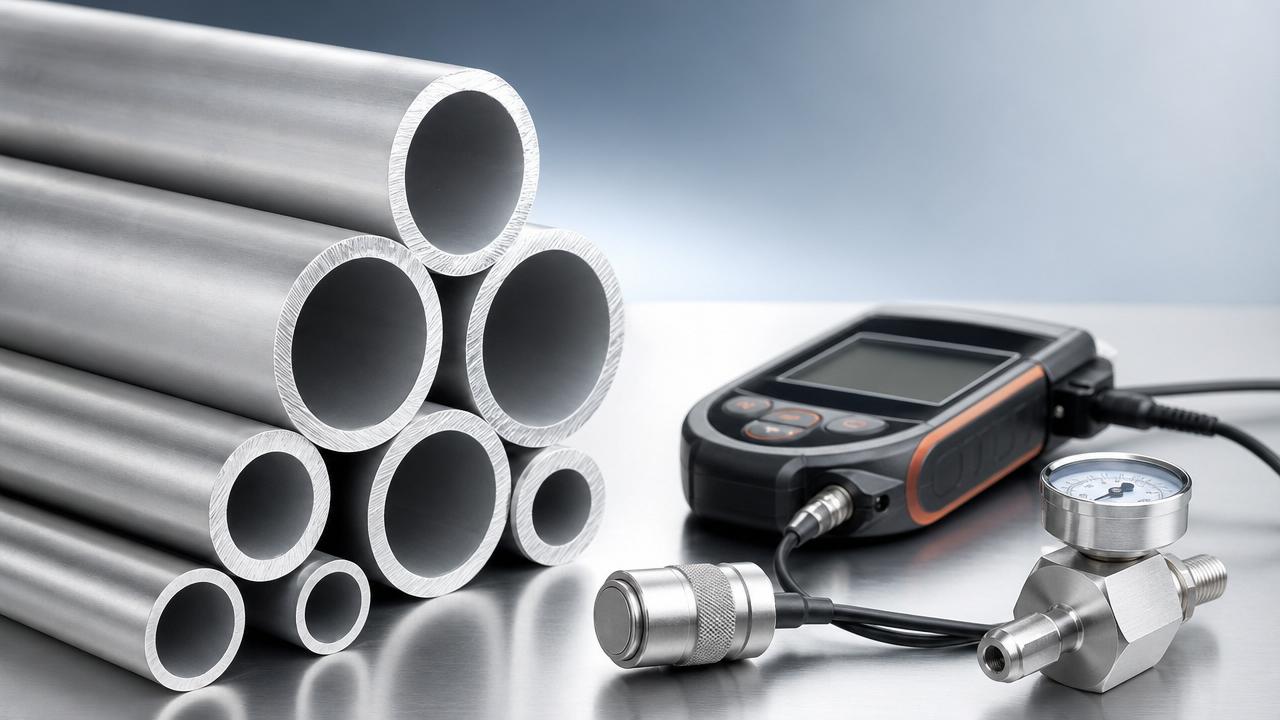
Aluminum Tube Wall Thickness and Pressure Safety
For quality control and safety managers, Aluminum tube wall thickness is not just a dimensional specification—it is a critical factor in pressure resistance, service life, and operational safety.
In metallurgical applications, selecting the right thickness helps prevent deformation, leakage, and failure under demanding conditions.
This article explains how wall thickness affects pressure safety, what factors should be evaluated during inspection, and how reliable Aluminum tube manufacturing supports safer performance across engineering, machinery, aviation, and industrial systems.
Why Aluminum Tube Wall Thickness Needs a Checklist
An Aluminum tube may look simple, but its pressure behavior depends on geometry, alloy condition, forming quality, and operating environment.
A checklist prevents decisions based only on outside diameter or price.
In pressure-related service, thin walls can reduce weight, yet they may increase denting, fatigue, and burst risk.
Thicker walls improve strength margins, but they can affect forming, welding, heat transfer, and cost.
A structured inspection method makes Aluminum tube selection more consistent and easier to audit.
Core Checklist for Aluminum Tube Pressure Safety
- Confirm the working pressure, peak pressure, and test pressure before selecting Aluminum tube wall thickness for any system.
- Match the alloy grade and temper with required strength, corrosion resistance, weldability, and bending performance.
- Check the outside diameter, inside diameter, and wall thickness tolerance against project drawings and applicable standards.
- Inspect wall thickness uniformity along the Aluminum tube length, especially near welded seams, bends, and expanded ends.
- Evaluate surface defects such as scratches, pits, folds, cracks, and dents that may reduce pressure safety.
- Review forming history, including extrusion, drawing, annealing, straightening, and any post-processing that affects mechanical properties.
- Verify hydrostatic testing, pneumatic testing, or non-destructive testing when the Aluminum tube is used in pressurized service.
- Record batch traceability, inspection results, and material certificates to support quality review and failure analysis.
How Wall Thickness Influences Pressure Resistance
Pressure creates circumferential stress in an Aluminum tube wall.
When the wall is too thin, stress rises quickly and reduces the safety margin.
A thicker Aluminum tube can carry higher loads, but thickness alone does not guarantee safe performance.
The alloy’s yield strength, heat treatment, seam quality, and dimensional tolerance must also be considered.
For many aluminum alloys, corrosion resistance is good, but local pitting can still reduce effective wall thickness.
This is important in humid, marine, chemical, or outdoor environments.
Use Actual Thickness, Not Only Nominal Thickness
Nominal thickness is a design value, while actual thickness is the measured condition.
Pressure safety should use the minimum acceptable wall thickness after tolerance, wear, corrosion, and processing allowance.
Consider Diameter-to-Thickness Ratio
A large-diameter Aluminum tube with a thin wall may deform before reaching expected pressure resistance.
The diameter-to-thickness ratio helps identify buckling, ovality, and handling risks.
Inspection Points Before Installation
- Measure thickness at multiple positions using calibrated ultrasonic gauges or suitable mechanical measuring tools.
- Compare measurements with the drawing tolerance and reject sections below minimum allowable thickness.
- Check roundness, straightness, and end-face quality to prevent sealing failure during assembly.
- Inspect weld zones and heat-affected areas if the Aluminum tube is welded or joined into a pressure circuit.
- Confirm that storage, transport, and cutting have not introduced dents, burrs, or contamination.
Inspection should not stop at incoming material control.
Any bending, flaring, machining, or welding operation may change local wall thickness and stress distribution.
Application Notes for Different Industrial Systems
Engineering and Machinery
In machinery frames, pneumatic lines, and structural assemblies, Aluminum tube selection often balances weight and rigidity.
Wall thickness must handle internal pressure, external impact, vibration, and repeated maintenance operations.
Aviation and Automotive Systems
Lightweight design is critical in aviation and automotive use, but pressure safety cannot be sacrificed.
An Aluminum tube in these systems should be checked for fatigue resistance, bending quality, and surface integrity.
Power, Textile, and Mining Environments
Dust, moisture, vibration, and temperature changes can reduce service life in power, textile, and coal mining applications.
Extra allowance may be required when the Aluminum tube faces abrasion, frequent handling, or outdoor exposure.
Related Material Control Across Metal Products
Wall thickness control is also important in coated metal products used around industrial facilities.
For example, Pre-painted roofing sheets combine metal sheet strength with color coating performance for roofing applications.
Common options include PPGI and PPGL, using color-coated steel sheet or galvanized sheet materials.
Typical specifications cover 0.12-3.0 mm thickness, 20-1500 mm width, and coil inner diameters of 508 mm or 610 mm.
This same discipline applies to Aluminum tube production: dimensional control, surface quality, traceability, and standard compliance all support safe use.
Common Overlooked Risks
Ignoring Local Thinning
Bending, expanding, and swaging can thin the outer radius or processed ends of an Aluminum tube.
Measure these areas separately instead of relying only on straight-section data.
Underestimating Temperature Effects
Aluminum properties change under elevated temperatures.
If the Aluminum tube works near heat sources, confirm allowable pressure at the actual service temperature.
Using Visual Inspection Alone
A smooth surface does not prove adequate wall thickness or internal soundness.
Combine visual inspection with thickness measurement, pressure testing, and certificate review.
Skipping Traceability
Traceability connects each Aluminum tube to alloy grade, batch, production date, and inspection results.
Without it, root-cause analysis becomes difficult after leakage or deformation.
Practical Execution Suggestions
- Define minimum wall thickness in drawings, purchase documents, and inspection plans before ordering Aluminum tube materials.
- Set sampling rules based on batch size, pressure level, and criticality of the final application.
- Use hydrostatic testing for pressure-critical systems where leakage risk can affect safety or downtime.
- Store Aluminum tube sections on clean supports to avoid scratches, flattening, and galvanic contamination.
- Keep inspection records with photos, measurement data, and material certificates for future audits.
Reliable supply also matters.
Shandong Diwang Aluminum Technology Co., Ltd. integrates design, research, production, and sales for aluminum and galvanized products.
Its aluminum product range includes aluminum sheets, rods, foil, Aluminum tube, coils, alloys, and profiles.
With multiple aluminum coil production lines and exports to more than 30 countries, consistent process control supports demanding industrial applications.
Summary and Next Steps
Aluminum tube wall thickness directly affects pressure resistance, deformation control, leakage prevention, and service life.
A safe selection process should combine design pressure, alloy properties, actual thickness, processing quality, and inspection evidence.
Before confirming an Aluminum tube order, prepare a checklist covering dimensions, tolerance, test method, surface condition, and traceability.
For critical pressure systems, request material certificates, measured thickness data, and suitable testing records.
This approach turns Aluminum tube selection from a simple size choice into a controlled safety decision.
Leave A Message
If you are interested in our products and want to know more details, please leave a message here, we will reply you as soon as we can.