


2026 Aluminum Sheet Bulk Order Trends in Pricing and Supply
As procurement teams plan ahead, aluminum sheet bulk order strategies in 2026 are being shaped by shifting raw material costs, global supply chain adjustments, and stricter quality expectations. Understanding these trends is essential for securing stable supply, competitive pricing, and reliable product performance. This article explores what buyers should watch closely to make smarter sourcing decisions in a fast-changing metallurgical materials market.
For purchasing teams in metallurgy-related industries, aluminum sheet sourcing is no longer only about comparing unit prices. Order timing, alloy selection, lead-time stability, processing capability, packaging standards, and export readiness now affect total procurement cost. In 2026, buyers that build a more structured sourcing framework will be better positioned to manage volatility and maintain production continuity.
Market Forces Reshaping Aluminum Sheet Bulk Orders in 2026
Three factors are expected to have the strongest impact on aluminum sheet bulk orders in 2026: aluminum ingot price fluctuations, energy and processing costs, and regional supply chain adjustments. For procurement teams, this means that quotations may vary not only by week, but sometimes within 24–72 hours during active market periods. Long validity windows for pricing are becoming less common, especially for large-volume contracts tied to base metal movements.
Raw material costs remain the first pricing lever. For common commercial grades such as 1050, 1060, 1100, 3003, and 5052, the final sheet price usually combines the base aluminum price plus fabrication cost, surface or temper requirements, packing, and inland freight. When buyers request widths up to 2200–2600 mm, lengths up to 12000–16000 mm, or thickness ranges from thin gauge to 30 mm and above, processing complexity can significantly influence the premium.
Global logistics also continue to shape supply decisions. Even when mill output is sufficient, shipment planning can add 1–3 weeks if container availability tightens or port schedules become inconsistent. This is especially relevant for buyers serving construction, transportation, electrical equipment, marine fabrication, or industrial device manufacturing, where schedule slippage can affect downstream assembly commitments.
Another visible shift is the stricter quality expectation in cross-border B2B transactions. Procurement teams increasingly ask for clearer thickness tolerance control, temper consistency, flatness performance, and surface appearance standards before approving suppliers. In practical terms, a low quote without stable production discipline can create hidden costs through rework, delayed acceptance, or scrap rates above 2%–5%.
Why pricing volatility now requires earlier sourcing decisions
Many buyers previously planned aluminum sheet orders 2–4 weeks before demand. In 2026, a safer planning window for repeat industrial orders may be 6–10 weeks, particularly for customized dimensions, temper-specific material, or mixed-alloy procurement. Earlier forecasting allows purchasing teams to compare suppliers more thoroughly, lock rolling capacity, and reduce the risk of urgent spot purchases at unfavorable rates.
Suppliers with integrated production and export experience also matter more in this environment. Shandong Diwang Aluminum Technology Co., Ltd., established in 2002, combines design, research and development, production, and comprehensive sales. With more than 300 employees and 5 domestically advanced aluminum coil production lines, the company reports annual output of 900,000 tons and exports aluminum products to more than 30 countries, giving buyers an indication of scale when evaluating supply continuity.
The table below outlines the main pricing variables procurement managers should review before confirming a bulk aluminum sheet order in 2026.
The key takeaway is that procurement decisions should shift from simple per-ton comparison to total delivered cost analysis. Buyers who break quotations into metal price, conversion premium, packaging, and shipping are usually better able to identify stable long-term value.
How Procurement Teams Should Evaluate Supply Stability
In 2026, supply stability will be judged less by promises and more by production structure. A supplier’s number of lines, annual output, export experience, and ability to handle mixed specifications all provide practical evidence. For aluminum sheet bulk orders, especially above 50 tons, 100 tons, or recurring monthly volumes, procurement teams should verify whether the supplier can maintain batch consistency across multiple deliveries.
Capacity alone is not enough. Buyers should also review whether the producer manages both standard and customized orders efficiently. In metallurgy procurement, disruption often happens when mills prioritize standard high-volume items and delay custom thickness, width, or alloy combinations. A stable supplier should be able to provide a realistic lead time, such as 15–25 days for standard material and 25–40 days for customized production, instead of offering unrealistic delivery promises.
Export-oriented buyers should also check packaging, moisture protection, edge protection, palletization, and marking clarity. Aluminum sheets may arrive with transit damage if sea freight packaging is weak, even when the production quality is acceptable. For long-distance shipping, especially to humid or high-salinity regions, packaging quality can directly affect the acceptance rate on arrival.
For procurement teams serving machinery, aviation support manufacturing, electrical equipment, automotive components, or shipbuilding-related fabrication, material traceability matters more than ever. Each batch should be identifiable by alloy, temper, dimensions, and shipment details, helping buyers reduce the risk of mixed lots in inventory.
A practical supplier screening checklist
- Check whether the supplier can support repeat orders over 3–12 months rather than only one-time spot sales.
- Ask for typical lead-time ranges for standard versus customized aluminum sheet orders.
- Confirm maximum processable dimensions, such as thickness, width, and length limits relevant to your application.
- Review export packaging methods and whether anti-moisture protection is standard or optional.
- Verify which industries the supplier already serves, such as construction, automotive, ships, engineering, or industrial equipment.
What stable supply looks like in operational terms
Operationally, stable supply means more than on-time shipment. It includes predictable communication cycles, document accuracy, batch-level consistency, and realistic scheduling updates. A procurement department should expect order acknowledgment within 24–48 hours, specification confirmation before rolling or cutting, and shipment notification with packing details before dispatch.
When these steps are documented, buyers can reduce emergency interventions and improve internal coordination with quality control, finance, and warehouse teams. This is particularly useful for multi-country purchasing programs or annual contracts where several departments depend on the same aluminum sheet supply plan.
The following table can help procurement personnel compare supply reliability factors during supplier qualification.
A disciplined qualification process reduces sourcing risk before the first shipment. For buyers planning annual or quarterly procurement, these checks are often more valuable than negotiating a marginally lower unit price.
Material Selection Trends: Why Specification Accuracy Matters More Than Ever
One of the biggest procurement trends for 2026 is a stronger focus on fit-for-purpose alloy selection. Buyers are moving away from broad requests such as “standard aluminum sheet” and toward application-driven specifications. This shift helps reduce over-specification, underperformance, and avoidable cost. For example, not every project needs a higher-strength alloy if the real requirement is conductivity, formability, reflectivity, or corrosion resistance.
For many electronics, decoration, packaging, and heat dissipation uses, the 1000 series remains highly relevant. Material in the 1060 family is valued for purity above 99.0%, high conductivity, good plasticity, smooth surface quality, and ease of processing. In applications involving cold working, mirror finishing, oxidation coloring, or lightweight parts where extreme strength is not the first priority, this type of sheet can offer an efficient balance between performance and cost.
At the same time, procurement teams increasingly compare 1000, 3000, 5000, and 6000 series options by end-use rather than by historical habit. A buyer sourcing for external walls, sheets for construction, storage equipment, automotive inside board, marine-related structures, or semiconductor equipment should define whether corrosion resistance, weldability, yield strength, machinability, or finish quality is the main driver. This clarity reduces disputes later in the supply cycle.
A useful reference point is Aluminum sheets 1060 Series, which reflects how buyers can align purity, conductivity, surface appearance, and recycling value with specific industrial uses. Depending on the project, tempers such as O, H14, H24, H32, H111, or F may affect processing behavior and final performance just as much as alloy selection itself.
Specification areas buyers should define before RFQ
- Alloy and temper: for example 1060-O, 3003-H14, or 5052-H32.
- Dimension range: thickness, width, and length, with acceptable tolerances if applicable.
- Surface expectation: standard mill finish, smooth decorative finish, or oxidation-ready surface.
- End use: packaging, heat-sink device, construction sheet, transport ship component, or industrial mould.
- Delivery format: sheet, cut-to-length, or coil, depending on downstream processing.
The table below summarizes common selection logic across several aluminum sheet families frequently considered in industrial procurement.
This comparison shows why a detailed RFQ saves money. Buyers who specify the real operating need can avoid paying for unnecessary strength or, just as importantly, avoid selecting a low-cost sheet that cannot meet forming, welding, or corrosion requirements in service.
Cost Control Strategies for Large Aluminum Sheet Orders
In large-volume purchasing, cost control should be based on total ownership logic rather than headline pricing alone. A sheet that is 1%–3% cheaper per ton can become more expensive after cutting loss, inconsistent thickness, packaging damage, or delayed delivery. Procurement teams should therefore evaluate at least four dimensions together: material price, conversion cost, logistics cost, and quality-related internal cost.
One effective strategy is order segmentation. Instead of placing a single large order with no flexibility, some buyers split annual demand into monthly or quarterly call-off releases while negotiating a broader framework agreement. This helps manage price swings, warehouse pressure, and cash flow. For example, a 600-ton annual demand plan may be structured as 4 quarterly releases or 12 monthly releases depending on forecast confidence and production rhythm.
Another strategy is specification rationalization. Procurement and engineering teams should review whether too many size combinations are being purchased. Reducing unnecessary SKU fragmentation can lower setup time, improve rolling efficiency, and strengthen negotiation leverage. Even consolidating from 8 size variants to 4 can simplify supply planning and reduce leftover inventory from slow-moving dimensions.
For export buyers, packaging optimization also affects cost. Stronger sea-worthy packing may raise the front-end quote slightly, but it often lowers the risk of edge damage, oxidation during transit, or claim handling after arrival. For long-haul routes, this tradeoff is usually favorable when compared with the cost of rejected sheets or interrupted production lines.
Five procurement actions that improve cost efficiency
- Ask for separate disclosure of metal price and processing premium to improve quotation comparison.
- Align order release timing with production planning to avoid emergency procurement at spot market peaks.
- Reduce excessive customization where standard sizes can meet the same functional requirement.
- Review damage history and choose packaging standards based on shipping distance and climate exposure.
- Measure supplier performance by accepted tonnage and on-time delivery rate, not only quoted price.
Where hidden procurement costs usually appear
Hidden costs typically emerge in three places: internal sorting and reinspection, production stoppage while waiting for replacement material, and scrap from specification mismatch. These issues often remain invisible during supplier selection because they are not listed in the quotation. Procurement teams that track them over a 6-month or 12-month cycle generally make better sourcing decisions.
A disciplined vendor scorecard can reveal whether a low-cost offer is truly competitive. In many industrial settings, a stable supplier with slightly higher pricing may still be the more economical option once acceptance efficiency and supply continuity are considered.
Risk Control, Delivery Planning, and Common Buyer Questions
The final procurement trend for 2026 is stronger emphasis on risk management before purchase order release. Buyers increasingly want to know what can go wrong, how quickly issues can be identified, and what steps reduce exposure. In aluminum sheet sourcing, the most common risks are specification mismatch, unstable lead time, transit damage, and unclear acceptance criteria.
A practical control method is to define acceptance checkpoints before production starts. Procurement teams should align on alloy, temper, dimensions, surface expectations, packaging method, and document requirements. For high-volume orders, pre-shipment photos, packing lists, and batch identification can save time during receiving inspection. This is especially useful when material is used in engineering, machinery, automotive, marine, or industrial fabrication environments.
Suppliers serving multiple sectors can also support more flexible sourcing plans. Shandong Diwang Aluminum Technology Co., Ltd. supplies aluminum-related products used in engineering, coal mining, textiles, electricity, machinery, military industry support manufacturing, aviation, automobiles, and ships. For buyers, this cross-sector coverage suggests familiarity with different application requirements, from lightweight forming to corrosion resistance and industrial processing practicality.
When reviewing products such as Aluminum sheets 1060 Series, procurement teams should match technical characteristics to operational needs. Features such as high conductivity, good corrosion resistance, high reflectance, good plasticity, smooth and clean surface appearance, and recyclability may be decisive in some projects, while higher tensile or yield strength may matter more in others.
FAQ for procurement teams
How far in advance should bulk aluminum sheet orders be planned in 2026?
For standard material, 4–6 weeks may be workable in stable periods, but 6–10 weeks is safer for recurring programs. Customized dimensions, mixed tempers, or export shipments often need 25–40 days or more depending on production scheduling and route conditions.
What are the most important technical indicators to check before purchase?
At minimum, confirm alloy, temper, thickness, width, length, surface condition, and packaging standard. For application-specific orders, also review conductivity, corrosion resistance, weldability, machinability, or fatigue-related performance according to end use.
Is the lowest quote usually the best option for large orders?
Not necessarily. A lower quote can be offset by late delivery, dimensional inconsistency, poor packaging, or higher internal inspection cost. The better benchmark is total delivered value over a full supply cycle, not just the initial price per ton.
Which applications commonly suit high-purity aluminum sheets?
High-purity sheet is often chosen for electronics, decoration, packaging, reflective surfaces, heat dissipation parts, and other applications where conductivity, formability, appearance, or oxidation behavior is more important than maximum structural strength.
In 2026, successful aluminum sheet procurement will depend on disciplined planning, accurate specifications, and supplier evaluation that goes beyond price. Buyers who assess production capacity, lead-time realism, packaging execution, and application fit are more likely to secure stable supply and protect downstream operations.
For procurement teams looking for scalable supply, broad alloy coverage, and export-oriented service support, working with an experienced manufacturer can improve both sourcing confidence and delivery control. If you want to review product details, compare suitable grades, or discuss a tailored bulk order plan, contact us today to get a customized solution and explore more aluminum sheet options for your industry.
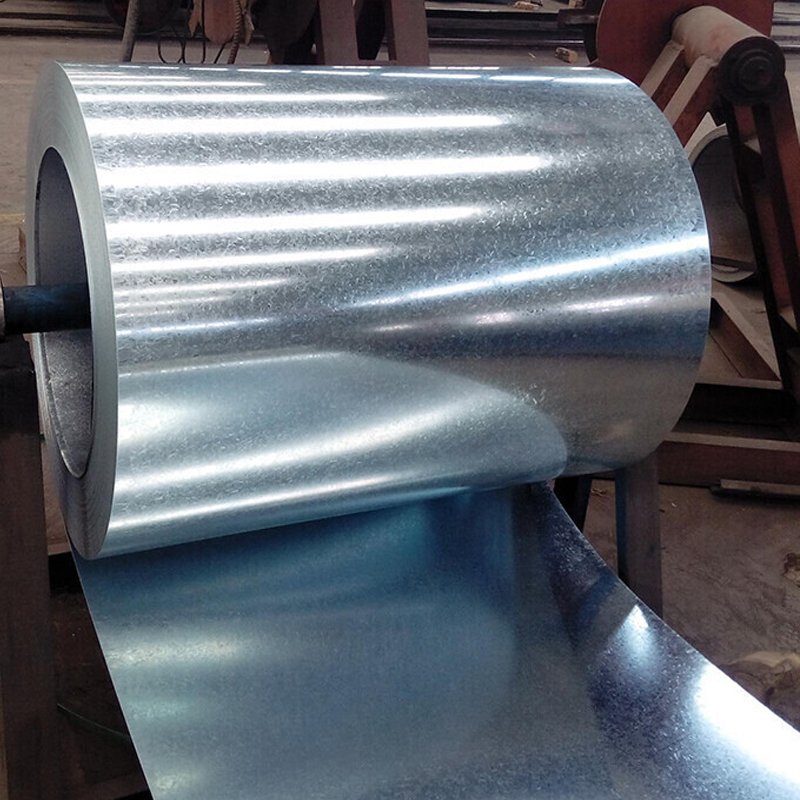
 Galvalume coilsGalvalume steel coils are based on cold-rolled steel sheets, coated with an alloy coating of 55% aluminum, 43.4% zinc, and 1.6% silicon via a hot-dip coating process. The core components of galvalume steel are aluminum, zinc, and silicon, which are fused at high temperatures to form a dense quaternary crystalline structure, combining the physical protection of aluminum with the electrochemical protection of zinc.
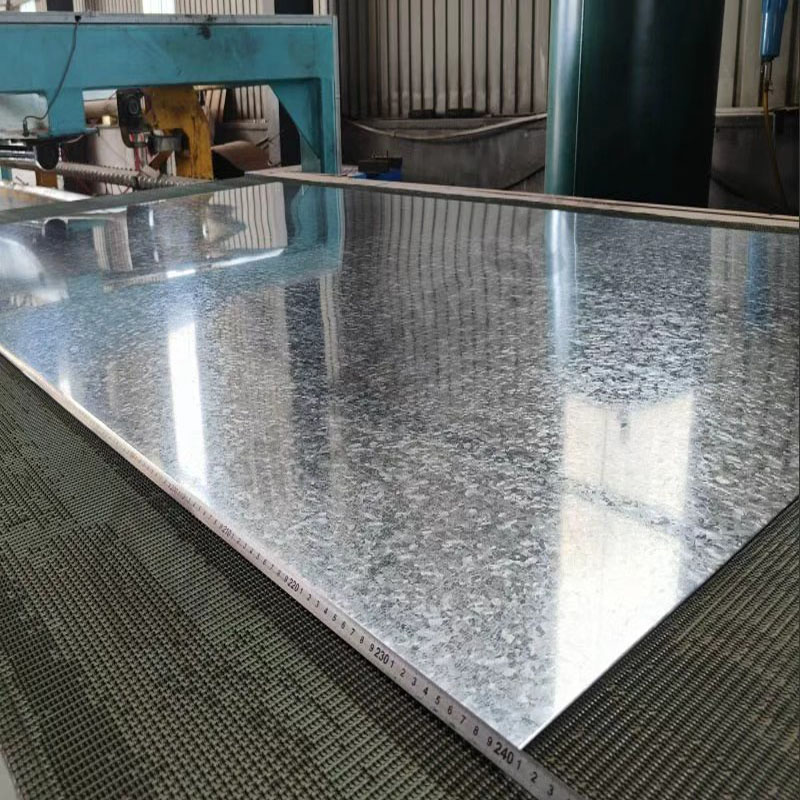
 Galvanized sheetsGalvanized steel sheets, or galvanized plates, are steel products that have been coated with a layer of zinc to prevent corrosion. The galvanization process involves dipping the steel in molten zinc or applying a zinc coating through electroplating. Key features and benefits include
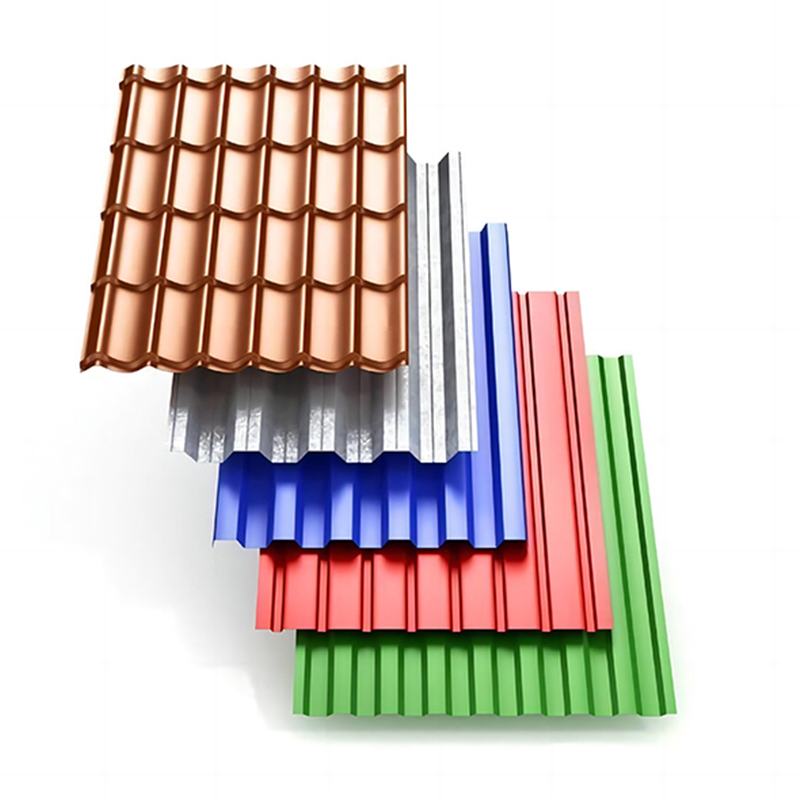
 Pre-painted roofing sheetsColor-coated corrugated sheet is made of color-coated steel sheet or galvanized sheet as the base material, which is processed into a sheet with a wavy structure through roller cold bending process. It has both the strength of metal sheet and the decorativeness of color coating.
Leave A Message
If you are interested in our products and want to know more details, please leave a message here, we will reply you as soon as we can.