


Aluminum Sheet Bulk Order Quality Checks Before Shipment
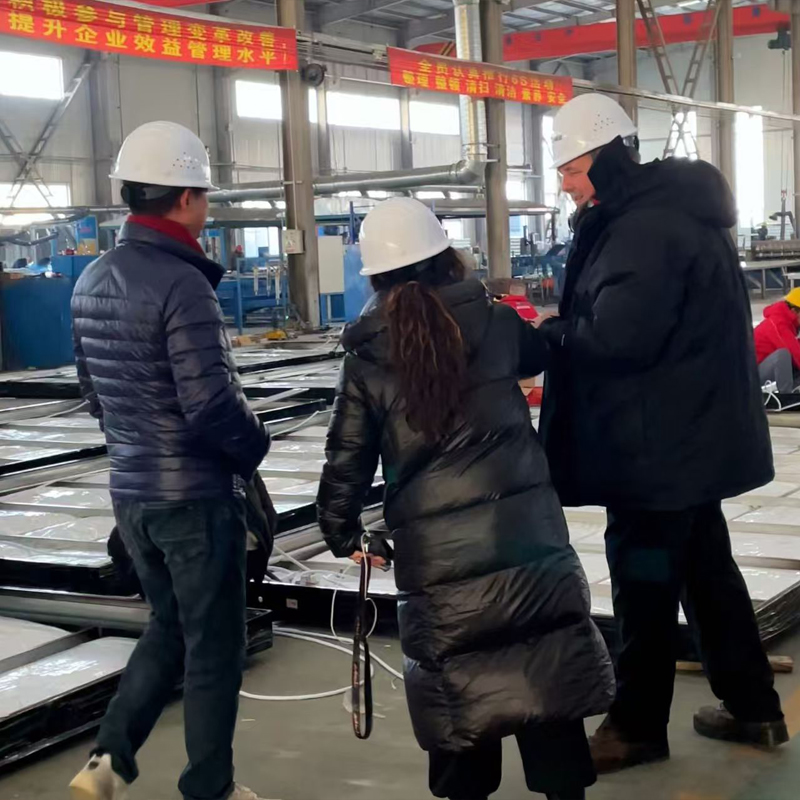
Before approving an aluminum sheet bulk order for shipment, procurement teams need more than a basic visual check. From thickness tolerance and surface finish to packaging integrity and mill test documentation, every detail affects cost, compliance, and downstream performance. This guide outlines the key quality checks buyers should confirm before delivery to reduce risk, prevent disputes, and ensure consistent supply for industrial applications.
What should procurement teams verify before aluminum sheet shipment?
For bulk aluminum sheet procurement, pre-shipment inspection is not a formality. It is the last practical control point before the material enters fabrication, storage, or site installation. In metallurgical materials purchasing, one missed deviation in thickness, coating, width, or packaging can create a chain reaction: rejected goods, production delays, transport claims, and higher total landed cost.
Most purchasing teams focus on 5 core checkpoints before release: dimensions, surface quality, mechanical consistency, documentation, and packing condition. These checkpoints are especially important for orders used in engineering, transportation equipment, industrial plants, exterior wall systems, and machinery components, where aluminum sheet quality directly affects bending, forming, joining, corrosion resistance, and visual acceptance.
A reliable supplier should support this process with traceable production control rather than post-shipment explanations. Shandong Diwang Aluminum Technology Co., Ltd., established in 2002, operates integrated design, R&D, production, and sales, with more than 300 employees and 5 advanced aluminum coil production lines. For procurement teams, this matters because stable line capacity and process continuity usually reduce lot-to-lot variation in bulk orders.
When the shipment includes coated material for architectural or industrial appearance requirements, inspection should go beyond the substrate. For example, buyers sourcing Color coated Aluminum sheets should confirm coating adhesion, color uniformity, flatness, and weather-resistance expectations in addition to alloy and dimensional checks.
A practical 6-point pre-shipment checklist
- Confirm alloy, temper, and product form match the purchase order, such as 1050, 3003, 5052, 5083, or 6061 in O, H14, H24, H32, or F condition.
- Measure thickness, width, length, and squareness on samples from different bundles or coils, not only from the top sheet.
- Inspect surface finish under adequate lighting for scratches, oil marks, roller lines, dents, edge damage, waviness, and coating inconsistency.
- Review packaging strength, moisture protection, pallet condition, strap security, and labeling clarity for each unit.
- Check mill test certificates, batch numbers, heat or coil references, quantity statements, and any requested standard references.
- Align acceptance criteria before dispatch so any deviation can be sorted in 1 round instead of after delivery.
Which quality indicators matter most in bulk aluminum sheet orders?
In real procurement practice, not every indicator carries the same weight. The most important checks depend on whether the aluminum sheets will be stamped, bent, welded, cut into panels, exposed outdoors, or used as visible decorative surfaces. For industrial buyers, 4 groups of indicators usually determine whether a batch is commercially acceptable: dimensional accuracy, surface condition, mechanical suitability, and coating or corrosion performance.
Dimensional accuracy comes first because even a small deviation can affect nesting efficiency, forming performance, and waste ratio. Typical purchase discussions involve thickness ranges, sheet width limits, length tolerances, and edge condition. For coated sheets, flatness is equally critical. A surface may look acceptable in the warehouse but become visibly wavy after installation on curtain walls, doors, window trims, or external wall cladding.
Mechanical suitability is often overlooked during buying negotiations. Yet procurement teams should confirm that alloy and temper match end use. For example, 5052 or 5754 may be selected for better corrosion resistance and forming balance, while 6061 may fit structural or machined applications. If the material is too hard or too soft for the process, downstream defects may appear only after bending, punching, or joining.
For painted or prefinished material, coating performance affects both appearance claims and service life. Buyers should verify adhesion, color consistency, resistance to chalking or fading expectations, and whether the sheet is intended for indoor or outdoor exposure. In many projects, visual uniformity across 1 shipment is just as important as the nominal alloy itself.
Key pre-shipment quality indicators and why they matter
The table below helps procurement personnel prioritize inspection points before release, especially when handling medium to large volume orders across multiple bundles, pallets, or coils.
This type of inspection matrix makes decision-making faster. Instead of arguing over isolated defects, procurement teams can separate critical, major, and minor deviations and decide whether to release, rework, or hold the shipment within 24–48 hours.
How product characteristics affect inspection focus
For coated aluminum sheets used in building curtain walls, industrial plants, container applications, or decorative panels, high flatness and uniform color are often non-negotiable. The surface should be flat and smooth, without obvious unevenness, wavy deformation, indentation, or bulging. This directly affects installation accuracy and final visual acceptance.
Where the material will be exposed to weather, procurement should ask not only for basic corrosion resistance but also for coating stability under sunlight, rain, and wind. In such cases, a supplier that regularly serves engineering, automotive, marine, machinery, and external wall sectors is usually better prepared to discuss fit-for-use rather than only stock availability.
How to inspect dimensions, surface finish, and packaging without slowing delivery
A common purchasing dilemma is speed versus control. Tight shipping windows often pressure teams to sign off quickly, but rushed inspection creates far bigger costs later. The solution is a structured sampling method. For small orders, buyers may inspect every bundle. For medium and large orders, a sample plan across top, middle, and lower stack positions usually gives a more reliable picture than checking only the most accessible sheets.
Dimension checks should be done with calibrated tools and recorded by batch or pallet. Even when purchase contracts do not define every tolerance numerically, buyers should still verify whether actual dimensions are commercially reasonable for the intended fabrication route. If the order includes sheets up to Thickness≤30mm, Width≤2600mm, or Length≤16000mm, handling and measurement methods should match the size and weight of the material.
Surface inspection works best under clear side-lighting because overhead warehouse light can hide dents, orange-peel effect, coating streaks, and slight waviness. This is particularly important for decorative material, automotive interior panels, appliance covers, and visible construction sheet applications. A sheet that passes a casual look from 2 meters away may still fail after cutting or installation.
Packaging should be reviewed as part of product quality, not as a separate logistics issue. Moisture damage, edge crushing, or poor strapping can turn acceptable factory output into disputed delivered material. For export shipments, protection against handling shock and warehouse exposure during 7–30 days of transit is often just as important as mill finish quality.
Recommended inspection sequence for procurement teams
- Verify order identity first: PO number, alloy, temper, quantity, sheet size, destination markings, and packaging count.
- Measure dimensions on selected samples from at least 3 positions per lot or pallet group where practical.
- Inspect surface and edges under proper lighting, including film application or coating appearance if applicable.
- Check labels and documents against the physical goods before container loading or dispatch release.
- Approve packaging only after confirming corner boards, waterproof wrap, straps, pallet stability, and loading direction marks.
Packaging and shipping checks that reduce claims
The following table is useful when buyers want to reduce transit-related disputes, especially in export projects or domestic deliveries involving multiple transfer points.
These packaging controls are simple, but they prevent a large share of avoidable disputes. In many bulk aluminum sheet claims, the root cause is not chemical or metallurgical failure but preventable handling damage between the warehouse and the customer site.
What documents, standards, and traceability records should buyers request?
Physical inspection alone is not enough for aluminum sheet bulk orders. Procurement teams also need document consistency to support receiving, quality acceptance, internal audit, and any later claim handling. At minimum, buyers usually review the commercial invoice, packing list, mill test certificate, and shipment mark list. If the order serves regulated or specification-driven projects, additional declarations may be needed according to contract terms.
Mill test documentation should connect the product actually loaded to the alloy, temper, and batch references stated on the order. The key point is traceability, not paperwork volume. If 1 pallet or 1 bundle cannot be linked to its production information, the buyer may struggle to isolate a problem later. This becomes critical when receiving material for marine, automotive, aviation-support, semiconductor equipment, or industrial mould applications.
When standards are involved, buyers should use contract language carefully. General references to common aluminum standards, dimensions, temper states, and agreed acceptance criteria are useful. However, procurement should avoid assuming that every supplier applies the same default tolerance or test scope unless it is clearly stated in the purchase specification. A 2-page technical attachment often prevents weeks of commercial disagreement.
Shandong Diwang Aluminum Technology Co., Ltd. supplies aluminum products to more than 30 countries and serves sectors such as engineering, machinery, automobiles, ships, electricity, and aviation-related fields. For procurement teams, this export and multi-industry background is relevant because cross-border orders typically require stronger packaging discipline, documentation accuracy, and lot traceability than spot domestic purchases.
Documents buyers should align before release
- Packing list showing quantity by bundle, pallet, coil, or sheet count, with unit weights where applicable.
- Mill test certificate linking alloy series, temper condition, and relevant batch references to the shipped goods.
- Product labels or markings matching the purchase order and transport documents.
- Any agreed inspection report, sample approval record, or appearance standard used before dispatch.
- Shipping mark details for fast receiving and warehouse segregation at destination.
Why traceability matters in coated and application-specific orders
If a buyer is sourcing coated sheets for curtain walls, decorative facades, heat-sink device covers, containers, or automotive body parts, it is not enough to record only the product name. The order should link appearance requirements, color consistency expectations, and the relevant alloy or temper range. This reduces the risk of mixing visually similar material that behaves differently during forming or service.
For application-specific procurement, especially across 2–4 production batches, traceability supports faster root-cause analysis. It allows the buyer to separate a true product issue from transport damage, fabrication error, or storage mishandling at the receiving site.
How to choose the right aluminum sheet grade and coated option for end use?
A large share of shipment disputes starts much earlier than loading. The real issue is incorrect product selection. Procurement teams sometimes approve a sheet based on price, thickness, and appearance alone, without checking whether the alloy and finish fit the actual process. In aluminum purchasing, grade selection should consider at least 4 variables: environment, forming method, structural demand, and appearance expectation.
For example, 1xxx series grades such as 1050, 1060, and 1100 are commonly chosen where high purity, workability, or general-purpose use is needed. 3xxx series grades such as 3003, 3004, 3005, 3102, and 3105 are often considered for balanced formability and corrosion performance. 5xxx series like 5052, 5083, 5086, 5182, and 5754 are frequently discussed for marine, transport, or higher corrosion environments. 6xxx series such as 6061, 6063, and 6082 may suit structural or machined applications better.
Temper is equally important. O, H12, H14, H24, H32, H111, H112, and F conditions each influence bendability, strength, and forming behavior. Procurement teams should confirm the fabrication route with the end user: simple cutting, deep bending, enclosure forming, or structural assembly. That single step can prevent buying a harder material that later cracks at the press brake.
When appearance, weather exposure, or branding matters, coated material becomes the practical choice. Good coated aluminum should offer uniform and consistent color, strong adhesion between coating and substrate, stable weather resistance, corrosion resistance, and a flat smooth surface. These factors matter for external walls, construction sheets, doors and windows, storage systems, and industrial device housings.
Quick selection guide by application scenario
The table below helps buyers compare common decision points when selecting aluminum sheet types for different industrial and project needs.
This comparison helps procurement avoid the most common mistake: choosing one aluminum sheet specification for multiple unrelated applications. A lower initial unit price may increase scrap, repainting, handling loss, or installation defects later.
Common selection mistakes to avoid
Do not assume all bright, clean, or color-coated sheets have the same service performance. Visual similarity does not guarantee the same alloy family, temper range, coating adhesion, or weather resistance. Another common error is approving samples from 1 batch while mass production comes from another batch without agreement on consistency controls.
Buyers should also avoid under-specifying packing requirements. If the shipment includes long sheets, wide sheets, or visible-grade panels, packaging details should be written into the order. This is especially important when the goods will spend 2–6 weeks in transit or temporary storage.
FAQ and final buying advice for aluminum sheet bulk orders
Procurement teams often ask the same questions when balancing price, risk, and delivery. The answers below focus on practical buying decisions rather than general product descriptions, helping reduce disputes before aluminum sheet shipment approval.
How many samples should be checked before shipment?
There is no single rule for every order, but bulk shipments should not be approved from 1 visible surface only. A practical approach is to inspect material from at least 3 positions in a stack or across multiple bundles, then increase sampling if the order spans several production batches, different sizes, or multiple finish requirements. The larger and more appearance-sensitive the order, the tighter the sampling discipline should be.
What are the most common reasons aluminum sheet orders are rejected?
The most frequent rejection causes are thickness deviation, visible surface defects, edge damage, packaging failure, mismatched documents, and color inconsistency in coated products. In many cases, the problem is not severe metallurgical failure but poor alignment between the purchase specification and the shipment release process.
When is coated aluminum the better procurement choice?
Coated aluminum is usually the better choice when buyers need decorative effect, long-lasting color, outdoor exposure resistance, corrosion protection, and stable appearance across a project. It is commonly considered for curtain walls, industrial plants, door and window decoration, containers, and visible cladding systems. Buyers should still confirm flatness, color consistency, adhesion, and end-use environment before shipment approval.
How long should buyers expect for quality confirmation before dispatch?
For routine orders with clear specifications, document and inspection review can often be completed within 24–48 hours. For mixed-size orders, export loads, or appearance-critical material, buyers should allow extra time for sample review, packaging checks, and batch traceability confirmation. Building this step into the schedule is usually cheaper than handling a rejected container later.
Why work with a supplier that supports both production control and procurement decisions?
For purchasing professionals, the best supplier is not simply the one offering a quotation first. It is the one that can connect product selection, production stability, inspection support, and shipment execution into one coordinated process. In metallurgical materials sourcing, this reduces internal workload across procurement, QA, warehouse, and project teams.
Shandong Diwang Aluminum Technology Co., Ltd. combines independent design, research and development, production, and comprehensive sales. Its product scope covers galvanized series and aluminum series, including aluminum sheets, coils, rods, foil, tubes, alloys, and profiles. With 5 domestically advanced aluminum coil production lines and annual output reaching 900,000 tons, the company is positioned to support both regular volume procurement and broader industrial supply planning.
If your team is evaluating a bulk aluminum sheet order, the most useful next step is to confirm the commercial and technical details before shipment: alloy and temper range, dimensions, surface grade, packaging standard, quantity split, and document set. If coated material is involved, include color consistency, flatness, adhesion, and weather-resistance expectations in the discussion from the start.
You can contact us for specification confirmation, product selection advice, sample support, delivery lead time discussion, packaging requirements, export shipment planning, and quotation alignment. If your application involves construction panels, industrial equipment, transport components, storage systems, or outdoor decorative use, share the end-use scenario first so the recommended aluminum sheet solution matches both budget and performance goals.
Leave A Message
If you are interested in our products and want to know more details, please leave a message here, we will reply you as soon as we can.